Quick Answer
For safe, comfortable play with the Sportsheets Neck & Wrist Restraint, always check fit before use, secure wrists at the right D-rings, and establish a clear release signal with your partner.
Why Fit and Safety Matter
A restraint that's too tight can cut off circulation, while one that's too loose may slip or cause chafing. The Neck & Wrist Restraint's neoprene padding helps distribute pressure, but proper adjustment is still key to avoiding discomfort or injury.
Because the collar and cuffs are adjustable, you can customize the fit to your partner's body. However, the neoprene material has some stretch, so it's important to check snugness periodically during play, especially if the position changes.
Understanding the D-Rings
The strategically placed D-rings allow you to secure wrists at various points along the front or back of the body. This versatility is great for different positions, but it also means you need to think about where you're placing the cuffs to avoid awkward angles that could strain joints.
When routing the restraint along the front or back, ensure the D-rings are positioned so that the wrists can be secured without pulling the collar too tightly against the neck. The goal is to challenge flexibility without forcing it.
Step-by-Step Safety and Adjustment Guide
- Check the fit of the collar: Before play, have your partner try on the collar. It should be snug but allow two fingers to slide between the neoprene and the neck. If it's too tight, adjust the Velcro or buckle; if too loose, tighten it to prevent slipping. Never start play with a collar that's too tight—circulation issues can develop quickly.
- Position the D-rings correctly: Decide whether you'll run the restraint along the front or back. For front positioning, route the straps so the D-rings sit at the sides of the neck, not directly over the throat. For back positioning, ensure the D-rings are centered between the shoulder blades to avoid pressure on the spine. Check that the D-rings don't press into the neck or spine when the wrists are secured.
- Secure the wrist cuffs: Attach the cuffs to the D-rings at a point that allows natural wrist movement. The cuffs should be snug but not cutting off circulation—again, two fingers should fit underneath. Avoid overextending the arms; the goal is to restrict movement, not to force an uncomfortable stretch. If your partner complains of tingling or numbness, release the cuffs immediately.
- Establish a safe word and release signal: Agree on a clear verbal safe word and a non-verbal signal (like dropping a ball or tapping twice) in case the mouth is covered or the position makes speaking difficult. Make sure you can release the cuffs quickly—practice unbuckling them once before starting. Never leave a restrained partner unattended, even for a moment.
- Monitor and adjust during play: Check the fit every 10-15 minutes, especially if your partner changes position. The neoprene can stretch slightly with movement, so re-tighten or loosen as needed. Watch for skin discoloration or coolness in the hands, which indicate circulation issues. If the cuffs leave deep marks or the skin turns blue or pale, end the scene and remove the restraints.
Product Facts
-
Neck & Wrist Restraint: The Neck & Wrist Restraint features a neoprene collar and cuffs for superior comfort and durability. Neoprene padding reduces pressure points, making longer sessions more comfortable and helping to prevent marks or chafing.
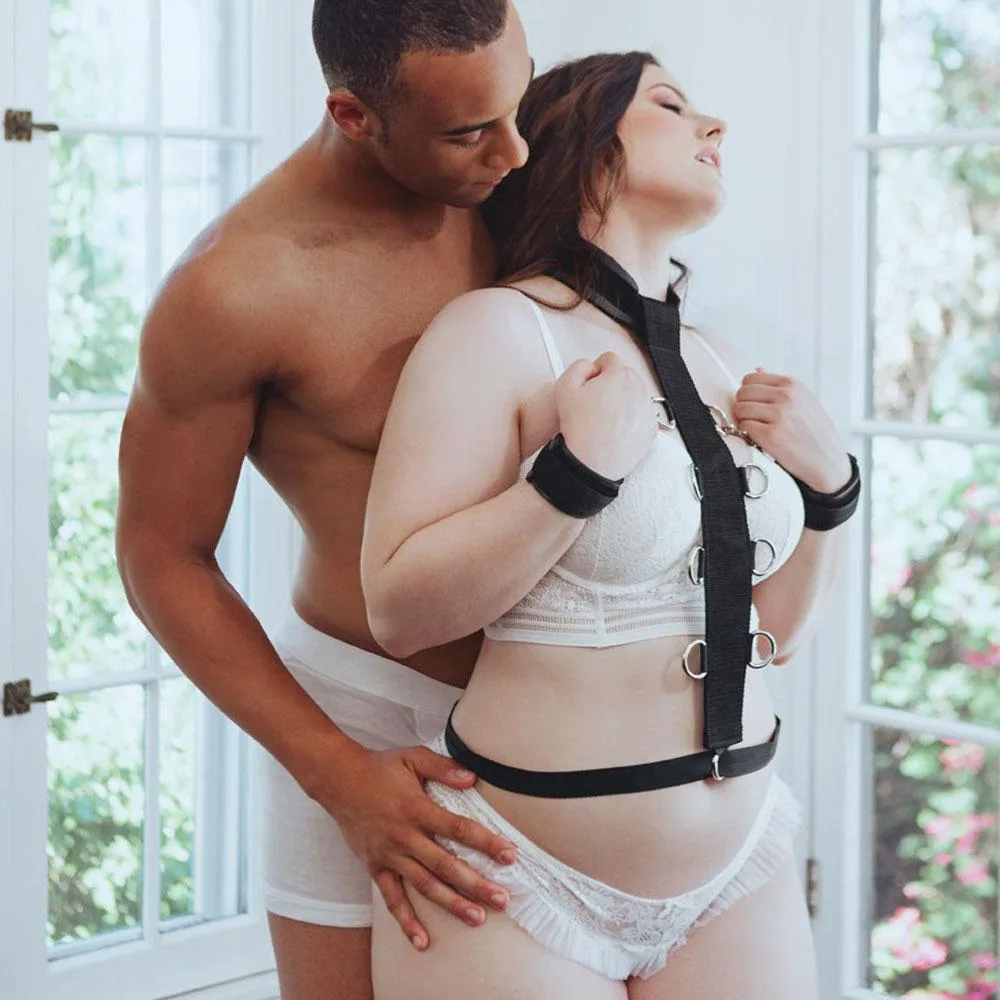
Neck & Wrist Restraint
-
Neck & Wrist Restraint: Strategically placed D-rings allow for customizable wrist positioning along the front or back. This flexibility lets you adjust the restraint to suit different body sizes and play styles, but it also means you should experiment with placement to find the most comfortable and safe configuration.