Quick answer
If you play at a table, buy a playmat first: it protects cards from scratches and keeps them from sliding. Add a playmat display only if you own art you want to show off or store flat between sessions. Most players need one good playmat and a simple storage sleeve, not a display case.
A playmat and a playmat display solve two different problems. The playmat is the surface you actually play on: it cushions cards, reduces damage, and stops sleeves from sliding. A playmat display is for after the game: it holds the mat flat, protects the artwork, and turns it into a wall or shelf piece.
Because both products use the word "playmat," it's easy to buy the wrong one. This comparison breaks down what each does, what it doesn't do, and which setup fits your table, your budget, and how often you actually play.
What a playmat actually does at the table
A tabletop gaming playmat is a soft fabric surface with a non-slip rubber backing. The fabric top reduces damage to cards during shuffling, picking up, and sliding, while the rubber backing keeps the mat from shifting during use. The Magic: The Gathering®—FINAL FANTASY™ Terra, Herald of Hope (Commander) Playmat measures approximately 24 in. x 13.5 in., which is a standard footprint for a single player's play area.
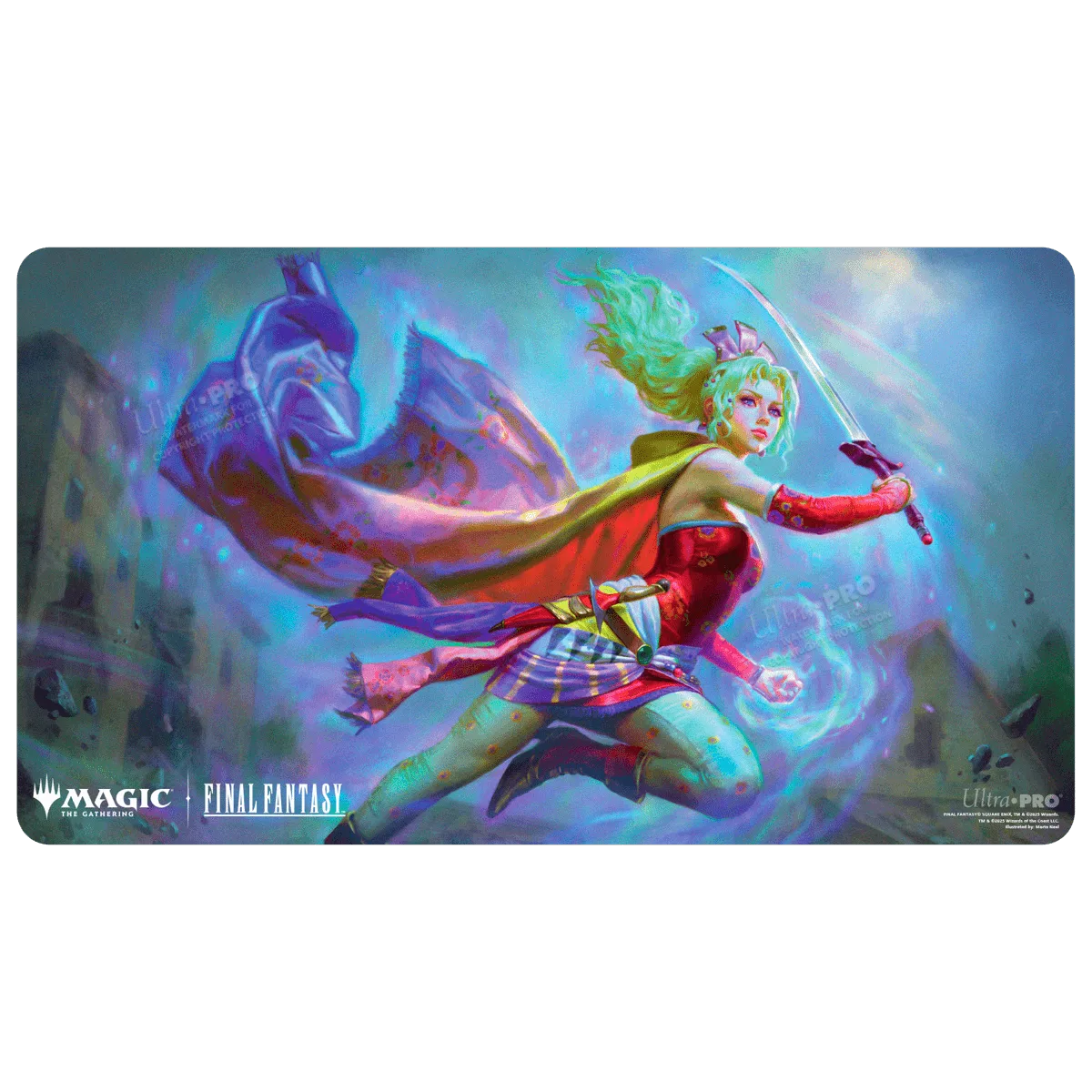
Magic: The Gathering®—FINAL FANTASY™ Terra, Herald of Hope (Commander) Playmat
That size matters. It's large enough for a deck, tokens, and a life pad, but small enough to fit most tables and to roll up for transport. If you play at a game store or a friend's house, a playmat is the one accessory that changes how your cards feel on any surface, from bare wood to a sticky café table.
- Choose a playmat if your cards ever touch a bare table.
- A playmat also works as an oversize mousepad at home or in the office.
What a playmat display does (and doesn't do)
A playmat display is a frame or case designed to hold a playmat flat for viewing or storage. It does not improve gameplay; it protects the mat's artwork and keeps it from curling or getting crushed in a bag. If you own a limited-art playmat or want to rotate your favorite art on a wall, a display makes that practical.
The trade-off is cost and space. A display takes up wall or shelf room, and you can't play on a mat that's framed. For most players, a display is a second purchase, not a first one. If your goal is simply to keep a mat clean between sessions, a storage tube or a flat sleeve does the job for less.
- A display is for showing or storing a mat, not for playing on it.
- Measure your mat before buying any frame; standard mats are about 24 in. x 13.5 in.
How to choose based on how you play
If you play weekly at a store, prioritize the playmat. The fabric top and non-slip backing directly affect card safety and comfort. If you play mostly at home and already own a mat you love, a display lets you enjoy the art between games without exposing it to spills or sunlight.
If you collect art mats but rarely play, a display may be the better first buy. If you play often but own only one mat, skip the display and put the money toward a second playmat or a deck box that protects your cards in transit.
- Frequent player: playmat first, display later.
- Collector: display first, playmat only if you actually play.
Storage and transport: the part most players forget
A playmat left loose in a bag picks up dust, creases, and edge wear. A playmat display keeps a mat flat at home, but it's not a travel case. For transport, roll the mat loosely and use a tube or a dedicated playmat bag. If you carry a large collection, a storage box like the Legion SENTINEL 1000-Card Dropship Card Storage Box - Red can hold cards, dice, tokens, or playmats in one place.
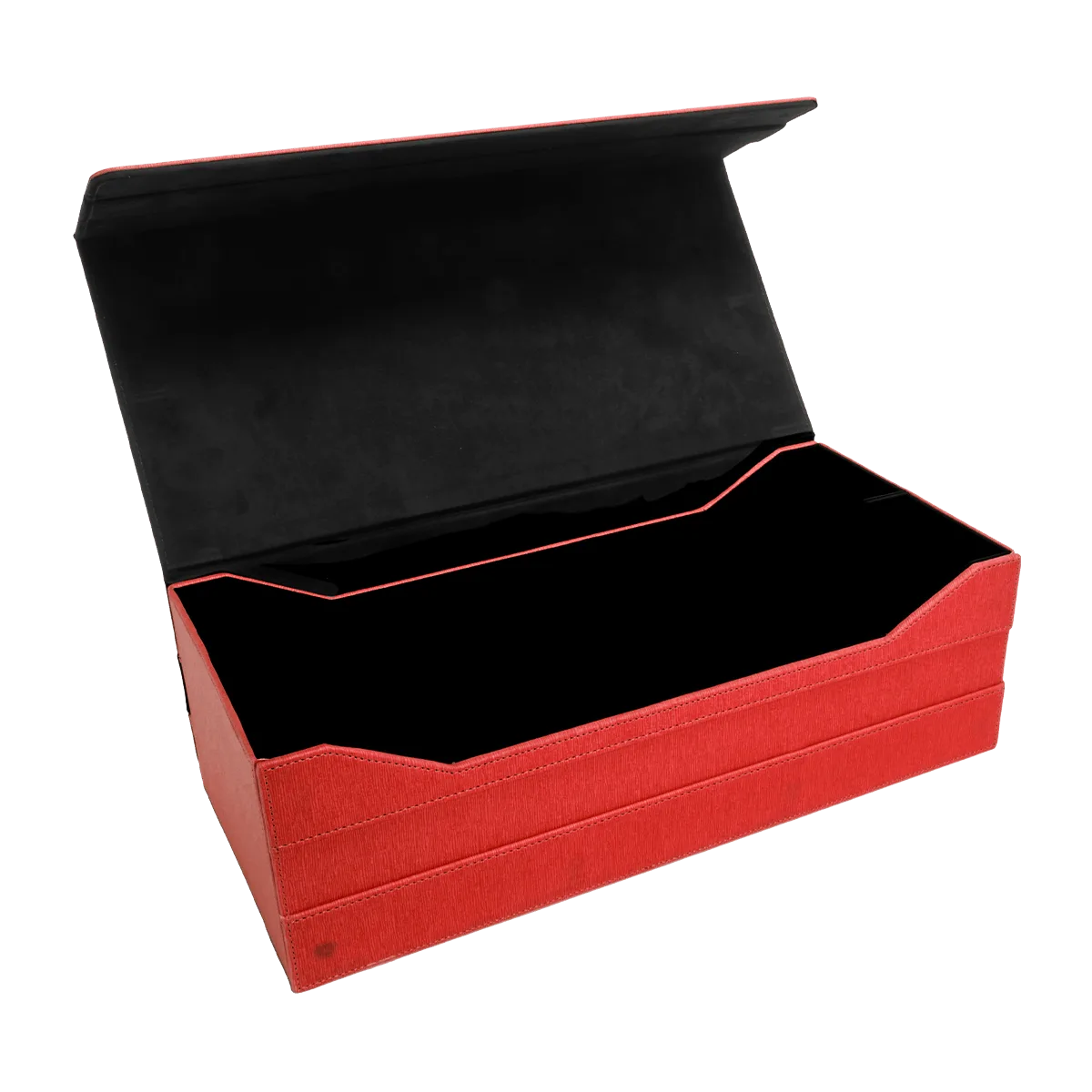
Legion SENTINEL 1000-Card Dropship Card Storage Box - Red
That box holds up to 1000 double-sleeved cards, which makes it a practical home base for a deck collection and a rolled mat. It's not a display, but it solves the storage problem that a display doesn't: getting everything to and from game night without damage.
- Never store a playmat folded; roll it around a tube to avoid creases.
- Keep mats out of direct sun to slow artwork fading.
Trade-offs at a glance
- Playmat: protection vs. portability: A playmat protects cards and stays flat during play, but it must be rolled and carried separately. It does not display art when not in use. Best first purchase for anyone who plays away from home.
- Playmat display: presentation vs. playability: A display keeps a mat flat and visible, protecting artwork from dust and creases. You cannot play on a framed mat, and it adds wall or shelf space. Best second purchase for collectors or home players with a favorite art mat.
- Storage box: capacity vs. display: A box like the Legion SENTINEL holds up to 1000 double-sleeved cards plus dice, tokens, or playmats. It protects in transit but doesn't show off artwork. Choose a box if transport and capacity matter more than display.
Product facts
- Magic: The Gathering®—FINAL FANTASY™ Terra, Herald of Hope (Commander) Playmat: Soft fabric top reduces damage to cards; non-slip rubber backing keeps the playmat from shifting during use; approximately 24 in. x 13.5 in.; also works as an oversize mousepad. This is the core play surface: it protects cards and stays put, so you can focus on the game instead of chasing sliding sleeves.
- Legion SENTINEL 1000-Card Dropship Card Storage Box - Red: Holds up to 1000 double-sleeved cards or stores dice, coins, tokens, or playmats; made with premium materials. A single box can carry your cards and a rolled playmat, which is more practical for travel than a fixed display.
- Recessed Snap Card Holder: Holds 2-1/2 in. x 3-1/2 in. standard cards; two-piece ultra-clear recessed design; stackable; PVC-free and acid-free. If you display a single card alongside your playmat, this keeps it protected and viewable without adhesive or screws.
Which setup fits you?
Choose a playmat if you
- Play at game stores, conventions, or friends' tables
- Want to protect cards from scratches and sliding during play
- Need a surface that rolls up and travels easily
Choose a playmat display instead if you
- Rarely play but own art mats you want to show
- Want to keep a mat flat and dust-free between sessions
- Have wall or shelf space for a framed display
Buy the playmat first if you play; add a display only when you have art worth showing and a place to show it. A storage box bridges the gap for players who need to carry both.