Quick answer
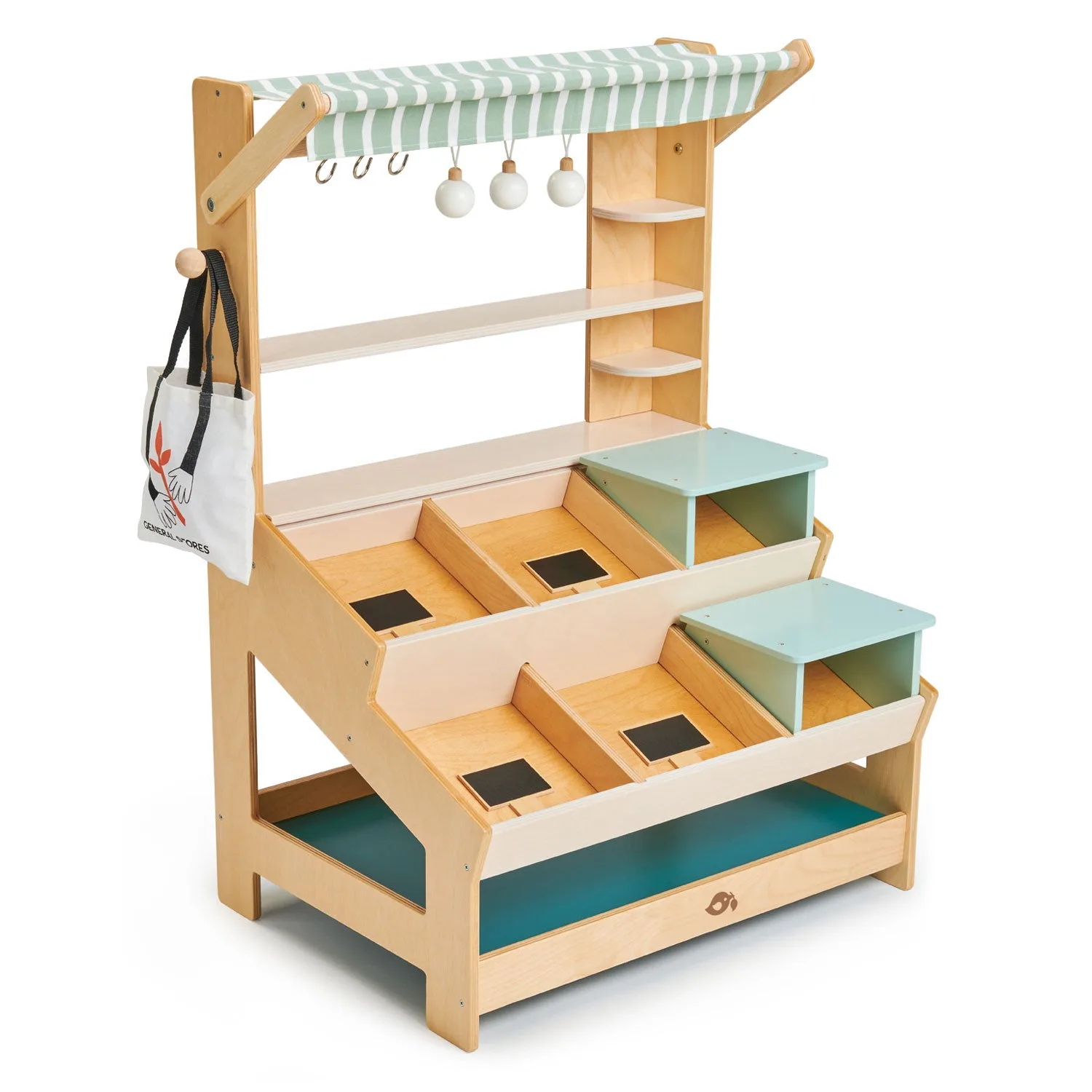
Treat the https://tenderleaftoysenz.com/products/general-stores-till-e41ed162d9bdf1d99b7d91d8-1357377General Stores Till as the counter of a small shop, not the whole toy. Pick two or three products with clear identities, add price tags and a basket, then let your child run the till while you play customer. Keep the setup small, repeat the same routine a few times, and the till becomes the anchor for grocery store pretend play that lasts far longer than the toy alone.
A wooden till is one of the few toys that gets better when you add almost nothing to it. The General Stores Till already gives you the drawer, the buttons, and the hand-over of goods and money; what it lacks is a reason to use them. That reason is stock.
These pretend play shop ideas build a working shop around the till in about ten minutes, using toys and kitchen items you probably already own. Work through the steps in order the first time, then let your child rearrange them once the routine feels familiar.
Set up the counter before you open
Decide where the shop lives before you invite anyone to play. A low table, a rug, or the end of a kitchen counter all work, as long as the till sits at your child's chest height and the stock sits within arm's reach. If the till is too high, your child will spend the game climbing instead of selling. If stock is scattered across the room, the play dissolves into tidying.
A five-minute setup is enough. Place the till slightly off-center so there is room to bag items on one side and stack purchases on the other. That single decision gives the game two work zones, which keeps hands busy and makes the shop feel like a real place rather than a table with a toy on it.
- Keep the counter low enough that your child can see the drawer open and close.
- Leave one clear side for bagging; a small basket or paper bag works.
Choose stock that is easy to name and count
The best pretend shop for kids uses items a child can identify in one glance: bread, fruit, blocks, small animals. Ambiguous objects slow the game down because every sale needs a negotiation about what the thing is. Pick six to ten items, no more, and keep them in a shallow tray so restocking is quick.
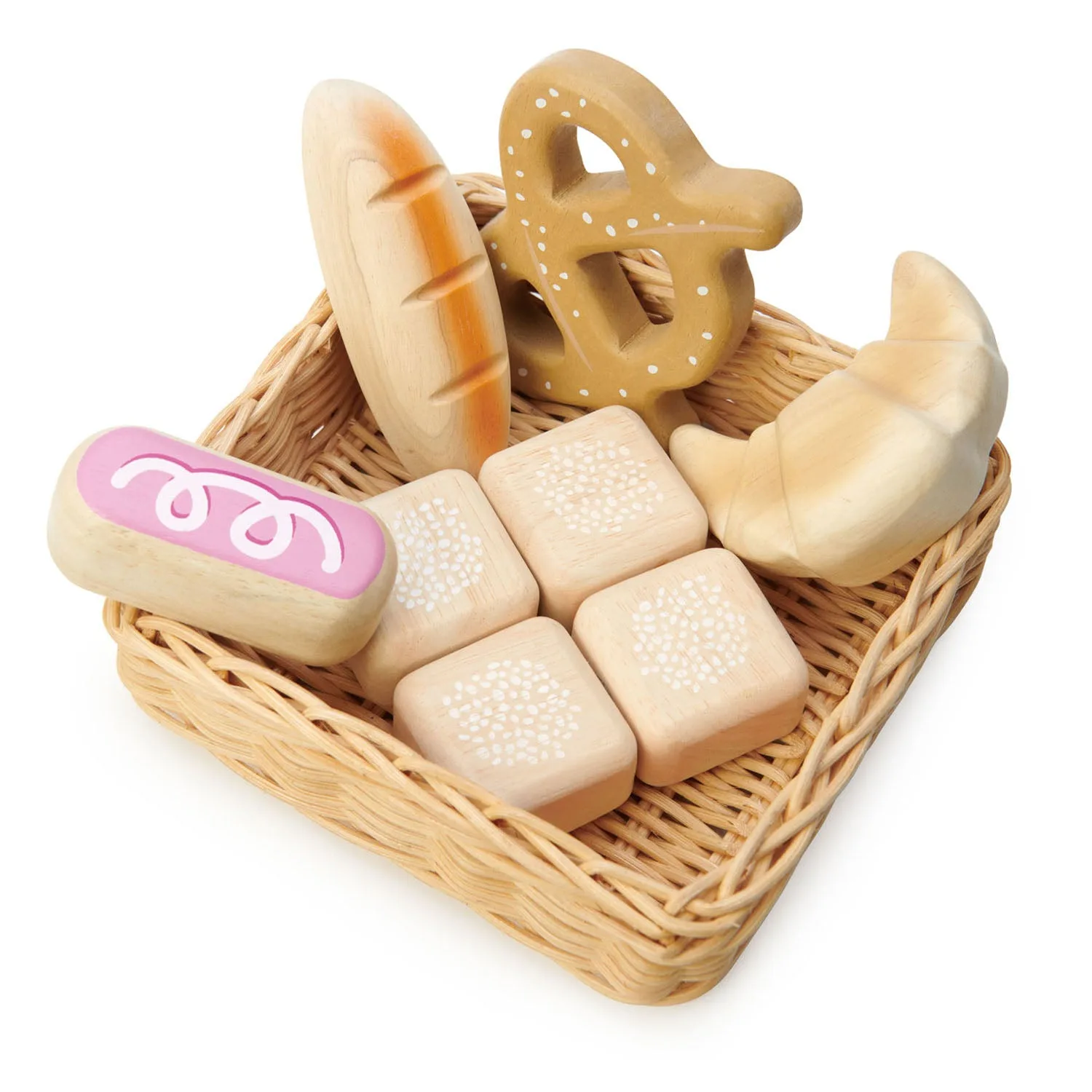
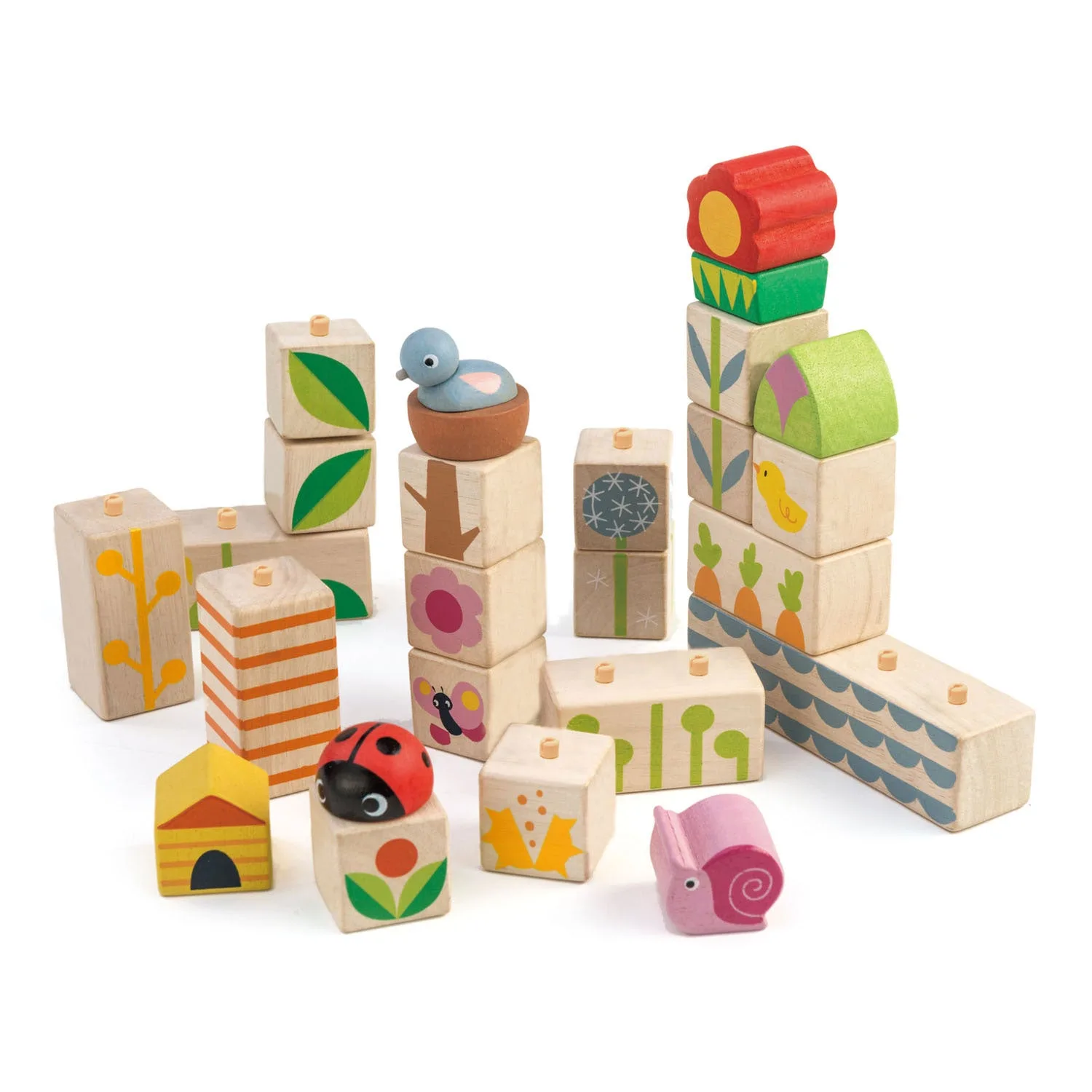
Bread Basket is a strong starting product because it contains five recognizable baked goods plus four pull-apart rolls, which gives you both individual items and a set to sell as a bundle. Garden Blocks work the other way: all 24 pieces are illustrated with a nature theme, so you can sell them one at a time or as a full box, and the garden graphics double as sorting practice between customers.
- Six to ten items is enough; more stock means more tidying and less selling.
- Choose items with obvious names so the customer can order without pointing.
Add price tags and a simple money rule
Price tags do more for toy cash register activities than any other single addition. Write one number per item on a sticky note or a scrap of card and tape it to the tray in front of the item. Keep every price to one or two digits so your child can read the tag and press the matching buttons without help.
Agree on one money rule before you start: for example, every item costs one coin, or the customer always pays with the largest coin and gets change back. A single rule keeps the arithmetic inside the game. Changing the rule mid-game is the most common reason pretend shop play collapses into an argument about who owes what.
- Write prices large enough to read from the customer's side of the counter.
- Pick one payment rule and stick to it for the whole session.
Assign roles, then swap them
Children learn the most from the till when they get to run it, but they also need to see it used well. Start with your child as shopkeeper and you as customer, then swap after three or four sales. As the customer, model the full loop out loud: greet, order, pay, wait for change, say thank you, leave. Your child copies that script the next time they are the customer.
If a sibling or friend joins, add a third role rather than splitting the same job. A delivery driver who restocks the tray, or a second customer who queues, keeps everyone busy and prevents two children from fighting over the buttons.
- Swap roles after a few sales so your child practices both sides of the counter.
- Add a delivery or queue role before adding a second shopkeeper.
Run a short, repeatable sales routine
A routine is what turns a till into a shop. Keep it to five beats: greet the customer, take the order, press the buttons, take payment, hand over the goods. Say the same words every round so your child can predict what comes next, and let them fill in the beats they know while you carry the rest.
Short rounds beat long ones. Five to eight sales is usually the sweet spot before attention drifts, and a clean ending, closing the drawer and saying the shop is shut, makes it far more likely your child will ask to open again tomorrow.
- Keep the loop to five beats and repeat the same phrases each round.
- End on a completed sale rather than a fading one.
Extend the shop without buying anything new
Once the basic loop works, add one layer at a time. A paper receipt pad introduces writing and number copying. A basket by the door introduces carrying and sorting. A small shelf introduces restocking, which is really a matching and counting task in disguise. Each addition should attach to something your child already does at the till, not replace it.
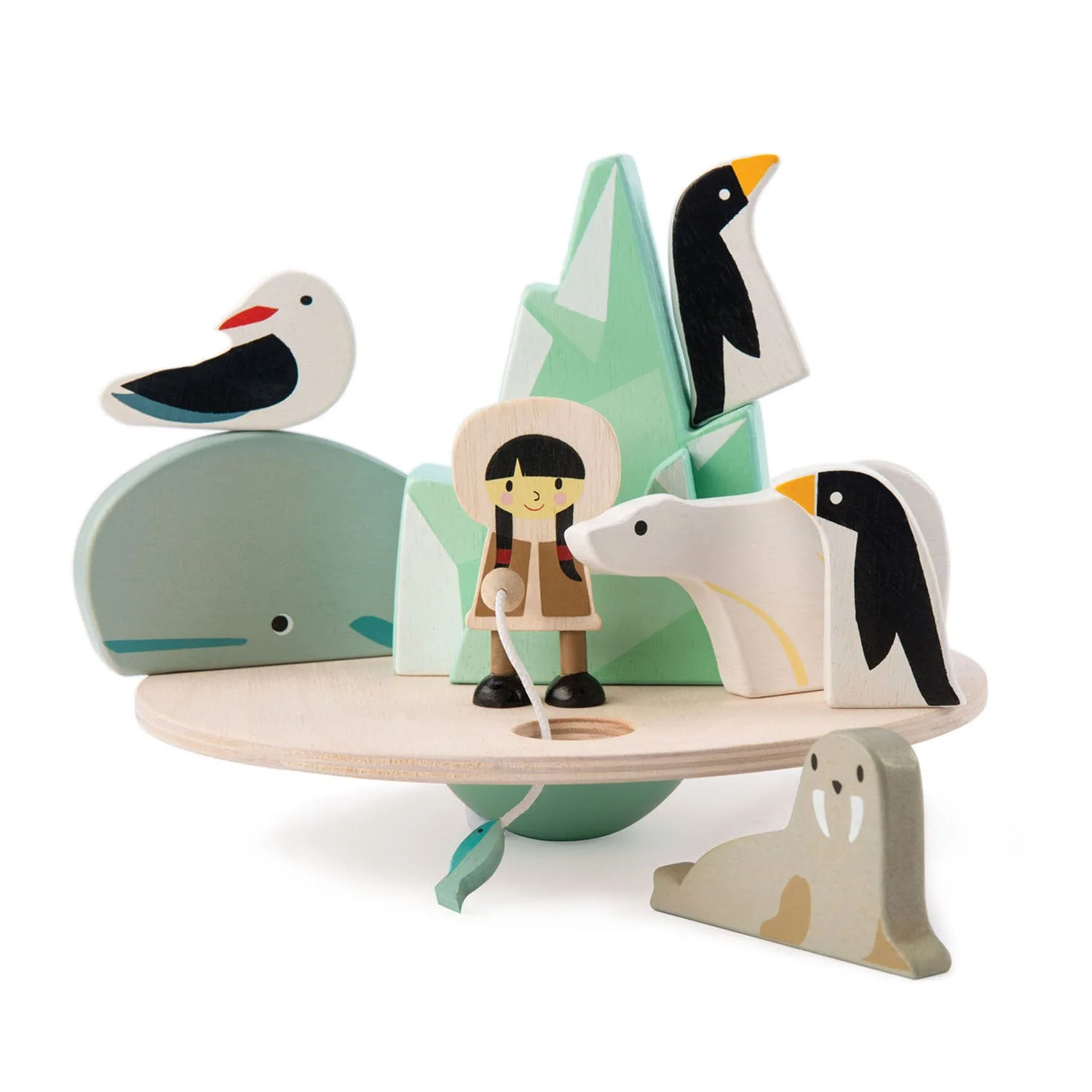
Larger toys can become part of the shop rather than a separate game. Timber Taxi is a log-shaped vehicle that picks up the Merrywood folks, Fungi, Robbie, and Woody, so it can serve as the delivery van that brings stock to the counter. Balancing Polar Circle, a frozen balancing game with two penguins, a whale, a walrus, a polar bear, a seagull, an iceberg, and a little Inuit fishing girl, can be the specialty display your shop sells alongside groceries.
- Add one new element per session, not three.
- Let bigger toys play a role in the shop instead of competing with it.
Nine steps to open your pretend shop
- 1. Pick the counter: Choose a low table or rug where the till sits at your child's chest height and stock is within arm's reach. Checkpoint: your child can open the drawer without climbing.
- 2. Choose six to ten items: Select stock with obvious names, such as the baked goods in Bread Basket or a handful of Garden Blocks. Common mistake: tipping out the whole box, which turns selling into tidying.
- 3. Tag every price: Write one or two digit prices on sticky notes and place each tag in front of its item. Checkpoint: your child can read each tag from their side of the till.
- 4. Agree one money rule: Decide before you start whether every item costs one coin or the customer always pays with the largest coin. Common mistake: changing the rule mid-game, which usually ends the play.
- 5. Assign roles: Start with your child as shopkeeper and you as customer, and add a delivery or queue role for extra players. Checkpoint: everyone has a job that touches the counter.
- 6. Model the full loop: As the customer, greet, order, pay, wait for change, thank the shopkeeper, and leave, saying each step out loud. Next step: swap roles after three or four sales.
- 7. Run five to eight sales: Repeat the same five beats each round and keep the session short enough to end on a completed sale. Common mistake: pushing for one more sale after attention has drifted.
Toys that fit a pretend shop counter
- Bread Basket: A handcrafted wicker basket with croissant, iced bun, pretzel, baguette and 4 pull-apart bread rolls for sharing. Gives you five named baked goods plus a set of rolls, so you can sell single items or a bundle without inventing stock.
- Garden Blocks: All 24 pieces are push and click blocks illustrated with a nature theme, and the garden graphics help develop sorting skills. Works as both counter stock and a between-customers sorting task, and the push-and-click action develops hand eye coordination and balance during stacking.
- Timber Taxi: A quirky log-shaped vehicle that picks up the Merrywood folks, Fungi, Robbie, and Woody. Turns into the delivery van that restocks the counter, which gives a second child a clear job.
- Balancing Polar Circle: A balancing game with 2 penguins, a whale, a walrus, a polar bear, a seagull, an iceberg and a little friendly Inuit fishing girl. Serves as a specialty display the shop sells, and the balancing element adds a careful-hands moment to the routine.
The General Stores Till does most of its work once there is stock to sell and a routine to repeat. Start with six named items, one money rule, and five short sales, then let your child add receipts, delivery runs, or a specialty display when they are ready. A shop that closes cleanly is a shop that opens again.