Quick Answer
Choose the Pull-Along Duck for a first pull toy that rewards every step with floppy webbed feet and a clear cause-and-effect lesson. Choose the Woodpecker Walker if your child is already steady on their feet and you want a push-along walker that adds a tapping, pecking motion to the walk. Both are wooden pull toys; the Duck is the simpler entry point, while the Woodpecker Walker suits a child who wants more feedback from the toy as they move.
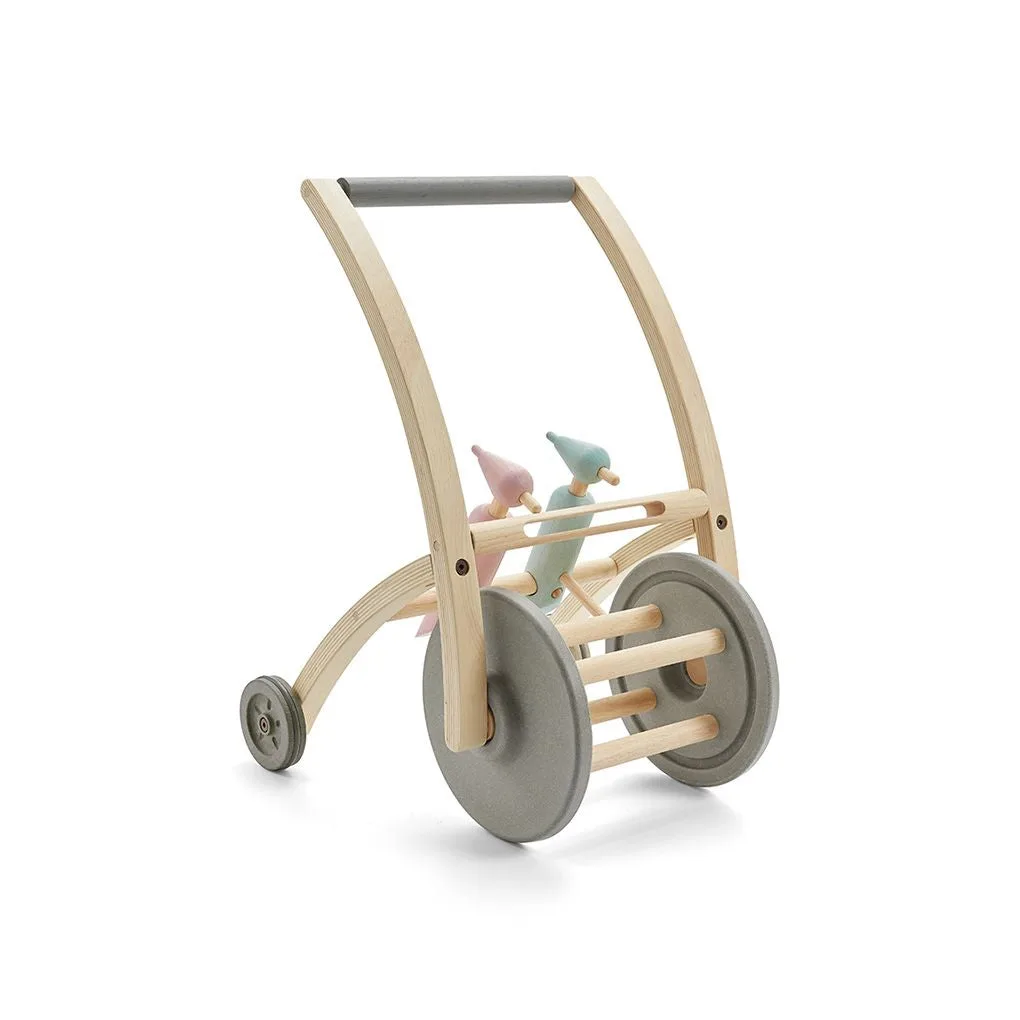
Woodpecker Walker
What Each Toy Asks of Your Child
The Pull-Along Duck is a string toy: your child holds the string and walks, and the duck follows with floppy webbed feet. That single action — pull, then watch — is the whole play pattern, which is why it works for a child who is just learning to coordinate walking and holding at the same time. The Woodpecker Walker is a push-along walker, so your child grips a handle and pushes the toy ahead of them. That reversed relationship changes the balance demand: pushing a walker gives more forward support, while pulling a string asks your child to manage the toy behind them.
Cause and Effect: Immediate vs Delayed Feedback
The Duck's feedback is immediate and visible — the feet flop with each pull, so a child can see that their movement made something happen. The Woodpecker Walker's pecking motion is also cause and effect, but it is tied to continuous pushing rather than a single tug. If your goal is to teach 'I move, it moves,' the Duck makes that connection with less coordination required. If your child already understands that link and wants a toy that keeps responding as they walk, the Walker holds attention longer.
Safety and Space at Home
Both toys are wooden and low to the ground, but they occupy space differently. A pull toy on a string needs a clear path behind your child so the duck does not catch on furniture legs or rugs. A push walker needs a clear path ahead and enough room to turn around. In a small apartment, the Duck stores more easily and can be used in a hallway; the Walker needs a longer, open run. Neither toy substitutes for supervision, especially on stairs or uneven floors.
Trade-Offs at a Glance
- Pull-Along Duck: simpler mechanics: One string, one action, visible floppy feet. The toy does less, so your child has less to coordinate. Best when your child is still learning to walk and hold at the same time.
- Woodpecker Walker: more feedback, more demand: A push walker asks your child to grip a handle and steer, which is a bigger balance and coordination task than pulling a string. Best once walking is already steady and your child wants the toy to keep responding.
- Wooden pull toys: storage and surface: Both are wooden and low to the ground, but the string toy needs clear space behind your child and the push walker needs clear space ahead. Check your floor surface and room layout before choosing.
Product Facts
- Pull-Along Duck: Promotes walking, balance, and coordination, strengthening gross motor skills with floppy webbed feet; pulling the string teaches cause and effect. The visible foot movement gives immediate feedback, so a child can connect their own pulling action to the toy's motion without needing extra explanation.
- Dino Set: Designed using PlanWood, a unique PlanToys material that utilizes recycled wood material. If you want a pull toy made with a recycled-wood material rather than solid wood, this is the option that states that construction.
- Pull & Grasp: Designed to boost fine motor skills as babies learn to grasp and pull the balls, strengthening hand and finger muscles; pulling and watching the balls bounce back builds cause-and-effect understanding. If your child is not yet walking, this is a seated alternative that still practices the pull-and-watch pattern before they are ready for a moving pull toy.
Which Pull Toy Fits Your Child?
Best for
- A child taking their first independent steps who needs a simple pull-and-watch reward
- Families who want a compact wooden pull toy that stores easily and works in a hallway
- Parents introducing cause and effect through a single, visible action
Not for
- A child who is already running and wants a toy that keeps pace with continuous pushing
- Homes with no clear walking path behind the child
- Children who still put small parts in their mouths and need a seated grasping toy instead