Quick answer
A pyrite donut necklace usually turns dark because the stone's surface is oxidizing or holding skin oils, lotion, and humidity, not because the stone has stopped working. Clean it gently with a soft dry cloth first, use only a barely damp cloth for stubborn film, dry it completely, and store it away from moisture. Stop polishing if the surface starts to flake, pit, or shed grit, because that means the damage is below the surface and more rubbing will make it worse.
What the darkening actually looks like
Before you treat the necklace, name the symptom. A dull gold that wipes away with a cloth is surface film. A bronze or brown haze that stays after wiping is light oxidation. Rainbow or purple patches are a natural oxide layer that some people like and some don't. Black spots, white powder, or a gritty feel are different: those point to moisture damage or a pyrite that was never fully stabilized. Each symptom needs a different response, and treating all of them with the same polish is how people strip a stone they meant to protect.
- Dull gold film: usually oils, lotion, or sunscreen.
- Brown or bronze haze: light surface oxidation.
- Rainbow or purple sheen: natural oxide layer, often harmless.
- Black spots, white powder, or grit: moisture damage or unstable pyrite.
How to clean pyrite jewelry without making it worse
Start dry. Fold a soft, lint-free cloth and wipe the donut in one direction, turning the cloth as it picks up residue. If the film is stubborn, dampen a corner of the cloth with plain water, wring it out until it is barely wet, and wipe once. Do not soak the necklace, do not run it under a tap, and do not use vinegar, lemon juice, baking soda, toothpaste, or ultrasonic cleaners. Pyrite contains iron and sulfur, and acids and abrasives can speed up the very tarnishing you are trying to remove. After any damp wipe, dry the stone immediately with a second dry cloth and let it air out for an hour before wearing or storing it.
- Use a soft dry cloth first; add water only if needed.
- Never soak, scrub, or use acidic or abrasive cleaners.
- Dry completely before the necklace touches skin or storage.
Where the red activation string fits into care
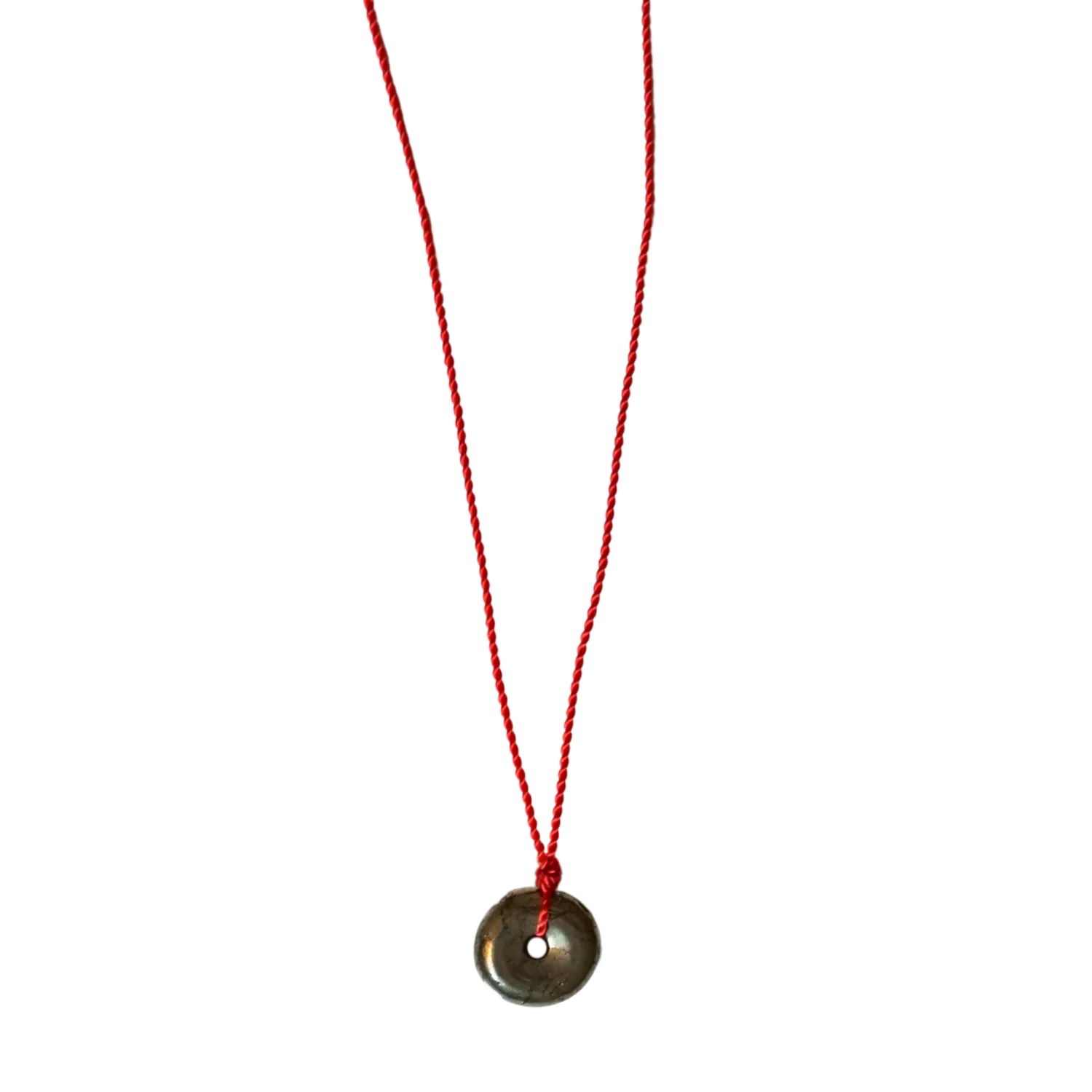
The red string on the Pyrite Donut Necklace is part of the piece, so treat it like a textile, not a stone. Water, perfume, and body lotion break down cord fibers and can transfer residue onto the pyrite. Put the necklace on after lotion and fragrance have dried, and take it off before showering, swimming, or working out. If the string gets damp, blot it dry and let the whole necklace air out flat rather than hanging, which can stretch the cord while it is wet.
Storage and daily habits that slow tarnishing
Humidity is the main driver of pyrite tarnishing, so storage matters as much as cleaning. Keep the necklace in a dry, closed container with a small moisture-absorbing packet if you live in a humid climate, and avoid leaving it in a bathroom or on a windowsill. Wear it against clean, dry skin rather than over lotion, and rotate it rather than wearing it every day if you sweat heavily. A simple wipe after each wear removes most of the film before it has time to set.
- Store dry and closed, away from bathrooms and direct sun.
- Wear over clean, dry skin, not over lotion or perfume.
- Wipe after each wear to stop film from setting.
Diagnose your pyrite before you treat it
- Symptom: dull gold film that wipes off: Likely cause is skin oils, lotion, or sunscreen sitting on the surface. Corrective action: wipe with a soft dry cloth, then store dry. If the shine returns, no further treatment is needed.
- Symptom: brown or bronze haze that stays after wiping: Likely cause is light surface oxidation from humidity. Corrective action: one barely damp wipe, dry fully, then store with a moisture absorber. If it fades, repeat only when it returns; do not polish weekly.
- Symptom: rainbow or purple sheen: Likely cause is a natural oxide layer on the pyrite surface. Corrective action: leave it alone unless you dislike the look. This is not damage, and polishing it away removes a natural feature.
- Symptom: black spots, white powder, or grit on the cloth: Likely cause is moisture damage or unstable pyrite below the surface. Corrective action: stop cleaning and stop wearing it against skin. At this point, choose another option rather than polishing further.
Product facts that affect care
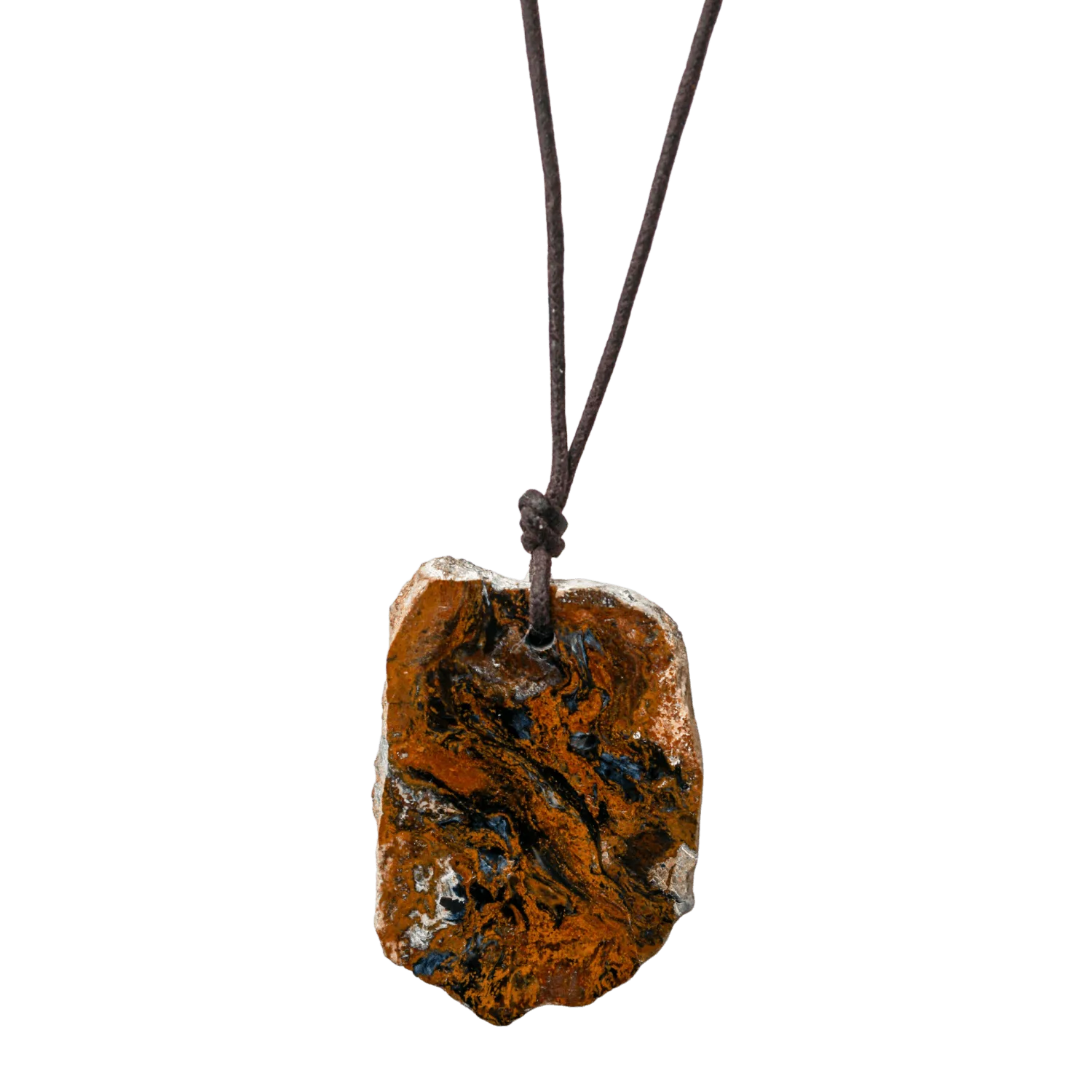
- Pyrite Donut Necklace with Red Activation String: The Mini Pyrite Donut Necklace sits on a Red Activation String and is designed to rest at the heart center. Because it sits against skin and a cord, it picks up more oils and moisture than a pendant on a metal chain, so it needs a quick wipe after each wear.
- Dioptase Pendant Necklace: Dioptase is described as the stone of the compassionate heart, working at deep emotional layers. If you are drawn to heart-centered work but want a stone that is not iron-based, dioptase is a different material with different care needs, so do not apply pyrite cleaning advice to it.