Quick Answer
Most children can start playing with rainbow blocks around 12 to 18 months, but always supervise and choose a set with no small parts if your child still mouths objects.
Why Age Matters for Block Play
Blocks are more than toys—they help develop fine motor skills, spatial awareness, and creativity. The right age to start depends on your child's developmental stage, not just their birthday. A one-year-old explores by mouthing and banging, while a three-year-old builds towers and tells stories.
Safety First: What to Check
Before giving blocks to a baby or toddler, check for splinters, sharp edges, and small pieces that could be a choking hazard. Natural wooden blocks like those in the Rainbow blocks set are sanded smooth and coated with safe finishes, but always inspect each piece. For children under three, avoid blocks smaller than 1.5 inches in any dimension.
Frequently Asked Questions
What is the minimum age for rainbow blocks?
Most manufacturers recommend age 3+ due to small parts, but if your child no longer mouths objects and you supervise closely, you can introduce them around 18 months. Always check the specific product's safety labeling.
Can a 1-year-old play with wooden blocks?
Yes, but only with large, chunky blocks that cannot be swallowed. The Rainbow blocks set includes pieces that vary in size, so sort out any that are smaller than a toilet paper roll before giving them to a 1-year-old. Always stay within arm's reach. For babies, choose blocks that are too big to fit in their mouth.
What skills do blocks teach at different ages?
At 12-18 months, blocks help with grasping, dropping, and cause-and-effect. At 2-3 years, stacking and knocking down builds hand-eye coordination. At 4+, children use blocks for pretend play, storytelling, and early math concepts like balance and symmetry.
How many blocks does a toddler need?
A set of 20-30 blocks is plenty for a 1-2 year old. The Rainbow blocks in sack - 100 pcs is better suited for ages 3 and up, when children can handle more pieces and build complex structures. You can start with a smaller subset and add more as they grow. Start with fewer blocks and increase the count as your child's attention span and coordination develop.
Product Spotlight
-
Rainbow blocks in sack - 100 pcs: Our Wooden Montessori toys improve senses, they are soft to the touch, they catch your eye with natural colours and they smell of wood. This sensory richness makes the Rainbow blocks set engaging for toddlers who learn through touch, sight, and smell.
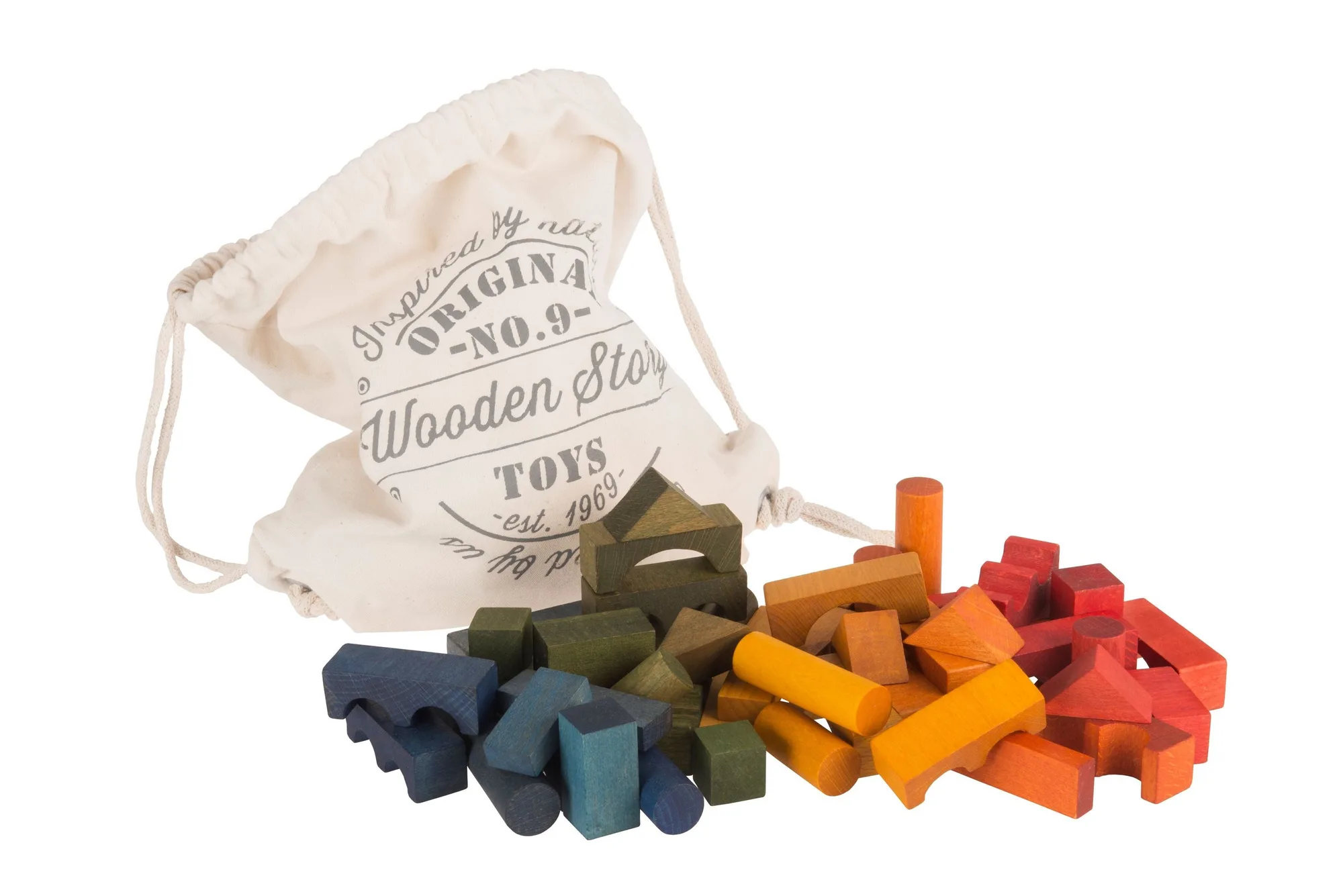
Rainbow blocks in sack - 100 pcs