Quick Answer
To make the most of realistic play food in a pretend kitchen, focus on a simple setup with accessible storage, a regular cleaning routine, and open-ended play prompts that spark imagination.
Why Realistic Play Food Boosts Pretend Play
Realistic play food helps children role-play everyday scenarios, like cooking dinner or running a restaurant. This type of play builds vocabulary, social skills, and problem-solving as kids decide what to serve and how to share.
The Skillmatics 100 Most Real Play Foods set includes 100 sturdy pieces, from snacks to mains and desserts. With so many options, children can explore global dishes and cultures, making each play session feel fresh and engaging.
Trade-Offs: Realistic vs. Simple Play Food
Realistic play food often has more detail, which can inspire richer storytelling but may require more careful storage to avoid losing small pieces. Simple play food is easier to clean and store but might not spark the same level of imaginative detail.
For a balance, choose a set with a mix of recognizable items and sturdy construction, like the 100 Most Real Play Foods set, which is built for frequent play.
How to Set Up, Organize, and Clean Realistic Play Food
- Choose a dedicated storage spot: Pick a low, open bin or basket near the pretend kitchen. This makes it easy for kids to see and reach the play food, encouraging independent play and cleanup. Check that the bin is not too deep, so small pieces don't get lost at the bottom.
- Sort play food by type: Group items into categories like fruits, vegetables, mains, and desserts. Use small containers or dividers to keep each group separate, making it simpler for kids to find what they need. Label each container with a picture or word to help pre-readers participate in cleanup.
- Rotate the play food regularly: Every few weeks, swap out some items and add others from your collection. This keeps the pretend kitchen feeling new and encourages kids to try different play scenarios. Store rotated items in a separate container so you remember what you have.
- Clean play food safely: Wipe down plastic play food with a damp cloth and mild soap, then air dry. Avoid submerging items that have printed details, as this can wear off the design. Check for any loose parts or damage during cleaning and remove broken pieces.
- Set up play prompts: Create simple scenarios like 'cook a dinner for a family' or 'run a fruit stand' to guide play. Use the play food to introduce new foods and cultures, like making a meal with global dishes from the set. Let your child lead the story, and only step in when they ask for help.
Play Food That Supports Your Setup
-
100 Most Real Play Foods | Play Food for Realistic Pretend Play (Ages 3+): This play set comes with 100 sturdy play foods, including snacks, mains, and desserts from a variety of global dishes. The variety and durability make it easy to rotate items, keep play engaging, and store pieces without worry.
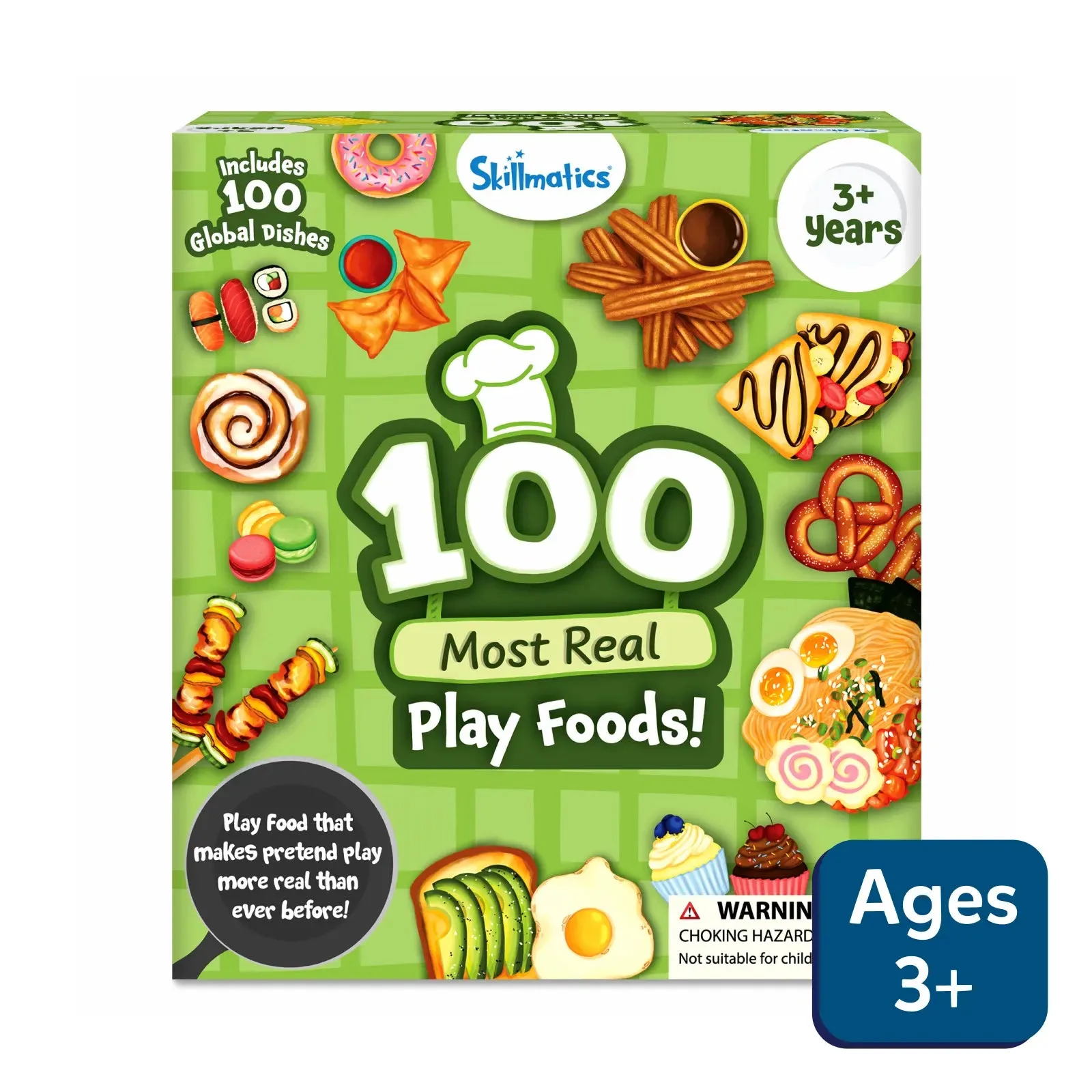
100 Most Real Play Foods | Play Food for Realistic Pretend Play (Ages 3+)