Quick answer
A nose cone that drops in with no resistance is almost always the wrong diameter for the tube, or the tube has swelled or worn at the mouth. Measure the outside diameter of the body tube with calipers and match it to the nose cone's stated diameter before adding tape or glue. If the diameters match and the cone still rattles, add friction tape to the shoulder in thin layers until it holds firmly but still twists out by hand.
Confirm the diameter match before anything else
Most loose-fit complaints trace back to mixing nominal sizes. A 20mm nose cone will not seat in a 40mm tube no matter how much tape you add, and a 2.6-inch cone will not fit a 2.6-inch tube from a different manufacturer if the wall thickness differs. Measure the tube's outside diameter at the mouth, then compare it to the nose cone's stated diameter. If they differ by more than about a millimeter, stop and order the matching size rather than building up the shoulder.
Check the shoulder, not just the cone
The shoulder is the cylindrical section that slides inside the tube, and it is where fit is actually decided. A shoulder that is too short will let the cone wobble even when the diameter is correct. A shoulder that is too long can bottom out on the motor mount or recovery hardware before the cone seats. Slide the cone in without tape and watch where it stops. If it stops before the shoulder is fully inserted, something inside the tube is blocking it, and the fix is to shorten the shoulder or move the obstruction, not to add friction material.
Build friction in thin layers
When the diameter and shoulder are correct, add friction with tape rather than adhesive. Apply one wrap of masking tape around the shoulder, test the fit, then add another wrap only if needed. Two or three wraps is typical for a snug friction fit. Avoid wrapping the entire shoulder in one thick layer, because that creates a high spot that can crack the tube mouth on insertion. For competition or high-power flights where the cone must stay put under ejection, a small piece of tape over the seam is a better backup than a tighter friction fit.
When the tube, not the cone, is the problem
Cardboard tubes swell with humidity and wear at the mouth after repeated flights. If a cone that used to fit now drops straight through, inspect the tube mouth for a flared or crushed edge. A thin ring of CA glue applied inside the mouth and sanded smooth can restore the original diameter. If the tube is crushed or delaminated, replace the tube section; no amount of nose cone adjustment will fix a deformed airframe.
Diagnosis: symptom, cause, action, stop point
- Cone drops in with no resistance and rattles: The nose cone diameter is smaller than the tube's actual inside diameter, or the tube mouth has worn or swelled. Measure both parts before adding material. If the diameters differ by more than 1mm, order the correct size instead of building up the shoulder.
- Cone seats but wobbles side to side: The shoulder is too short for the tube, so it cannot stabilize the cone. This is common when swapping cones between kits from different manufacturers. If the shoulder is less than about one tube diameter long, choose a cone with a longer shoulder or add a coupler sleeve inside the tube mouth.
- Cone fits at home but loosens at the field: Humidity and temperature change the tube diameter, and repeated insertions polish the shoulder smooth. Tape that felt snug in the workshop can slip after a few flights. Re-test friction before every flight and carry tape in your range box. If the cone must survive ejection, use a positive retention method rather than relying on friction alone.
Matching cones for common airframes
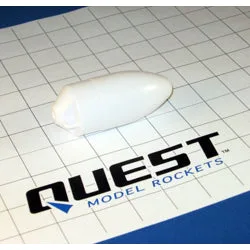
- 20mm Plastic Nose Cone - Q20075: This 20mm plastic nose cone is designed for model rocket applications, offering a ready-to-use component in a bright orange finish, and measures 20mm in diameter for compatibility with corresponding rocket body tubes. If your tube mouth measures 20mm, this is the direct replacement. The orange color also makes the cone easy to spot on the field and in tall grass.
- 40mm Plastic Nose Cone - Q20400: This 40mm plastic nose cone is a blow-molded, one-piece component with a 40mm diameter that fits standard body tubes of matching size. The one-piece blow-molded design means there is no seam or separate tip to align, so fit issues are limited to the shoulder and tube mouth. Measure your tube before ordering, because 40mm is a different airframe class from 20mm.
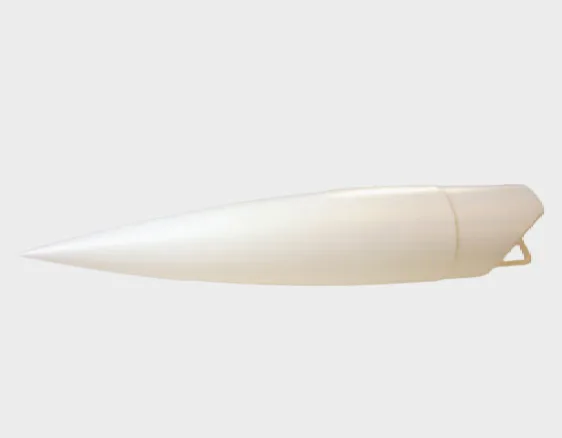
- AeroTech 2.6 inch 5:1 Ogive Plastic Nose Cone - 11261: The same nose cone supplied with AeroTech rocket kits, 2.6 inch diameter by 13 inch length, made from blow molded plastic with a shock cord attachment eyelet, weighing 3.75 oz. (106 g). The molded eyelet gives you a defined shock cord anchor, which matters when the cone must stay attached during ejection. At 106 grams, it is heavy enough that friction fit alone may not hold under high-speed deployment, so plan a positive retention method.