Quick answer
Choose Rommel At Gazala if you want a complete, self-contained operational game for two players about the May 1942 battle for the Gazala Line. Choose Nations At War: Desert Heat 2nd Edition Companion if you already own a Nations At War core game and want to add desert scenarios with Italians, Germans, Vichy French, British, Commonwealth, American, and Free French formations. They are not substitutes: one is a standalone battle game, the other expands an existing tactical system.
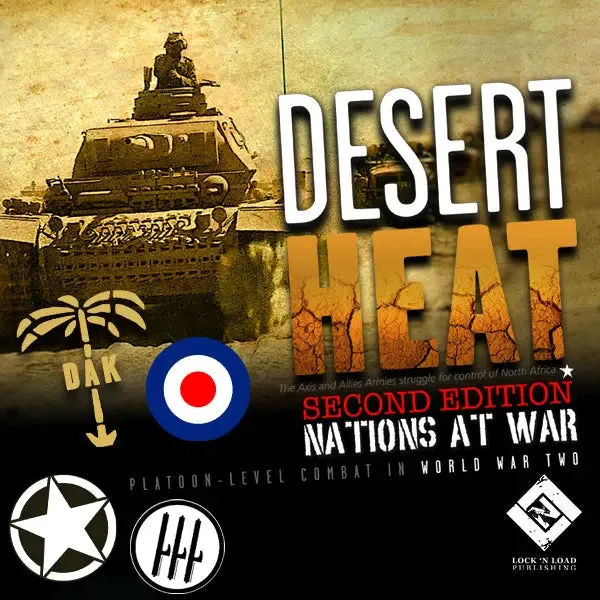
Nations At War: Desert Heat 2nd Edition
Scale is the real dividing line
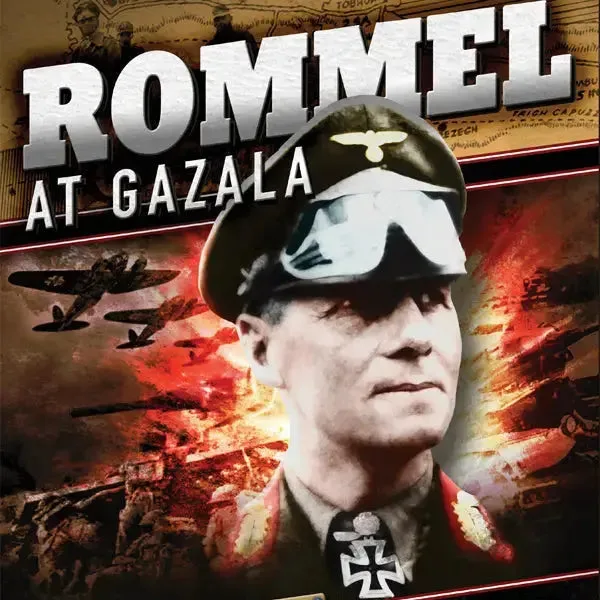
Rommel At Gazala puts you in command of divisions, not individual tanks. That changes what a turn feels like: you are deciding where armour should be concentrated and how fast it can get around or through a fortified line, while the British player reacts to where the weight is going. The Gazala Line itself is the problem to solve, with minefields in front and Tobruk behind, and the Axis player's route around the end of it is the historical dilemma the game is built on.
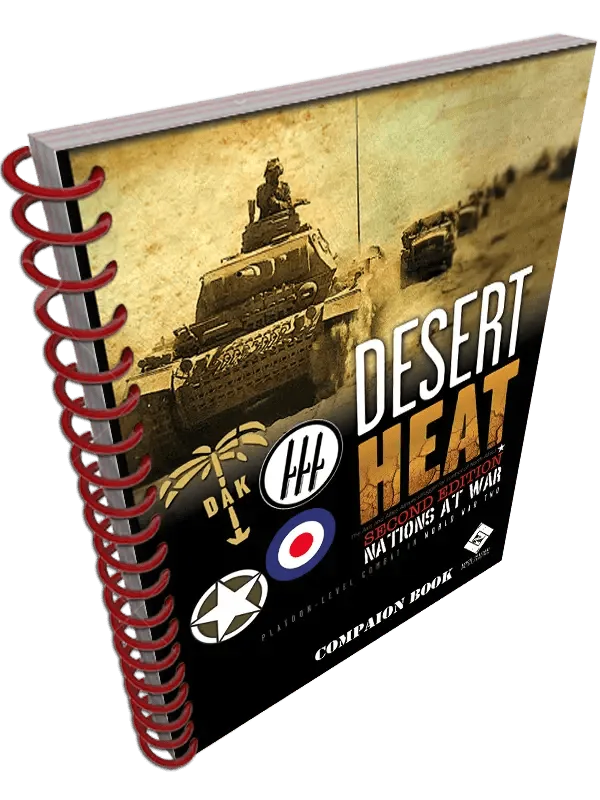
Nations At War: Desert Heat 2nd Edition Companion works at formation scale within the Nations At War system. You take a formation and put it somewhere it can hurt something, and the desert's long sight lines mean armour and anti-tank guns settle most of what happens. If you want to think about individual tank matchups and dust clouds on the horizon, this is the closer fit. If you want to think about whether an entire division can swing around a flank in time, Gazala is the closer fit.
What you actually need on the table
Rommel At Gazala is listed as a standalone product, so the decision is mostly about whether the battle interests you and whether you have an opponent for a two-player operational contest. The catalog does not list optional components or expansions for it, so treat it as a complete box rather than a system you will keep adding to.
Desert Heat 2nd Edition Companion is explicitly a companion, which means it assumes you already have the Nations At War core rules and components. The catalog does not list which core products are required, so check your existing collection before ordering. This is the single most common way to buy the wrong thing here: the word companion in the title is doing real work.
How the two play differently in practice
In Gazala, the Axis player wins on speed and concentration, getting armour through or around before the British can react to where it went. That rewards a plan you commit to early and a willingness to accept risk on one flank. The British player's job is reading the axis of advance and shifting reserves in time, which is a different kind of pressure.
Desert Heat scenarios lean on the desert's openness. You see the dust before you see the tanks and have to decide what to do while they are still a long way out, so anti-tank guns and armour placement matter more than terrain tricks. Infantry still has a role, but the long sight lines mean the armour fight usually decides the scenario. If you prefer games where cover and close terrain do the work, neither of these is the natural pick, and a Western Front set such as Nations At War: White Star Rising 2nd Edition Companion will suit you better.
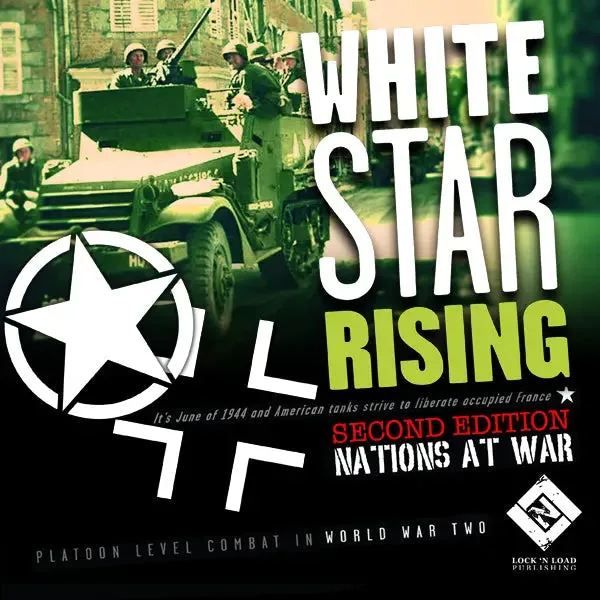
Nations At War: White Star Rising 2nd Edition
Cost and commitment
At catalog prices, Rommel At Gazala is the larger single outlay and Desert Heat is the smaller one, but that comparison is misleading on its own. Gazala includes everything you need for its battle. Desert Heat only makes sense once the core game is already on your shelf, so the true cost of the Desert Heat route is the core plus the companion.
If you are deciding between the two as a gift or a first desert game, Gazala is the safer standalone purchase. If you are already inside the Nations At War system and want more North Africa scenarios, the companion is the cheaper way to extend what you own.
Trade-offs at a glance
- Standalone versus companion: Rommel At Gazala is a complete operational game. Desert Heat 2nd Edition Companion requires a Nations At War core game you may not own. Check your shelf first. If you do not own a Nations At War core, Gazala is the cleaner purchase.
- Divisions versus formations: Gazala asks you to move divisions and time a flanking move around a fortified line. Desert Heat asks you to place formations and win the armour and anti-tank duel across open ground. Pick the level of command you find more interesting, not the one with more counters.
- One battle versus many scenarios: Gazala is built around a single historical situation with two sides. Desert Heat spreads across multiple nationalities and matchups within the desert war. Want replay variety? Desert Heat. Want one battle to master? Gazala.
- Terrain preference: Desert sight lines favour armour and anti-tank guns, with infantry in a supporting role. If you prefer hedgerows, bocage, and city fighting, the Western Front companion is the better match. Terrain taste decides more games than theme does.
Product facts
- Rommel At Gazala: Rommel At Gazala covers May 1942 at operational scale, with the Gazala Line fortified by minefields in front and Tobruk behind, and lets you take either the Axis or the Eighth Army. You are moving divisions rather than tanks, so planning and reaction speed matter more than individual vehicle stats. It is a complete two-player battle rather than an add-on.
- Nations At War: Desert Heat 2nd Edition Companion: Nations At War: Desert Heat 2nd Edition Companion covers armored warfare in the desert with Italians, Germans and Vichy French against British and Commonwealth troops, Americans and Free French, including Panzer IIIs and IVs and Tigers. It is a scenario and formation companion, so it extends a Nations At War core game rather than standing alone. The wide national mix gives you more matchup variety than a single-battle game.
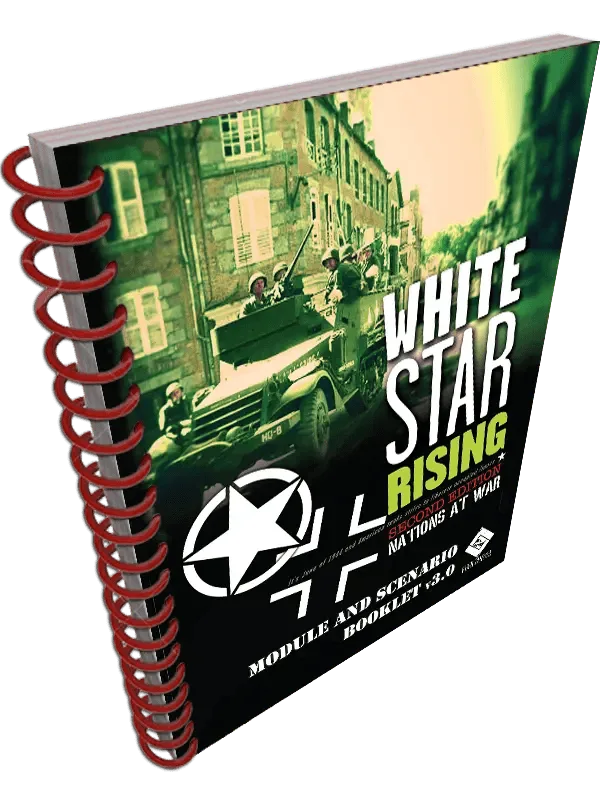
- Nations At War: White Star Rising 2nd Edition Companion: Nations At War: White Star Rising 2nd Edition Companion covers the Western Front from the Normandy hedgerows to the Rhine, including Operation Cobra, Aachen, and the Ardennes in December. If you want close terrain and bocage rather than open desert sight lines, this is the Nations At War companion to pick instead of Desert Heat.
Which should you buy?
Best for
- Two-player groups who want a complete, standalone operational game about the Gazala Line in May 1942
- Players who enjoy committing to a flanking plan and reacting to an opponent's axis of advance
- Buyers who want one box that plays without needing a core set
Not for
- Solo players or groups wanting many different scenarios and nationalities out of one purchase
- Anyone who does not already own a Nations At War core game and is considering Desert Heat as a first buy
- Players who prefer close terrain, bocage, or city fighting over open desert sight lines