Quick answer
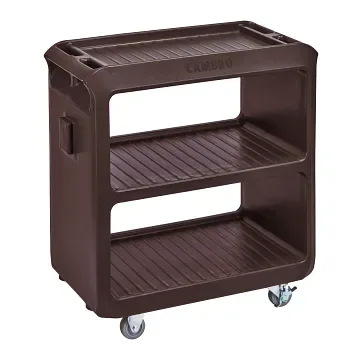
Set up your Service Cart Pro by attaching the handle, installing shelves at the right height, and checking wheel locks. For daily use, load heavier items on the bottom shelf and roll the cart slowly through doorways.
Why setup details matter for daily performance
A Service Cart Pro that is assembled with uneven shelves or loose hardware will wobble under load and wear out wheels faster. Taking a few extra minutes during setup prevents these problems and keeps the cart stable for years.
The cart is designed for front and back of house use, so it needs to handle tight turns, door thresholds, and wet floors. Correct assembly is the foundation for that reliability.
Choosing the right size for your operation
The Service Cart Pro line comes in small, medium, and large sizes. A small cart works well for catering equipment or office supplies in a compact kitchen. A large cart is better for bulk food pans, bus boxes, or dish racks in a high-volume setting.
If you regularly move full bus boxes or sheet pans, go with the large option. For occasional transport of small items, the small or medium size saves floor space and is easier to maneuver.
Step-by-step setup and daily use guide
- Attach the handle and check alignment: Slide the handle into the pre-drilled holes on the cart frame. Tighten all bolts evenly with a wrench. Do not overtighten, as this can strip the threads. After tightening, push the cart a few feet to confirm the handle does not wobble. An uneven handle will cause the cart to pull to one side when rolling.
- Install shelves at the correct height: Position each shelf on the corner brackets so it sits level. Use the same bracket slot on all four corners. Common mistake: using different slots on one side makes the shelf tilt and reduces load capacity. Check with a level before loading. A tilted shelf can cause pans to slide off.
- Lock the wheels and test stability: Press down each wheel lock until it clicks. Roll the cart forward and backward to confirm all locks engage. If a lock does not click, remove the wheel and reinsert it. Never use a cart with a faulty lock on a sloped floor. Test locks weekly, especially after cleaning the wheels.
- Load heavy items on the bottom shelf: Place bulk food pans, dish racks, or heavy equipment on the lowest shelf. Lighter items like bus boxes or catering supplies go on the top shelf. This lowers the center of gravity and prevents tipping during sharp turns. Overloading the top shelf is the most common cause of cart instability.
- Roll through doorways at a slow, steady pace: Approach doors straight on. If the cart is wide, turn it slightly to clear the frame. Never yank the cart sideways, as this can bend the handle or pop a wheel lock. For heavy loads, ask a second person to hold the door open. A sudden sideways pull is the fastest way to damage a wheel assembly.
Product facts
-
Service Cart Pro: The Service Cart Pro is a complete line of small, medium, or large carts designed to elevate operational efficiency in any type of foodservice operation. You can pick the exact size that fits your kitchen layout and typical load, avoiding wasted space or an undersized cart.
Service Cart Pro