Quick answer
Set up a pretend grocery store in your living room using the Shopping Grocery Trolley & Bag, then let your child fill the trolley, check off a list, and bag their items for a complete roleplay experience.
Why a shopping trolley works for toddler play
A wooden shopping trolley gives toddlers a familiar, grown-up activity they can control. Pushing, loading, and unloading builds gross motor skills while the pretend shopping list encourages early literacy and number awareness. The detachable fabric bag adds a real-world touch that makes the game feel authentic.
How to set up a pretend grocery store in 5 steps
- 1. Gather play food and empty containers: Collect play fruit, veg, boxes, and empty cartons from your kitchen. Arrange them on a low table or shelf so your child can reach everything. A common mistake is using too many items – stick to 8–10 pieces so the trolley doesn't overflow and the game stays manageable. Fewer items keep the activity focused and less overwhelming.
- 2. Write a simple shopping list on the chalkboard: Use the mini chalkboard on the trolley to draw or write 3–4 items your child needs to find. For pre-readers, draw simple pictures (apple, carrot, box). A common mistake is writing a long list – toddlers lose interest quickly, so keep it short and check off each item together. Drawing pictures works better than words for non-readers.
- 3. Let your child push the trolley and pick items: Encourage them to walk around the store, select each item from the list, and place it in the top compartment or lower shelf. A common mistake is directing every move – let them decide which item goes where, even if it seems random. The sorting happens naturally over time. Resist the urge to correct; let the child lead.
- 4. Use the fabric bag for checkout and carry-home: When the trolley is full, have your child transfer items into the detachable fabric shopping bag. Pretend to scan each item or count them together. A common mistake is skipping the bag step – the bag adds a second motor task (lifting, carrying) and extends the play session. The bag doubles the play value by adding a carry-home phase.
- 5. Repeat with a new list or swap roles: Once items are bagged, let your child be the cashier or store owner while you become the shopper. A common mistake is ending the game after one round – swapping roles can double the playtime and build language skills as they describe items to you. Role reversal keeps the activity fresh without new props.
Toy spotlight
-
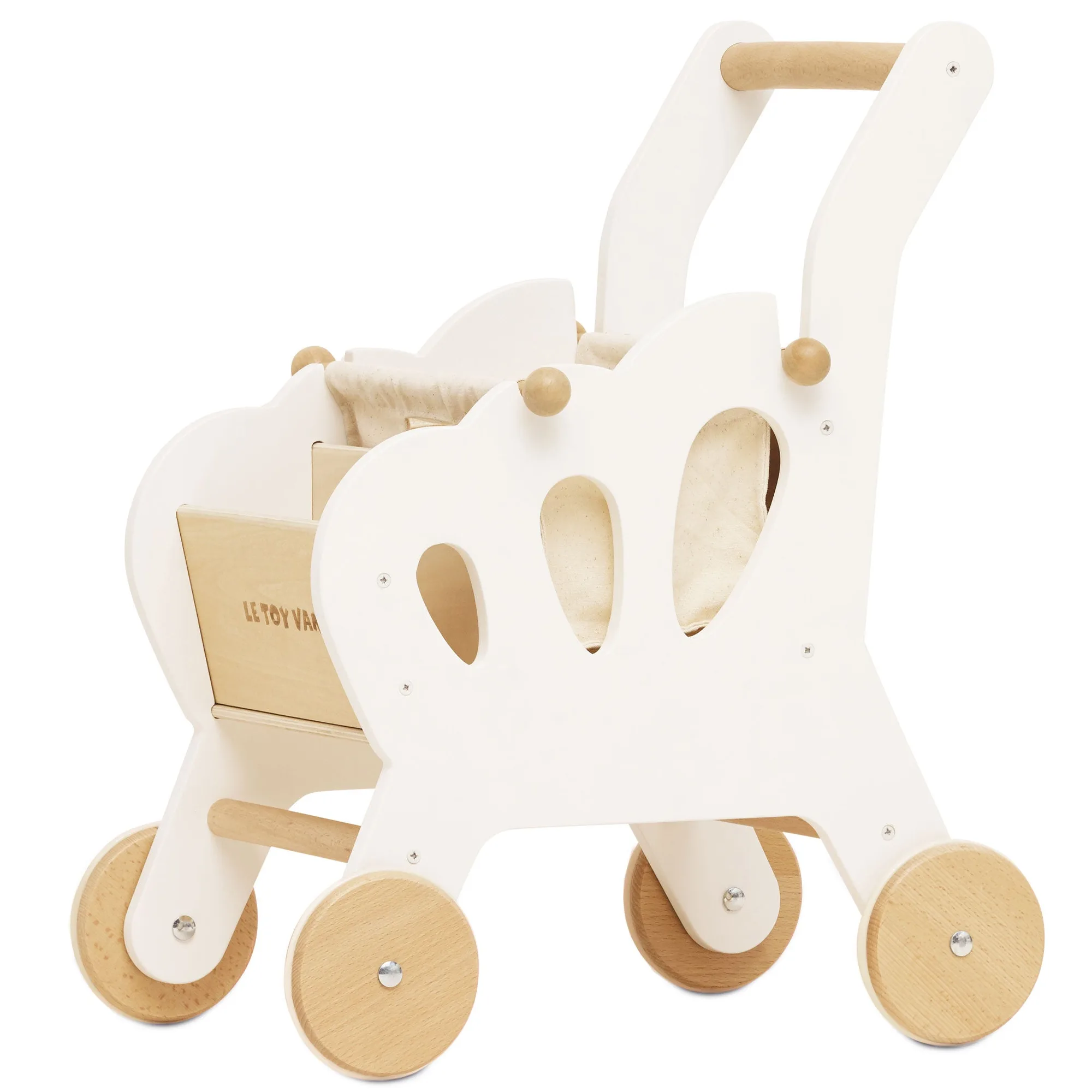
Shopping Grocery Trolley & Bag: Two spacious compartments, a lower storage shelf, a detachable fabric shopping bag and a mini chalkboard for shopping lists. The compartments let kids sort items (fruit vs. cans), the shelf holds bulky boxes, and the chalkboard turns list-making into a reusable drawing activity.
Shopping Grocery Trolley & Bag