Quick answer
A shorty offers more rear coverage than a thong but less than a classic brief, making it ideal for those who want a cheeky silhouette without constant adjustment. To find your perfect shorty, focus on rise height, side width, fabric stretch, and the level of back coverage you prefer.
Shorty vs brief: what’s the difference?
A shorty typically has a lower rise and narrower sides than a classic brief, with a cut that sits just below the hipbone. The back coverage is deliberately reduced — often called "cheeky" — so it shows more skin than a full brief but still covers the glutes partially. This makes shorties a popular choice under low-rise jeans, skirts, or any outfit where you want a smooth line without a full brief peeking out.
The trade-off: because the sides are narrower and the back is cut higher, a shorty can shift or ride up if the fit isn't right. That’s why fabric stretch and waistband snugness matter more here than with a full-coverage brief.
When a shorty might not be your best option
If you prefer full rear coverage or need a seamless look under tight leggings, a shorty may leave you adjusting throughout the day. In those cases, a seamless thong or a high-waisted brief could serve you better. Also, if your waist-to-hip ratio is very high or low, the standard shorty rise may sit at an awkward spot — try a mid-rise shorty or size up for a more forgiving fit.
How to choose your shorty in 3 steps
- 1. Decide on rise height: Measure from your natural waist (narrowest point) to the top of your hip bone. A low-rise shorty sits 2–3 inches below the navel; a mid-rise sits at or just below the navel. If you have a longer torso, a mid-rise shorty is less likely to roll down. Common mistake: choosing a low rise when your torso is long — it will slide down as you move. If you're between rises, go with mid-rise for better stay-put performance.
- 2. Check side width and back coverage: Look at the side seam width: narrow sides (under 1 inch) give a more daring look but can dig in if the elastic is tight. For the back, shorties range from "barely cheeky" (covers ¾ of each cheek) to "very cheeky" (covers half). If you plan to wear the shorty under low-rise pants, choose a back that doesn't extend above your hipbone. Common mistake: picking a very cheeky cut for high-waisted bottoms — the waistband will overlap awkwardly. For daily wear under most clothing, aim for a back coverage that matches your pant rise height.
- 3. Evaluate fabric stretch and waistband snugness: Stretch lace (like the geometric pattern in the Eclatante shorty) offers gentle hold without compression. Mesh or guipure blends (like the Tara shorty) provide more structure and opacity. The waistband should sit flat against your skin without leaving red marks — if you can easily pull it 2 inches away from your body, it's too loose. Common mistake: assuming all stretch fabrics fit the same — lace with less elastane may gap at the waist after a few hours. When in doubt, choose a shorty with at least 10–15% elastane content for reliable recovery.
Product facts
-
HUIT - Eclatante - Shorty: Crafted from stretch lace fabric with a geometric pattern, this shorty combines elegance with a textured look. The stretch lace molds to your curves without digging in, making it a good choice if you want a shorty that stays in place while still feeling luxurious.
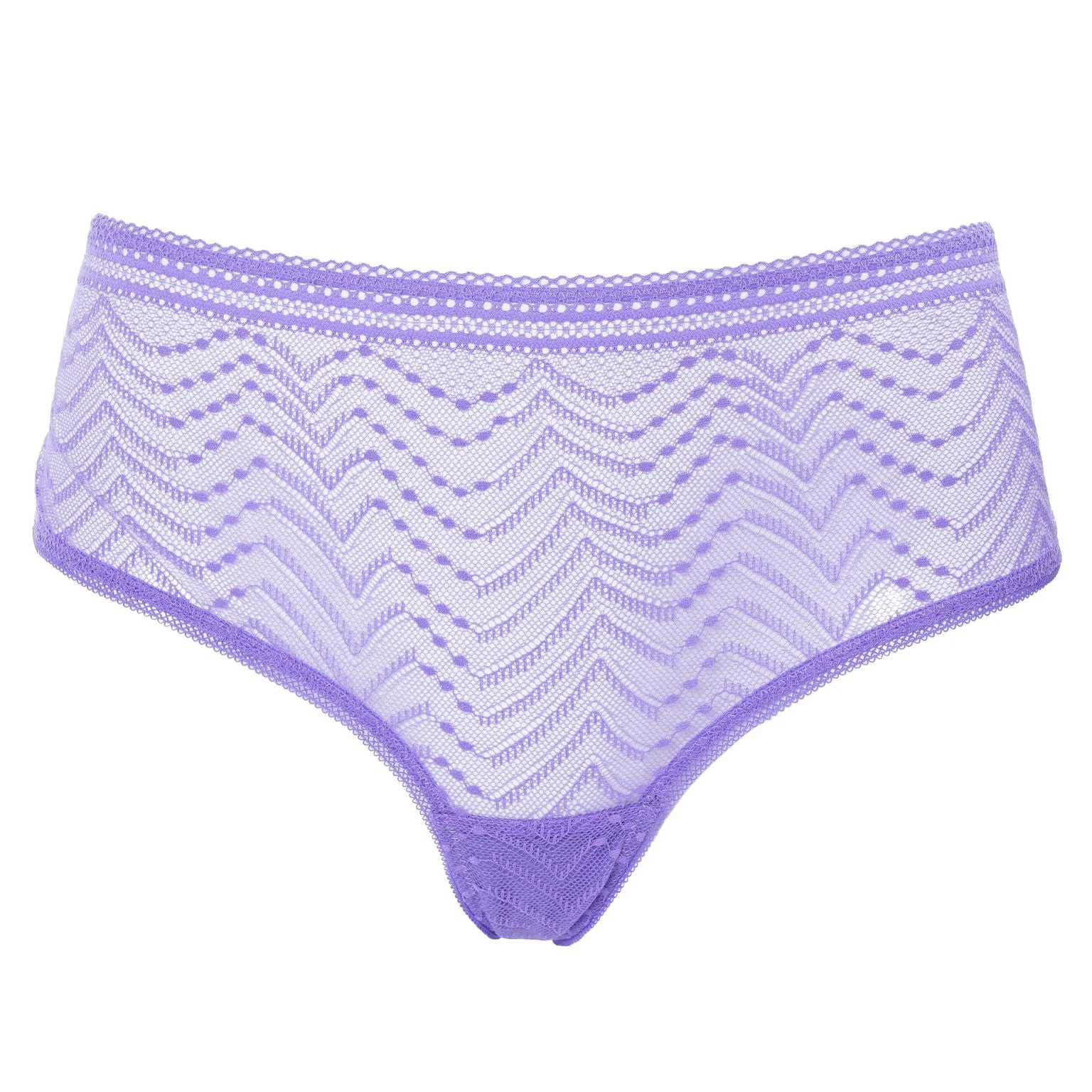
HUIT - Eclatante - Shorty
-
HUIT - Tara- Shorty: Guipure and fine mesh in soft stretch floral lace; the back is made of opaque floral mesh for a smooth look under clothing with cheeky partial back coverage. The opaque back panel reduces visible lines, so this shorty works well under fitted skirts or trousers while still giving you that cheeky silhouette.
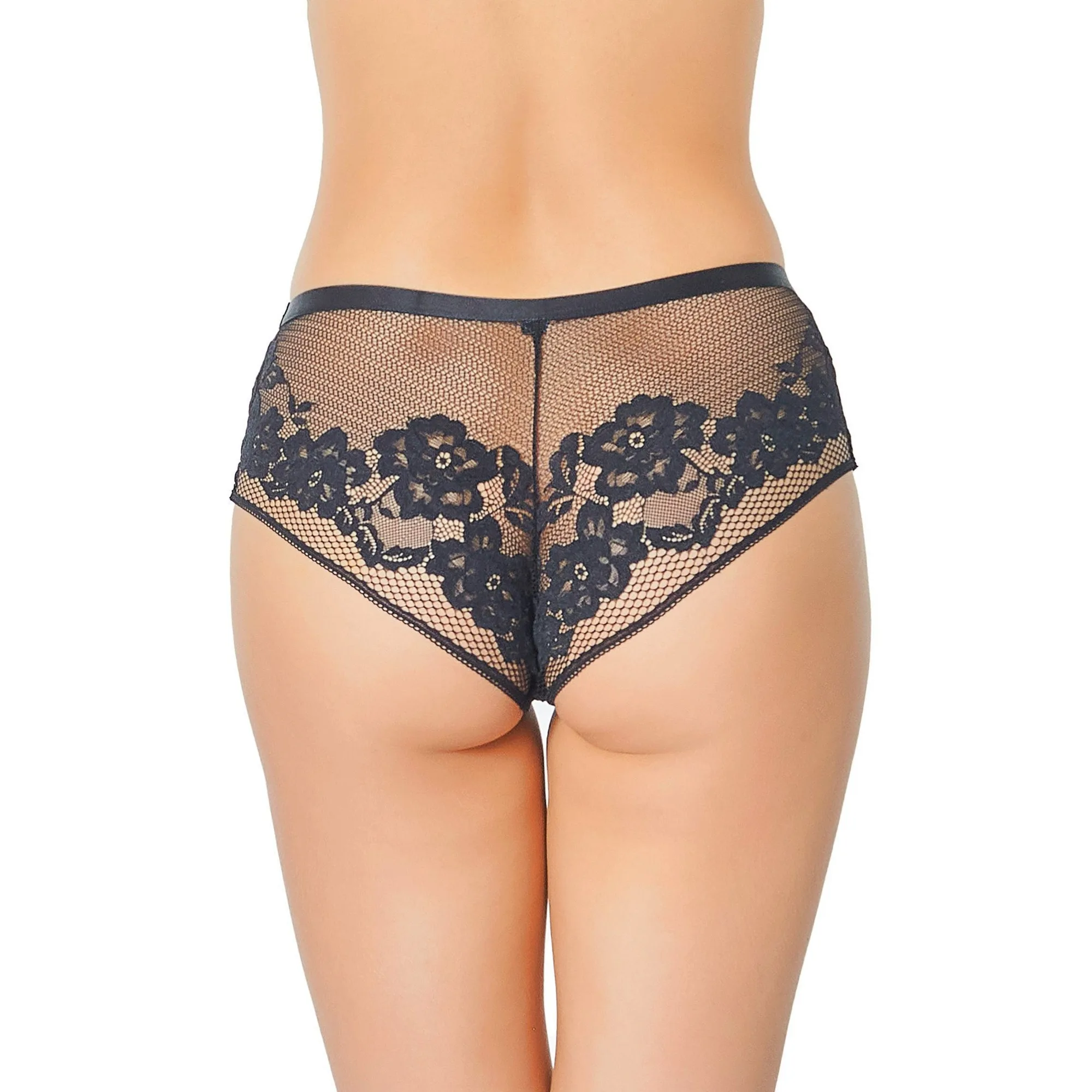
HUIT - Tara- Shorty