What to Expect from the Sigma 150-600mm Contemporary
The Sigma 150-600mm F5-6.3 DG OS HSM Contemporary for Nikon F is a hyper-telephoto zoom designed for photographers who need reach without the weight of a Sports-series lens. It covers a 150-600mm focal range, making it a strong candidate for wildlife, bird, and outdoor action photography. The lens uses an FLD (F Low Dispersion) glass element and three SLD (Special Low Dispersion) elements to control chromatic aberration, and Sigma claims distortion is well compensated throughout the zoom range.
This buying guide focuses on real trade-offs: what the lens does well, where it compromises, and whether it fits your shooting style. We rely on the supplied catalog facts rather than external reviews or hypothetical performance.
Key Specs and Build Details
-
Sigma 150-600mm F5-6.3 DG OS HSM Contemporary For Nikon F: The Sigma 150-600mm F5-6.3 DG OS HSM Contemporary For Nikon F is a lightweight and compact construction compared to the Sports version, enabling easier handheld photography for longer periods. Weight is a primary concern for wildlife photographers who hike or shoot handheld. The Contemporary's lighter build makes it more practical for extended field use.
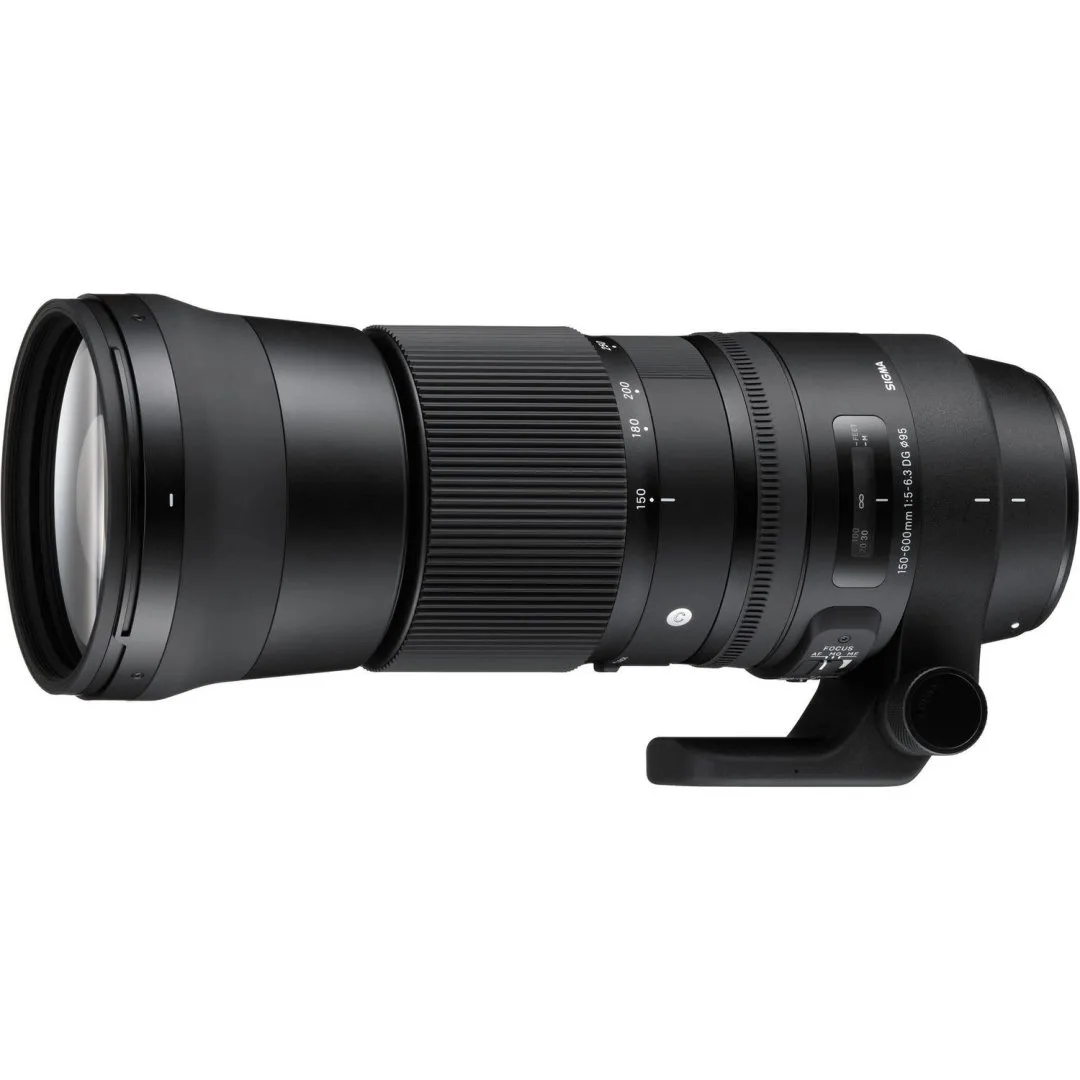
Sigma 150-600mm F5-6.3 DG OS HSM Contemporary For Nikon F
-
Sigma 150-600mm F5-6.3 DG OS HSM Contemporary For Nikon F: The tripod socket is detachable and can be replaced with a rubber protective cover to further reduce weight. Removing the tripod socket saves weight when carrying the lens in a bag or shooting handheld. The magnesium socket is light and strong when you need tripod stability.
-
Sigma 150-600mm F5-6.3 DG OS HSM Contemporary For Nikon F: The lens is dust and splash-proof, and the forefront lenses have a water and oil-repellent coating. Weather sealing matters for outdoor shooting in dusty or damp conditions. The coating makes cleaning easier and helps maintain image quality in challenging environments.
-
Sigma 150-600mm F5-6.3 DG OS HSM Contemporary For Nikon F: Compatible with the newly developed teleconverters (optional). Teleconverters extend reach beyond 600mm, but the supplied information does not specify which teleconverters or the resulting aperture and autofocus performance. Check compatibility before buying.
Optical Performance and Stabilization
The lens incorporates one FLD and three SLD glass elements to minimize chromatic aberration, especially at the telephoto end where hyper-telephoto zooms often struggle. Sigma states that image quality at 600mm is brilliant and distortion is well controlled across the entire range. For bird and wildlife photography, where fine detail and color accuracy matter, this optical design is a meaningful advantage.
The OS (Optical Stabilizer) features an acceleration sensor and offers two modes: Mode 1 for general photography and Mode 2 for panning with moving subjects. In Mode 2, the acceleration sensor works with an updated stabilization algorithm to compensate for horizontal, vertical, or diagonal camera movement regardless of lens position. This is particularly useful for tracking birds in flight or running animals. The autofocus uses a Hyper Sonic Motor (HSM) for quiet and fast focusing, and the AF algorithm is improved by approximately 5% over previous models for continuous AF (AF-C) efficiency.
Handling and Controls for Field Use
The zoom lock switch lets you lock the zoom ring at any focal length, which helps prevent zoom creep when the lens is pointed upward or downward during wildlife shoots. The focus mode switch includes AF, MF, and MO (Manual Override) positions. In MO mode, you can rotate the focus ring to override autofocus even during continuous AF, which is handy for fine-tuning focus on a bird's eye through dense foliage.
For photographers who want to customize focus behavior further, the optional Sigma USB Dock allows adjustment of the MO position's sensitivity. This is an advanced feature not available on all telephoto zooms.
Trade-offs and What the Supplied Information Does Not Settle
The main trade-off between the Contemporary and Sports versions is weight versus build robustness and maximum aperture consistency. The Contemporary is lighter and more portable, but the Sports version is typically heavier and built for more demanding conditions. The supplied information does not include specific weight figures, so compare both models directly if durability is critical.
The lens has a variable aperture of f/5-6.3, which means at 600mm the maximum aperture is f/6.3. This affects low-light performance and autofocus speed in dim conditions. For early morning or late evening wildlife photography, you may need to raise ISO or use a tripod. The supplied information does not specify exact low-light autofocus limits, so test the lens in your typical lighting before a critical shoot.
While the lens is dust and splash-proof, the supplied information does not detail the specific sealing points or temperature ranges. Use common sense in heavy rain or extreme environments. Teleconverter compatibility is mentioned but not specified; confirm with Sigma or the retailer which teleconverters work and what the resulting autofocus and aperture behavior will be.
Who Should Consider This Lens
The Sigma 150-600mm Contemporary for Nikon F is a strong choice for photographers who want a versatile telephoto zoom for wildlife and bird photography but prioritize portability and handheld shooting. It suits hikers, travelers, and those who shoot in good light conditions. If you need a constant aperture, extreme durability, or the absolute best low-light autofocus, consider the Sports version or a prime lens. The Contemporary delivers impressive optical performance in a package that won't weigh you down.