Quick answer
Rinse sippy cup straws with warm water immediately after every use, then deep-clean daily with a straw brush and mild soap. Replace the straw at the first sign of cloudiness, lingering odor, or black specks inside the tube, because mold in a sippy cup straw cannot be scrubbed away once it takes hold.
Why straws are the dirtiest part of the cup
Milk, juice, and smoothies leave a thin film inside the straw that you cannot see from the outside. That film feeds bacteria and mold, especially in the narrow bend where a sponge never reaches. A dedicated straw cleaner for sippy cups solves this by scrubbing the full length of the tube, not just the openings. If you only rinse the straw under the tap, you are cleaning the ends and leaving the middle untouched.
Daily cleaning routine that actually works
Take the straw out of the cup as soon as drinking is finished. Flush warm water through the straw, then push a soapy straw brush through from one end to the other. Rinse again and stand the straw upright to air-dry so water can drain out. A common mistake is letting the straw sit in the sink or a closed cup between uses, which traps moisture and speeds up mold growth. If your child uses the cup at daycare or on outings, pack a spare straw so the dirty one can be cleaned properly at home.
Weekly deep clean and what to check
Once a week, disassemble the cup completely, including the lid and any valve, and wash every part in hot soapy water. Hold the straw up to a bright light and look through it. You are checking for cloudy patches, dark spots, or a sour smell that survives washing. These are the signs that mold in the sippy cup straw has moved beyond surface dirt. If you see them, stop cleaning and replace the straw instead.
Step-by-step: clean, check, and replace sippy cup straws
- Rinse immediately after every drink: Flush warm water through the straw within minutes of your child finishing. Do not let milk or juice dry inside the tube. Checkpoint: if the straw still smells like the drink after rinsing, move to the next step right away.
- Scrub with a straw brush and mild soap: Push a straw cleaner for sippy cups through the full length of the tube, then rinse and air-dry upright. Skipping the brush leaves the middle of the straw untouched. Common mistake: only cleaning the visible ends. The bend is where residue collects first.
- Inspect weekly under bright light: Look through the straw for cloudiness, black specks, or a persistent sour odor. These are signs that mold in the sippy cup straw has taken hold. Checkpoint: if you see any of these, do not try to sterilize it clean. Replace the straw.
- Replace the straw at the first sign of wear: Swap in a new straw when the old one discolors, stays smelly, or feels rough inside. Keep a spare set on hand so the cup is never out of action. Next step: note the replacement date on your calendar so you remember to check again in a few weeks.
Replacement options that keep the cup in rotation
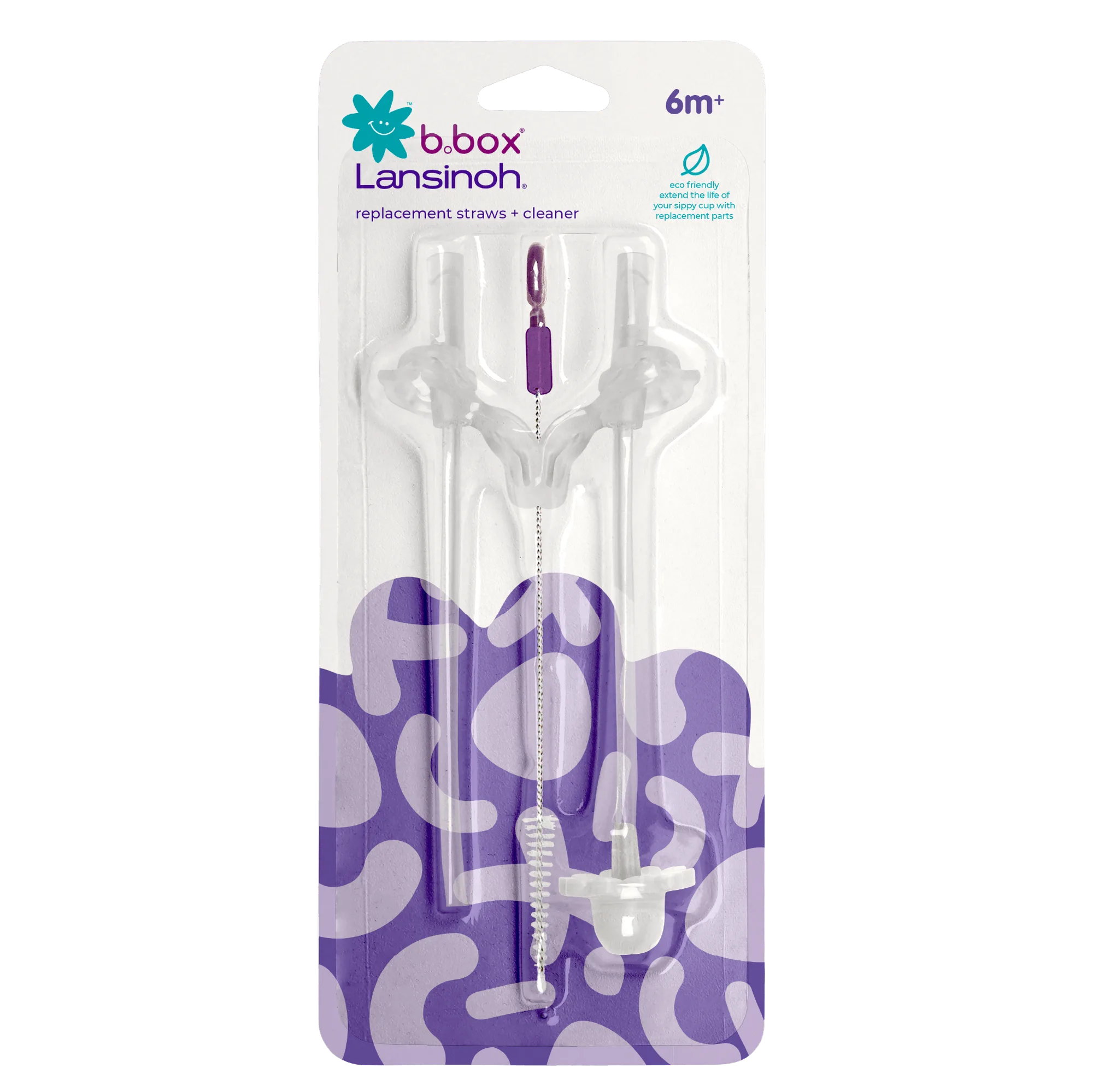
- b.box + Lansinoh Replacement Straws + Cleaner: b.box + Lansinoh Replacement Straws + Cleaner includes replacement straws and a dedicated cleaning brush, compatible with b.box cups. You get both the scrubber and the spare straw in one set, so you can clean thoroughly today and swap in a fresh straw the moment the old one shows wear.