Quick answer
A sleeping bag temperature rating is a lab-tested estimate of the cold a bag can handle, not a guaranteed comfort temperature. The number you should shop by is the comfort or limit rating, matched to your expected overnight low with a margin for wind, dampness, and how warmly you sleep. Treat the extreme rating as a survival figure only.
How a sleeping bag temperature rating is actually tested
Most sleeping bag ratings come from a standardized test that uses a heated mannequin wearing a base layer and a specific sleeping pad. The test measures how the bag's insulation slows heat loss, then converts that into temperature figures. Because the mannequin is a fixed shape and the test room has no wind or humidity swings, the result is a controlled comparison between bags rather than a forecast of your night. Two bags with the same number can sleep differently if one has more room around the shoulders or a different draft collar.
Comfort rating vs limit rating: which number should you use?
The comfort rating is the temperature at which a cold sleeper—often a woman or anyone who runs cold—is expected to stay comfortable. The limit rating is the temperature at which a warm sleeper in a curled position is expected to stay comfortable without shivering. Manufacturers usually print both, and the gap between them can be 10 to 15 degrees or more. For hunting, choose a bag whose comfort or limit rating sits at or below your realistic overnight low, not the optimistic low you hope for.
What a 0 degree sleeping bag meaning actually is
A 0 degree sleeping bag is rated to roughly zero degrees Fahrenheit on the standard scale, usually expressed as a limit rating for a warm sleeper. It does not mean the bag will keep every person comfortable at 0°F. A cold sleeper may want a lower-rated bag or an added liner, while a warm sleeper may be fine at the stated number. The rating also assumes you are wearing dry base layers and sleeping on a pad with enough insulation for the ground temperature.
Why your real-world low differs from the rating
Wind strips heat from the shell, damp air reduces loft, and a poorly insulated pad lets cold climb up from the ground. Eating a large meal and doing light activity before bed raises your core temperature; going to bed cold and hungry makes any rating feel optimistic. If you sleep in a tent with a wood stove, the stove may warm the air for a while, but it usually burns out overnight, so plan for the bag to carry the coldest hours on its own.
How to choose a sleeping bag temperature rating for your hunt
Start with the lowest overnight temperature you realistically expect, then subtract a safety margin of about 10 degrees for a cold sleeper or 5 degrees for a warm sleeper. Check the bag's comfort and limit numbers rather than a single headline figure. If you plan to hunt late-season or sleep at elevation, a zero degree bag gives you room to add a liner on the coldest nights. If you mostly hunt early season, a higher-rated bag saves weight and bulk.
Temperature rating questions hunters ask
Is the temperature rating a comfort or survival number?
It is neither a guarantee nor a survival-only figure. The comfort and limit ratings describe expected comfort for cold and warm sleepers, while the extreme rating is a survival threshold you should not plan around. Shop by comfort or limit, ignore extreme for planning.
Can I make a warmer-rated bag work in colder weather?
You can extend a bag's range with a liner, a warmer sleeping pad, dry layers, and a draft collar, but you cannot add loft that is not there. A bag rated well above your expected low will eventually let cold through no matter how you layer. Accessories help at the margins, not across a 20-degree gap.
Does a lower rating always mean a heavier bag?
Usually, because more insulation and a warmer design add weight and packed size. The tradeoff is warmth versus carry weight, so match the rating to your coldest realistic night rather than buying the lowest number available. Pick the rating for your hunt, not the coldest number on the shelf.
Products that match these ratings
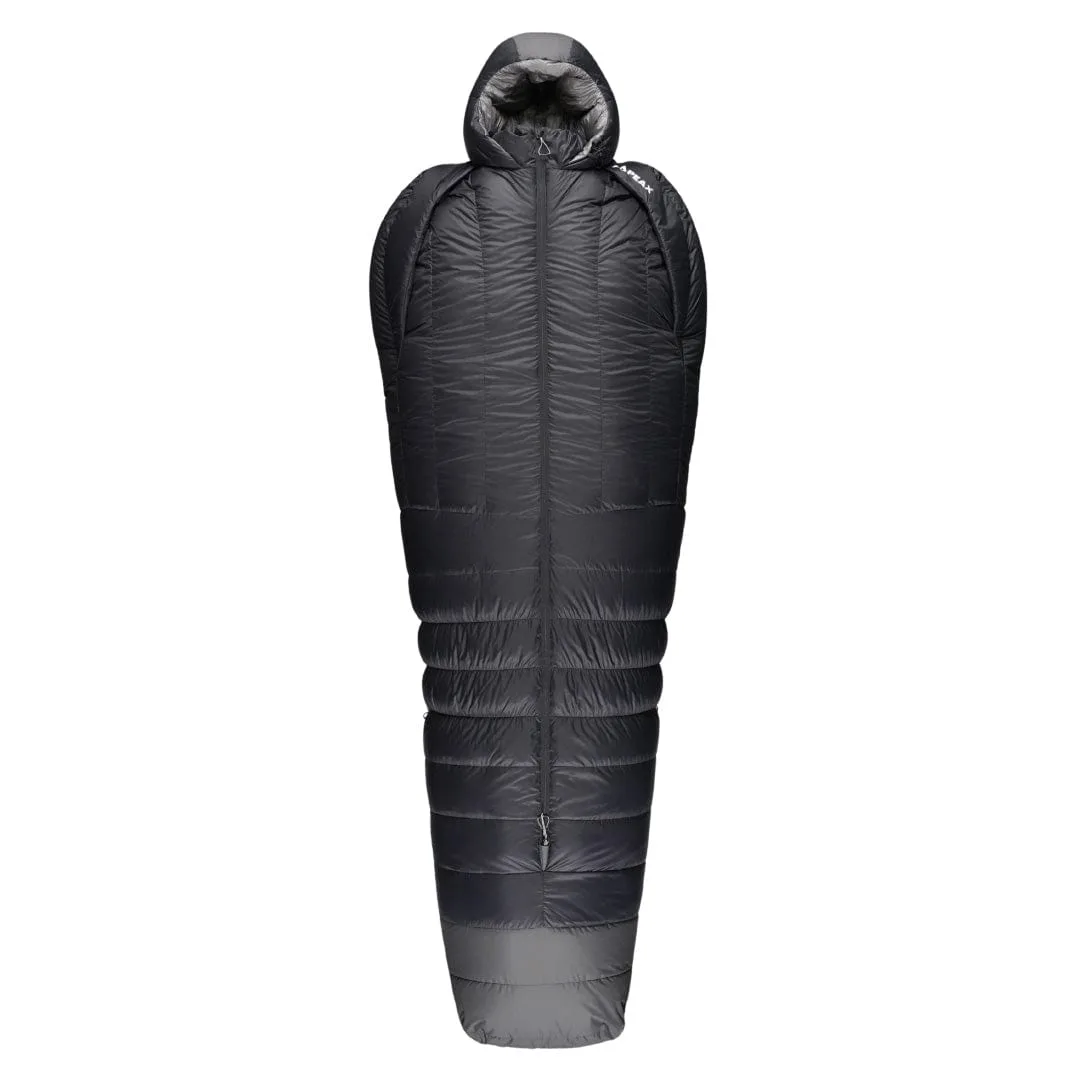
- SOLACE 0 DEGREE SLEEPING BAG: The PEAX Solace 0 degree sleeping bag is built for backcountry hunters facing late-season conditions where warmth, recovery, and dependable sleep are critical. If your hunt regularly pushes into freezing overnight lows, a zero degree bag is the rating class to compare against your expected low and sleep style.