Quick answer
Choose a sports bra for low-impact workouts where sweat and bounce matter, and a nursing bralette for everyday wear and easy feeding access. If you need one bra for both, look for a nursing sports bra or a cami with a built-in shelf bra. Most moms end up with one of each, not one that does everything.
What each bra is actually built to do
A sports bra is designed around movement: it compresses or encapsulates breast tissue, uses moisture-wicking fabric, and often has a racerback or adjustable straps to keep things stable. A nursing bralette is designed around access: it uses nursing clips and a pullover or clip-down structure so you can feed without undressing. Those two goals pull in different directions, which is why the right choice depends on your day, not on which bra is 'better.'
- Sports bra priority: hold everything steady during activity and manage sweat.
- Nursing bralette priority: quick, discreet access and all-day comfort.
- Nursing sports bra priority: a compromise that works for light activity and feeds, but rarely excels at both.
Support: what to expect from each
Sports bras generally offer more support because they're built with compression and a snug band. Nursing bralettes tend to be lighter support, which is fine for lounging, sleep, and errands but may not be enough for running or jumping. If you're larger-busted, a supportive nursing bra or a nursing sports bra will serve you better than a standard bralette for anything high-impact. If you're smaller-busted, a seamless bralette may be all you need for low-impact days.
Nursing access: the deciding factor
This is where the comparison gets simple. A standard sports bra has no nursing clips, so feeding means pulling it up, pushing it aside, or changing entirely, which is impractical with a hungry baby. A nursing bralette has clips or a pullover design made for one-handed access. If you're pumping, a cami with a double-layer system lets you slide flanges through openings in the inner layer for hands-free pumping, which a sports bra can't do. If you're not nursing or pumping, that access doesn't matter, and a sports bra wins on function.
Fabric and comfort for postpartum life
Sports bras usually use breathable, moisture-wicking fabric to keep you dry during activity. Nursing bralettes often use softer, stretchier fabrics like bamboo or silky blends for around-the-clock comfort, including sleep. Postpartum, you may be dealing with leaking, sensitive skin, and temperature swings, so a soft bralette can be kinder for day-to-day wear, while a sports bra is better for the workout itself. Having both means you're not forcing one bra to be comfortable in situations it wasn't made for.
How to choose without overbuying
Start with your week: how many workouts, how many feeds, how many hours in bed. If you work out two or three times a week and nurse the rest of the time, one sports bra and two or three nursing bralettes is a practical rotation. If you're returning to running or higher-impact training, invest in a supportive nursing sports bra rather than layering a bralette under a regular sports bra. And if you're done nursing, a standard sports bra is the simpler, cheaper choice.
Trade-offs to weigh before you buy
- Support vs. access: A sports bra gives you more stability for movement but no nursing clips, so feeding means changing or improvising. A nursing bralette gives you clips and comfort but lighter support. Pick based on whether your priority that day is the workout or the feed.
- Sweat management vs. softness: Moisture-wicking fabric keeps you dry during activity but can feel more technical against sensitive postpartum skin. Bamboo and silky stretch fabrics feel softer for lounging and sleep but aren't designed to manage heavy sweat. Keep one of each rather than expecting one fabric to do both jobs.
- Pumping features: Standard sports bras and basic bralettes have no pumping openings. A pumping cami with a double-layer system lets you pump hands-free without undressing. If you pump regularly, a pumping-specific layer saves more time than either a sports bra or a plain bralette.
Two options that show the difference
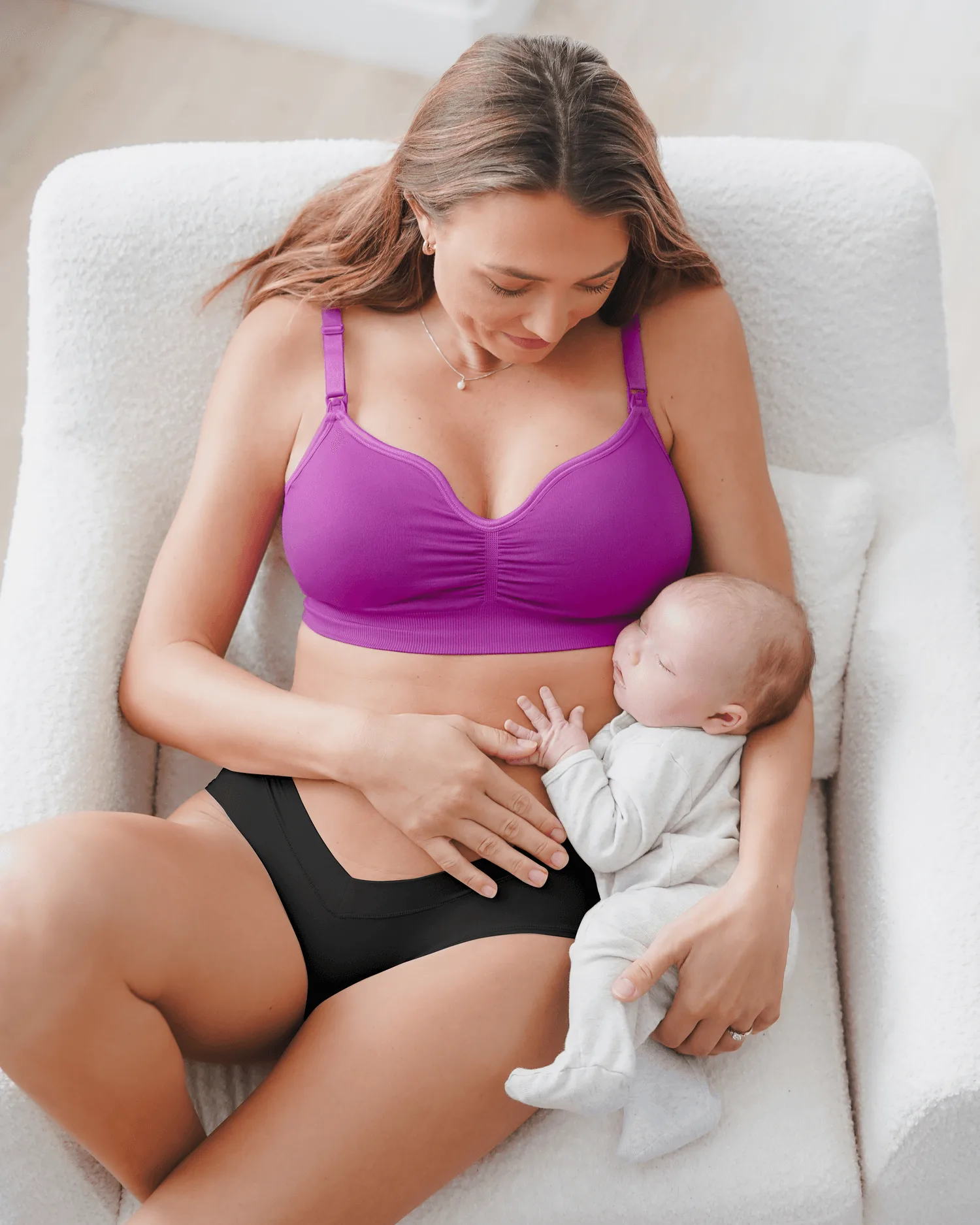
- Tatum Seamless Maternity & Nursing Bralette | Orchid: Pullover maternity and nursing bralette with nursing clips, adjustable straps, removable padding, a sweetheart neckline, and seamless silky stretch fabric for light support. This is the everyday nursing option: easy access for feeds, soft enough for all-day and sleep wear, but not built for high-impact workouts.
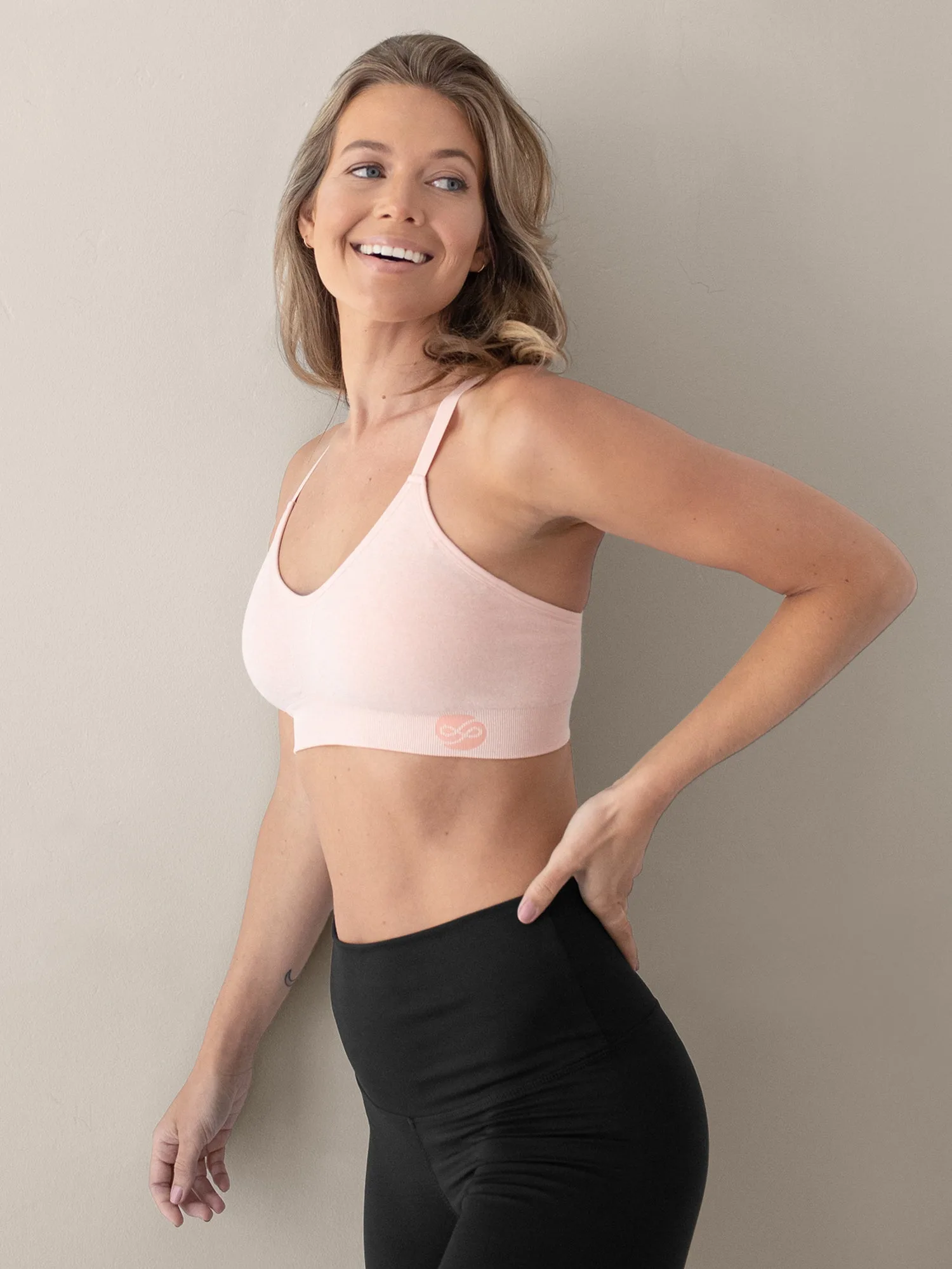
- Diana Sublime® Sports Bra | Pink Heather: Racerback sports bra made of breathable, moisture-wicking fabric for low-impact activities like hiking, with no nursing or pumping features. This is the workout option: it keeps you dry and comfortable during movement, but you'd need to change bras to feed, so it suits non-nursing workouts or moms who aren't breastfeeding.
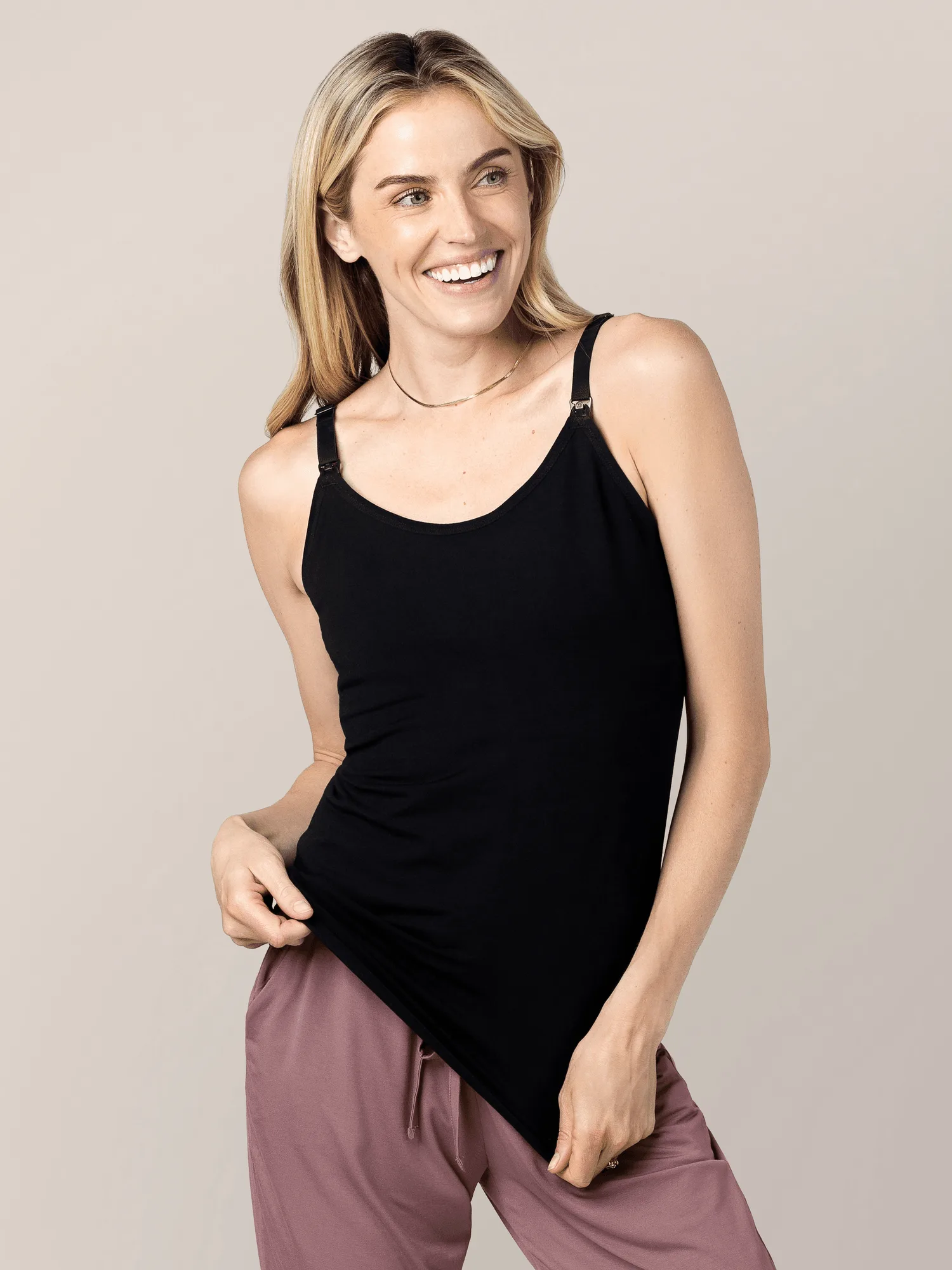
- Sublime® Bamboo Hands-Free Pumping & Nursing Cami | Black: Bamboo nursing and pumping cami with a built-in shelf bra, scooped neckline, and a patented double-layer system for hands-free pumping by sliding flanges through the inner layer. If pumping is part of your routine, this cami covers hands-free pumping and nursing in one layer, which neither a standard sports bra nor a basic bralette can do.
Which should you wear?
Best for
- Low-impact workouts, hiking, or days when sweat and bounce matter most
- Moms who are not nursing or pumping and want a simple, supportive bra
- Nursing moms who want a dedicated workout bra and will change before feeding
Not for
- Anyone who needs to feed or pump without changing clothes
- High-impact training if you need nursing access built in
- All-day lounging or sleep if you want the softest possible fabric