Quick answer
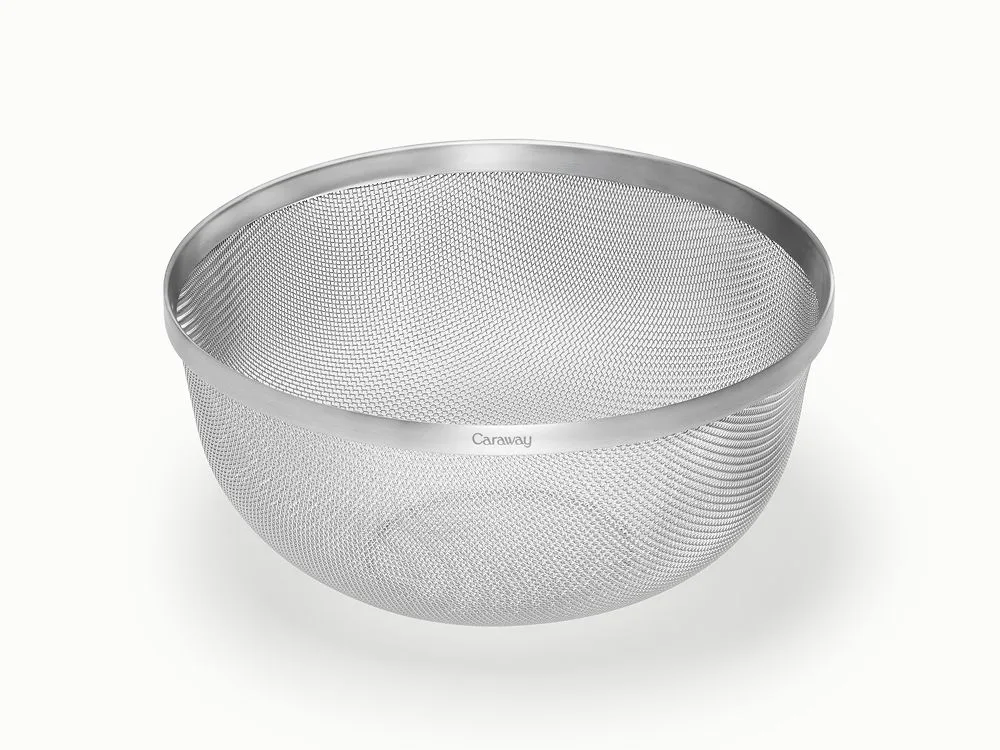
For most home cooks, one large stainless steel strainer around 9 to 10 inches wide covers family pasta, canned beans, and big produce rinses, while a small 5 to 6 inch strainer handles single servings, tea, and dusting flour. If you bake often, choose a fine mesh strainer with tight holes; if you mainly drain pasta, a wider-hole or perforated strainer drains faster and clogs less. Buy the size that matches your largest routine batch, not the smallest.
Why strainer diameter matters more than you think
Strainer size is really about surface area. A wide strainer spreads food into a thin layer so water escapes quickly and steam doesn't trap underneath. A narrow strainer forces the same amount of pasta or greens into a deep pile, which slows draining and can leave the center soggy. Diameter also decides whether the strainer can rest across your sink without falling in, and whether it fits in a cabinet without blocking everything else.
As a rule of thumb, match the strainer's width to your sink's basin and your largest pot. A strainer that spans the sink lets you drain one-handed. A strainer smaller than your pot's rim means you may need two hands and a steady grip. If you cook for one or two, a compact strainer is easier to store and rinse; if you cook family-size batches, the extra width pays off every time you drain.
Mesh holes and wire gauge: what they change
Two strainers can be the same diameter and still behave completely differently. Fine mesh, with many small holes, catches tiny particles: flour when you sift, seeds when you rinse berries, and small grains like quinoa. Wider perforations or a looser mesh drain faster and resist clogging, which is what you want for pasta, potatoes, and canned beans.
Wire gauge affects durability and how the strainer feels in hand. Thicker wire holds its shape under a full load of potatoes but adds weight. Thinner wire is lighter and often cheaper, yet it can bend if you press food against it. Rust resistance matters too, especially if you leave the strainer in the sink. Stainless steel is the standard choice because it resists rust and won't react with acidic foods like tomatoes or lemon.
Match the strainer to the job, not the shelf
Think through your three most frequent tasks before choosing a size. Draining a pound of pasta needs a wide bowl and a handle that clears the pot. Rinsing a head of lettuce or a pint of cherry tomatoes needs enough width for the water to sheet off. Sifting flour or cocoa needs fine mesh and a size you can tap cleanly over a bowl or parchment.
If your tasks overlap, prioritize the one you do most. A large strainer can handle a single serving, just less efficiently. A small strainer cannot handle a family-size batch without working in shifts. That asymmetry is why many cooks start with a large strainer and add a small fine mesh one later for baking and tea.
Handle, resting style, and storage trade-offs
Handles and resting styles affect how a strainer fits your kitchen as much as diameter does. Long handles give leverage but take up drawer or cabinet depth. Loop or side-rest handles let the strainer sit over a sink or bowl without tipping. Some strainers have a flat base so they stand upright on the counter, which helps when you are transferring food rather than draining it.
Measure your cabinet before buying a wide strainer. A 10-inch strainer with a long handle can be surprisingly deep. If storage is tight, a compact strainer with a short handle is easier to hang or nest. Also check the dishwasher situation: many stainless strainers are dishwasher-safe, but fine mesh can trap food and may need a quick rinse first.
Decision rules for choosing a strainer size
- If you drain family-size pasta or large produce batches: Choose a large strainer wide enough to span your sink, with a handle that clears your tallest pot. Wider surface area drains faster and keeps food from steaming in a deep pile. Buy the large size first if pasta and produce are your main jobs.
- If you bake, sift, or rinse small grains: Choose a fine mesh strainer with tight holes and a diameter you can tap over a bowl. Fine mesh catches flour lumps, seeds, and quinoa that wider perforations let through. A small or medium fine mesh strainer is the baking workhorse.
- If you cook for one or two and storage is tight: Choose a compact strainer around 5 to 6 inches wide with a short handle. It handles single servings, tea, and dusting without dominating a drawer or cabinet. Small size wins on storage; accept that large batches will need two passes.
- If you are unsure between two sizes: Measure your sink basin and your most-used pot rim. Pick the strainer that rests across the sink and clears the pot. If both sizes fit, the larger one is more versatile for draining, while the smaller one is easier for baking and rinsing. Measure before you buy; the wrong diameter is the most common strainer regret.
Product facts to consider
- Large Stainless Steel Strainer: Crafted from premium, rust-resistant stainless steel and built to handle everything from family-size pasta to large batches of produce with fast, even drainage. If your routine includes draining a full pot of pasta or rinsing a lot of vegetables at once, a large strainer with rust-resistant stainless steel reduces the chance of bending, rust spots, and slow draining.
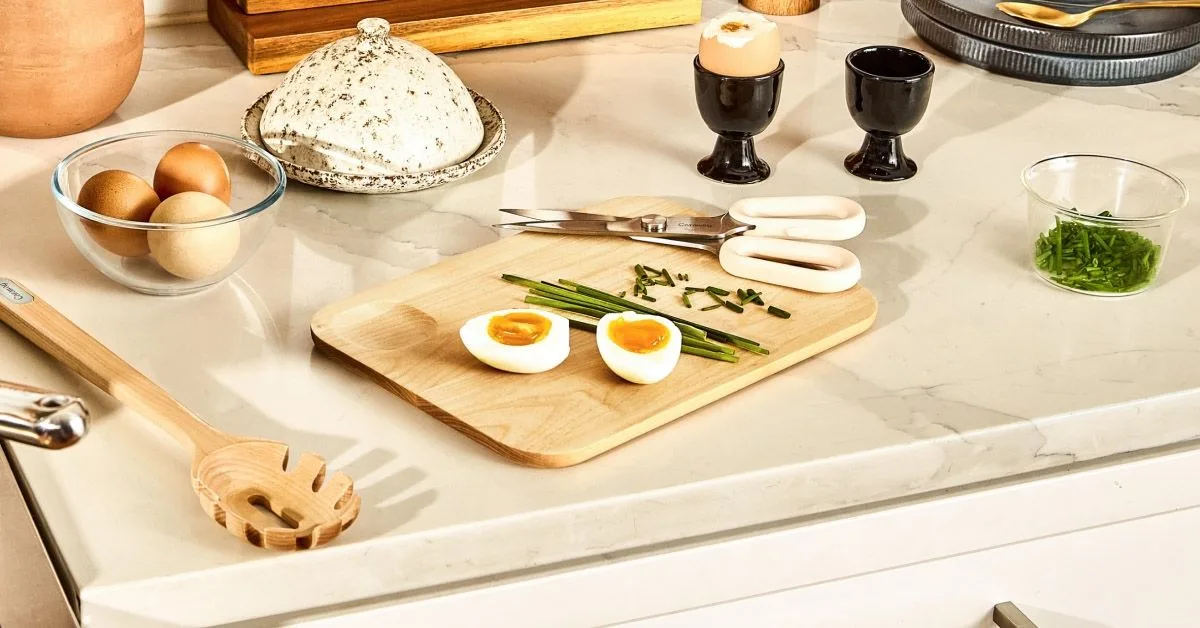
- Small Cutting Board: Made from non-toxic FSC-certified Birch wood, free of microplastics, compact size ideal for small tasks, and gentle on knives. A small cutting board pairs naturally with a small strainer for quick prep like slicing fruit or herbs before rinsing. Its compact size suits tight counters, and the wood surface is gentler on knife edges than plastic or glass.
Who should buy which size
Best for
- Home cooks who drain family-size pasta, rinse large batches of produce, or cook for four or more
- Bakers who need a fine mesh strainer for sifting flour, cocoa, or powdered sugar
- Anyone with a sink wide enough to rest a large strainer across the basin
Not for
- Cooks with very limited cabinet or drawer space who rarely make large batches
- Anyone who mainly needs to strain tea or dust a single serving and wants the smallest possible tool
- People who prefer a colander with larger holes for heavy items like potatoes and want a strainer only for fine tasks