Quick answer
Cat litter tracking happens when litter clings to paws or gets kicked out. You can reduce it with a textured mat, a larger box, and a low-tracking litter like Zamzows Clean and Easy Cat Litter.
Why litter tracking is so common
Most standard litters are lightweight and have fine granules that stick to cat paws easily. When your cat hops out of the box, those granules fall off wherever they step. The shape of the litter box also matters: low-sided boxes let litter fly farther when your cat digs or covers waste.
Trade-offs with low-tracking litters
Heavier, larger-granule litters track less but may not clump as firmly or control odor as well. Some cats also dislike the texture change. If your cat refuses a new litter, you can mix it gradually with the old one over a week.
Diagnosis: Why tracking happens and how to fix it
- Symptom: You find litter granules scattered around the box, on floors, and even in other rooms.
- Likely cause: Lightweight or fine-granule litter sticks to paws, and low-sided boxes allow litter to be kicked out during digging.
- Corrective action: Switch to a low-tracking litter like Zamzows Clean and Easy Cat Litter, place a textured mat outside the box, and consider a box with higher sides or a top entry. If your cat refuses the new litter, mix it with the old one over 5–7 days.
- When to stop or choose another option: If tracking persists after trying a mat and a different litter, your cat may have a medical issue (e.g., urinary tract infection) causing frequent exits. Consult your vet before changing the setup further.
Product that helps
-
Zamzows Clean and Easy Cat Litter: Zamzows Clean and Easy Cat Litter is a high-quality, sustainable litter available at 13 local locations. Its balanced granule size reduces tracking while still clumping well for easy scooping.
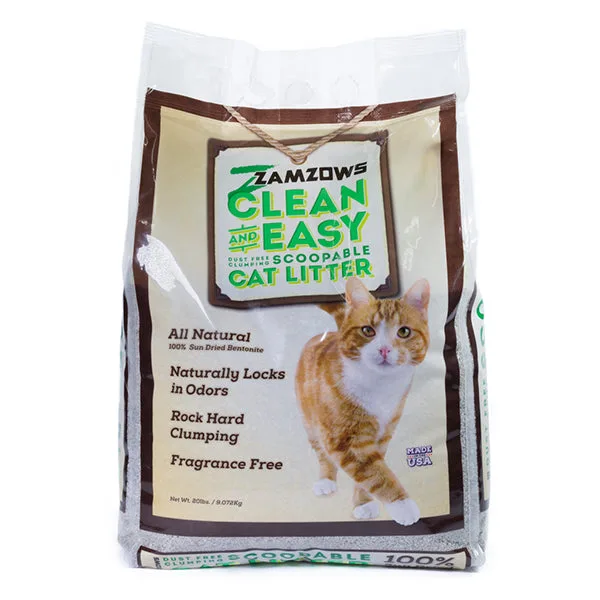
Zamzows Clean and Easy Cat Litter