If you've ever struggled with a dog that pulls, ignores cues, or bolts out the front door, a tab leash might be the training tool you've been missing. Unlike a traditional long leash, a tab leash is a short, lightweight attachment that stays on your dog's collar or harness, offering a convenient handle for quick corrections and guidance. In this ultimate guide, we'll explore what a tab leash is, why it's a game-changer for training, and how to use it effectively with puppies and adult dogs alike.
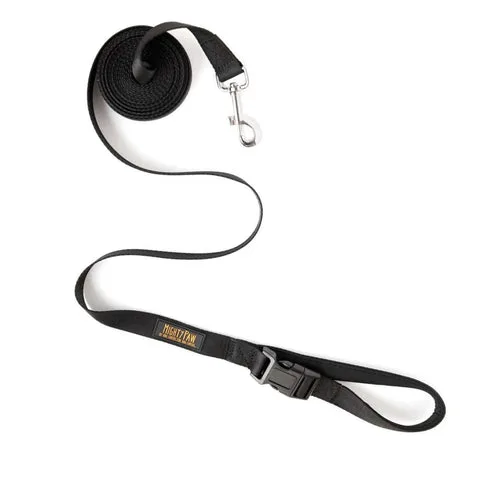
long leash
Tab leash training is a proven method used by professional dog trainers to improve focus, responsiveness, and safety. Whether you're teaching basic obedience, working on loose-leash walking, or building a reliable recall, a tab leash provides the perfect balance of control and freedom. By the end of this guide, you'll have the knowledge and confidence to incorporate a tab leash into your daily training routine.
What Is a Tab Leash and Why Use One?
A tab leash is a short leash, typically 6 to 12 inches long, that attaches to your dog's collar or harness. It features a loop at the end that serves as a handle, allowing you to quickly grab and guide your dog without the bulk of a full-length leash. This design makes it ideal for training scenarios where you need immediate control but also want to give your dog the freedom to move and explore.
The primary benefit of a tab leash is its versatility. It allows you to transition seamlessly between training modes—from focused heel work to relaxed sniffing breaks—without the hassle of clipping and unclipping a long leash. Additionally, a tab leash promotes better communication: because it's always on, you can use gentle pressure and release cues to teach your dog desired behaviors. This method is especially effective for teaching loose-leash walking, as it encourages your dog to stay close without constant tension.
- Provides instant control without restricting movement
- Facilitates clear communication through gentle pressure and release
- Ideal for teaching loose-leash walking, recall, and focus
- Lightweight and comfortable for your dog to wear all day
How to Use a Tab Leash for Training
Using a tab leash effectively requires a few key techniques. First, attach the tab leash to your dog's collar or harness using a sturdy clip. Ensure it's secure but not too tight. The loop should hang at chest level, making it easy for you to grab. Start in a low-distraction environment, such as your living room or backyard, and practice short training sessions of 5-10 minutes.
One of the most common uses of a tab leash is teaching loose-leash walking. Hold the loop in your hand, allowing the tab to hang loosely. When your dog pulls, stop immediately and wait. Once your dog returns to your side, reward with praise or a treat and continue walking. This teaches your dog that pulling gets them nowhere, while staying close earns rewards. For recall training, use the tab to gently guide your dog back to you when they don't respond to their name, reinforcing the cue with positive reinforcement.
- Start in a quiet area to minimize distractions
- Use the tab to give gentle, consistent cues
- Reward desired behaviors immediately to reinforce learning
- Practice in short, frequent sessions for best results
Tab Leash Training for Puppies
Puppies are like sponges, eager to learn and explore. Introducing a tab leash early can set the foundation for a lifetime of good manners. For puppies, the tab leash serves as a safety net, allowing you to quickly redirect them away from hazards like busy streets or dangerous objects. It also helps them get accustomed to wearing a collar and leash, reducing fear and anxiety.
When training a puppy with a tab leash, focus on positive reinforcement. Use high-value treats and enthusiastic praise to reward behaviors like checking in with you, walking beside you, and responding to their name. Keep sessions fun and short—puppies have short attention spans, so aim for 3-5 minutes at a time. Gradually increase the duration as your puppy matures. Remember, patience is key: puppies are learning about the world, and every interaction is a training opportunity.
- Introduce the tab leash gradually, letting your puppy sniff and explore it
- Pair the tab leash with treats and praise to create positive associations
- Use the tab to gently guide your puppy away from potential dangers
- Keep training sessions brief and playful to maintain engagement
Common Mistakes to Avoid
Even with the best intentions, dog owners can make mistakes that hinder training progress. One common error is using the tab leash to yank or correct your dog harshly. This can create fear and damage trust. Instead, use gentle pressure and release, allowing your dog to learn from the consequences of their actions. Another mistake is leaving the tab leash on your dog unsupervised, as it can snag on objects and cause injury. Always remove the tab when your dog is unattended.
Additionally, some owners expect instant results. Training takes time and consistency. If you're inconsistent with cues or rewards, your dog may become confused. Stick to a routine, use the same commands, and reward every success. Finally, don't forget to factor in your dog's individual personality. Some dogs are more sensitive, while others are more stubborn. Tailor your approach to your dog's needs, and you'll see progress.
- Never use the tab leash to jerk or punish your dog
- Remove the tab leash when your dog is alone to prevent accidents
- Be consistent with cues and rewards to avoid confusion
- Adapt your training to your dog's personality and learning style
Choosing the Right Tab Leash and Accessories
Selecting the right tab leash is crucial for comfort and durability. Look for a tab leash made from high-quality materials like nylon or neoprene, which are both strong and gentle on your dog's skin. The clip should be sturdy and easy to attach. Some tab leashes come with reflective stitching for added visibility during evening walks, which is a great safety feature.
While a tab leash is a standalone tool, pairing it with the right collar or harness can enhance its effectiveness. For example, a Martingale collar provides gentle control for dogs that tend to slip out of flat collars, while a padded sports collar offers extra comfort for active dogs. Consider your dog's specific needs and training goals when choosing accessories. Additionally, a hands-free bungee belt can be a great companion for training sessions that require both hands free, such as when you're working on recall or agility.
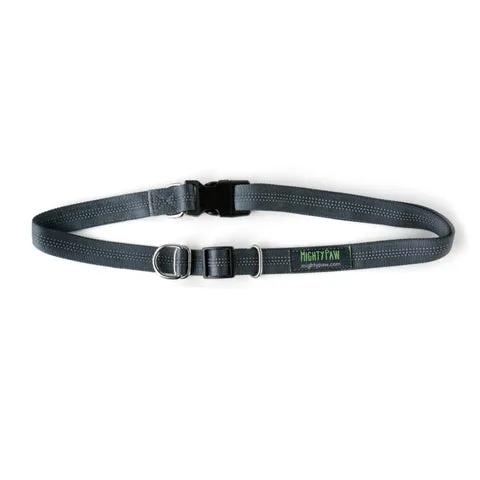
hands-free bungee belt
- Choose a tab leash with a comfortable handle and secure clip
- Pair with a Martingale collar for added control on slippery dogs
- Consider a padded collar for extra comfort during long training sessions
- Use a hands-free belt for convenience during active training
Integrating Tab Leash Training into Daily Life
Tab leash training isn't just for formal training sessions—it can be integrated into your daily routine to reinforce good behavior. For example, keep the tab leash on your dog during indoor activities like meal prep or when guests arrive. This allows you to quickly redirect your dog if they get too excited or try to jump. It also gives you a way to practice commands like 'sit' and 'stay' in real-world scenarios.
When you're out and about, the tab leash can be used in conjunction with a regular leash for added safety. Attach the tab to your dog's collar and clip your regular leash to the tab's loop. This creates a backup system in case the primary leash fails. It also gives you the option to drop the long leash and rely on the tab for quick control during off-leash training in a fenced area. Remember, the goal is to build a strong bond and reliable communication with your dog, and the tab leash is just one tool to help you achieve that.
- Keep the tab leash on during daily activities for quick control
- Use the tab as a backup when using a regular leash
- Practice commands in real-world settings to generalize behavior
- Gradually reduce reliance on the tab as your dog becomes more reliable
Tab leash training is a powerful, versatile method that can transform your dog's behavior and strengthen your bond. By understanding how to use a tab leash, avoiding common mistakes, and integrating it into your daily routine, you'll be well on your way to a well-trained, happy companion. Remember, consistency and positive reinforcement are the keys to success. So grab a tab leash and start your training journey today!