Quick answer
Start tummy time as soon as you bring your newborn home, with 1–2 minute sessions a few times a day. A tummy time mirror placed at eye level encourages your baby to lift their head, strengthens neck and shoulder muscles, and supports visual tracking skills.
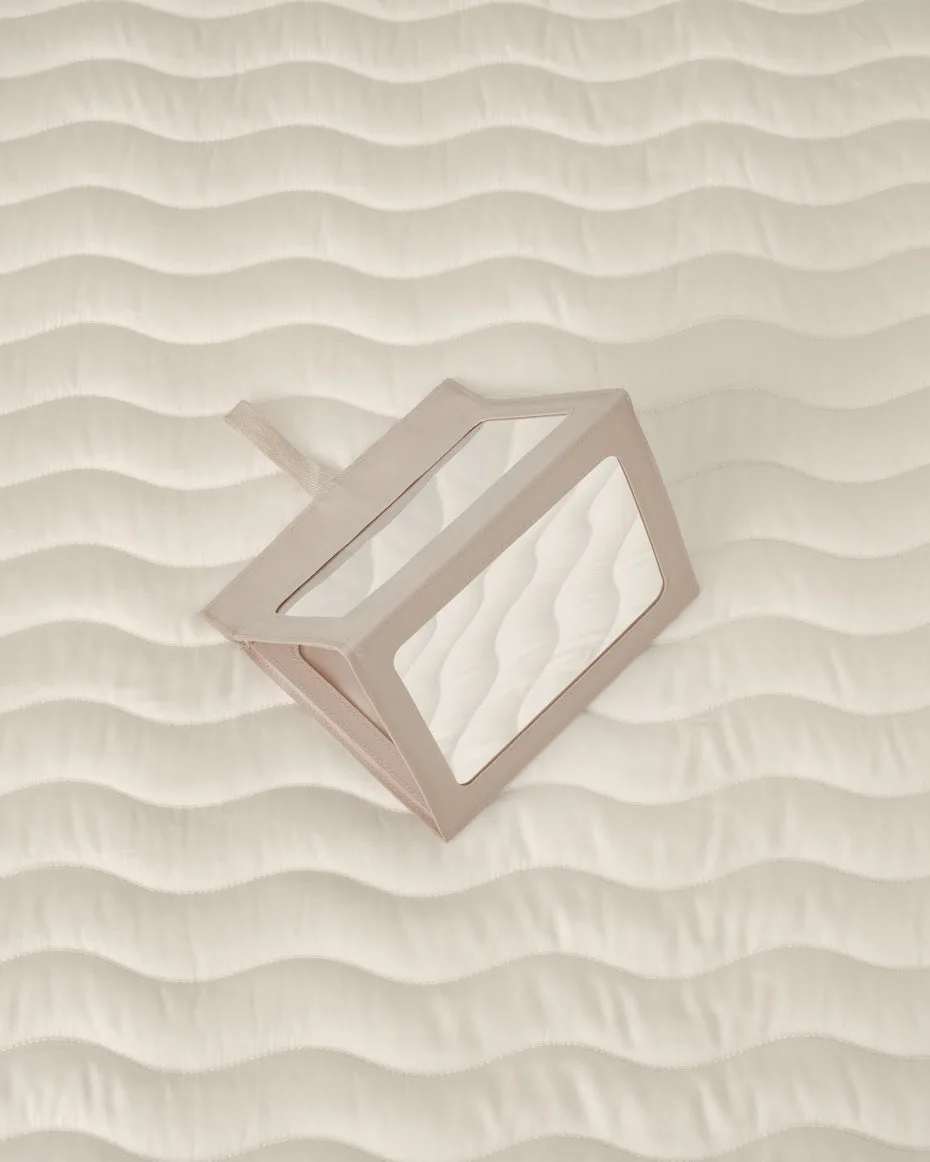
tummy time mirror
Why a mirror makes tummy time more effective
Babies are naturally drawn to faces, and a baby mirror tummy time setup gives them something fascinating to look at while they work those big muscle groups. The reflection encourages them to lift their head longer and practice tracking movement, which builds the coordination needed for rolling and crawling.
The Tummy Time Mirror + Art Cards from Lalo is designed to hang from The Play Gym or sit directly on a play mat. Flip it over to slide in high-contrast art cards featuring safari animals, adding a visual novelty that keeps your baby engaged session after session.
When to start tummy time
Pediatricians recommend starting tummy time from day one. Newborns can handle very short periods—think 1–2 minutes after a diaper change or nap. As your baby grows, gradually increase to 10–15 minutes total spread across the day. By 3–4 months, most babies enjoy longer stretches and begin pushing up on their arms.
How to use a tummy time mirror: 4 simple steps
- Position the mirror at eye level: Place the mirror on a play mat or hang it from a gym so your baby can see their reflection without straining. A mirror that’s too high or too low won’t encourage head lifting. Checkpoint: Your baby’s eyes should meet their reflection when their head is slightly raised.
- Start with short, frequent sessions: Aim for 1–2 minutes of tummy time 3–4 times a day. Use the mirror to capture their attention from the start. If they fuss, end the session and try again later. Common mistake: Waiting until your baby is already tired or hungry—timing matters more than duration.
- Add variety with high-contrast cards: Slide in the included art cards to introduce new patterns and animals. The high-contrast images help focus your baby’s gaze and encourage them to lift higher for a better view. Checkpoint: Rotate cards every few sessions to maintain novelty and visual interest.
- Gradually extend tummy time as your baby grows: Once your baby can hold their head up for a few seconds, increase sessions to 5 minutes each. The mirror continues to motivate them to push up on their arms and shift weight side to side. Common mistake: Stopping tummy time once your baby starts rolling—continue until crawling is established.
Product spotlight
- Tummy Time Mirror + Art Cards: Hanging from The Play Gym or used directly on the Play Mat, the Tummy Time Mirror strengthens attention and visual tracking skills and helps practice working big muscle groups. Flip it over and slide in the high contrast Art Cards to introduce them to their favorite safari animals. This mirror adapts to your baby’s changing tummy time setup—hang it for overhead engagement or place it flat for floor-level play—and the reversible art cards extend interest as your baby’s vision develops.