Quick answer
Choose a B complex if you want broad, convenient support for energy metabolism and general wellness, especially if your diet is limited or you prefer one daily serving. Choose an individual B vitamin, such as Vegan Vitamin B12, if you have a specific dietary gap or goal, like a vegan or vegetarian diet. There is no universal winner; the right pick depends on what your diet and routine already cover.
B vitamins are a family of eight water-soluble nutrients that help your body convert food into energy and support red blood cell formation and nervous system function. Because they work together, many people wonder whether a B complex or individual B vitamins make more sense.
The honest answer is that both can work, but they solve different problems. A B complex covers the full family in one serving, while individual B vitamins let you target a specific need, such as B12 for a vegan diet. This comparison breaks down the trade-offs using real product facts so you can pick the format that fits your life.
What a B complex actually gives you
A B complex typically includes all eight B vitamins: B1, B2, B3, B5, B6, B7, B9, and B12. The main benefit is convenience and coverage. Instead of buying and tracking several bottles, you take one serving and let the formula handle the rest. This is helpful if you are not sure which B vitamin you might be low in or if you simply want to avoid gaps.
The trade-off is that a complex may include doses or forms you do not specifically need. If you already eat a varied diet, some of those vitamins may be redundant. Also, not every complex uses the same forms; some use methylated B12 and folate, while others use synthetic forms. Reading the label matters more than the word 'complex' on the front.
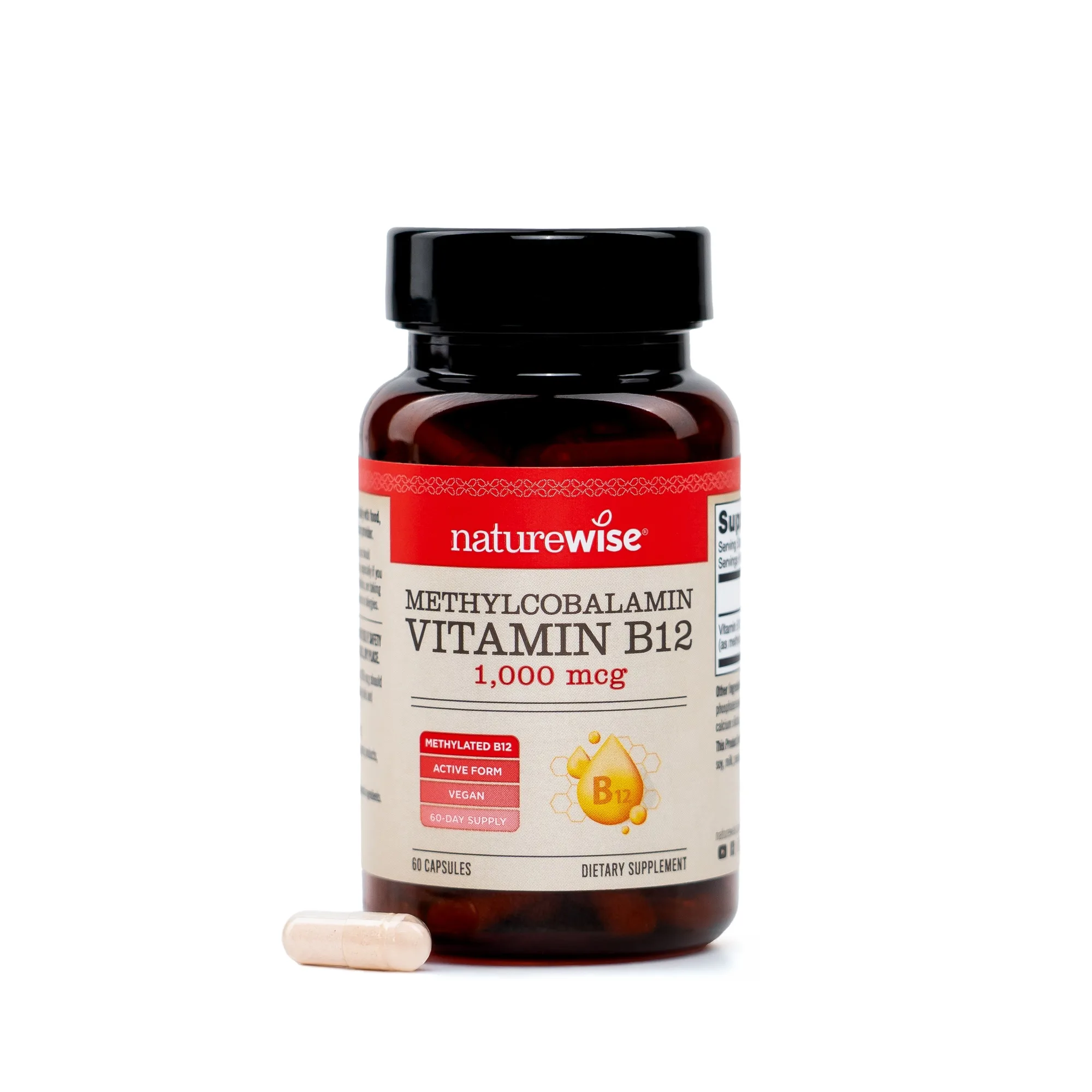
methylated B12
- Check whether the complex lists all eight B vitamins or only a subset.
- Look for methylated B12 and folate if you prefer active forms.
- One serving is easier to remember than three or four separate bottles.
When an individual B vitamin makes more sense
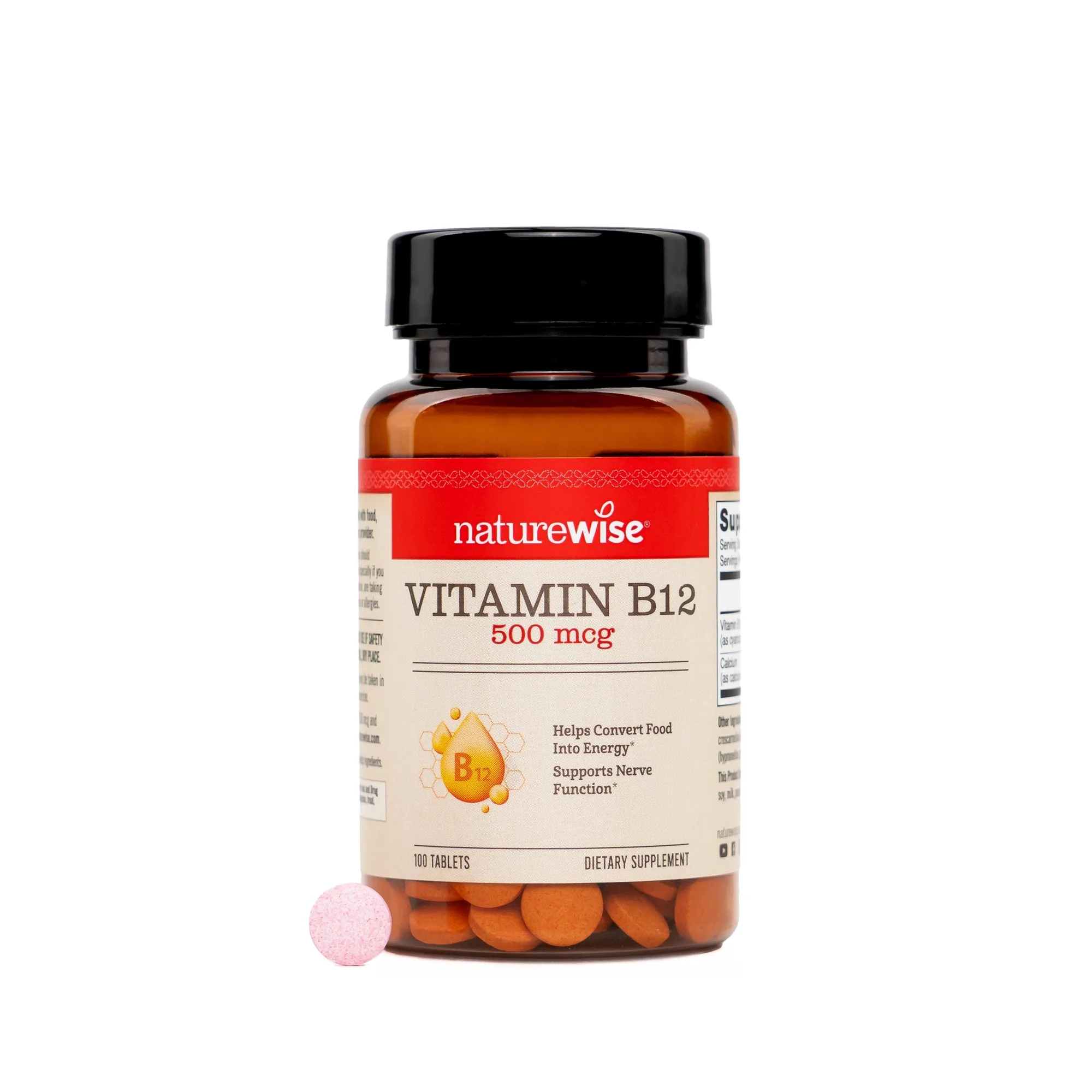
Individual B vitamins shine when you have a known gap. Vitamin B12 is the classic example because it occurs naturally almost exclusively in animal foods. If you follow a vegan or vegetarian diet, or if you take certain medications that reduce absorption, a standalone B12 supplement is a direct solution. NatureWise Vegan Vitamin B12 is a mini-tablet with added calcium, and it supports cognitive function, energy metabolism, and muscle support.
The trade-off with individual vitamins is that you may miss other B vitamins you also need. For example, fixing B12 alone will not address a folate gap. You also have to manage more bottles and remember multiple serving times. Individual vitamins work best when you have a specific reason, not as a random guess.
- Choose individual B12 if you are vegan, vegetarian, or advised by a clinician.
- Do not assume one B vitamin covers the whole family.
- If you take several singles, a complex may be simpler and cheaper.
B complex vs B12: the most common comparison
The B complex vs B12 question comes up often because B12 is the most talked-about B vitamin. A B complex gives you B12 plus the other seven, while a standalone B12 gives you a focused dose without the rest. If your diet already provides plenty of B1, B2, B3, and folate, a standalone B12 may be all you need. If your diet is inconsistent or restricted in several ways, a complex covers more ground.
Dosage is another difference. B complexes usually provide moderate amounts of each vitamin, while standalone B12 products can offer higher amounts for people with absorption issues. There is no single correct dose for everyone, so match the product to your reason for taking it rather than chasing the highest number.
- Use a complex if you want baseline coverage across the family.
- Use standalone B12 if your only known gap is B12.
- Higher dose is not automatically better; it depends on your need.
How to spot a B vitamin deficiency
B vitamin deficiency symptoms can be vague: tiredness, tingling in hands or feet, mouth sores, or pale skin. These overlap with many other conditions, so symptoms alone are not a diagnosis. If you suspect a deficiency, ask a healthcare professional about testing rather than guessing from how you feel.
Certain groups face higher risk, including vegans, vegetarians, older adults, people with digestive conditions, and anyone taking medications that affect absorption. For these groups, a targeted supplement or a complex can be a reasonable preventive step. Still, testing gives you a clearer starting point than trial and error.
- Do not self-diagnose from symptoms alone.
- Ask about B12 and folate testing if you are in a higher-risk group.
- Bring your supplement bottle to appointments so your clinician sees the doses.
B complex dosage and what to expect
B complex dosage varies by product, and there is no single standard. Most complexes are designed as a once-daily or twice-daily serving that provides a meaningful portion of each B vitamin. Because B vitamins are water-soluble, your body excretes what it does not use, which is why bright yellow urine is common and generally harmless.
More is not always better. Very high doses of certain B vitamins can cause side effects or interact with medications. Start with a product that clearly lists amounts per serving, and follow the label unless a clinician tells you otherwise. If you choose individual vitamins, track what you take so you do not double up.
- Follow the serving size on the label unless advised otherwise.
- Water-soluble B vitamins are excreted, so timing is flexible for most people.
- Tell your clinician about any high-dose B vitamins you take.
Trade-offs at a glance
- Coverage vs simplicity: A B complex covers all eight B vitamins in one serving, which reduces the chance of gaps. Individual B vitamins give you only what you choose, so you must know what you need. Pick coverage if you are unsure; pick individual if you have a specific gap.
- Targeted dose vs broad dose: Standalone B12 can deliver a focused amount for absorption concerns, while a complex spreads its amounts across the family. Neither is inherently stronger for your situation. Match the dose to your reason, not to the biggest number on the label.
- Cost and routine: One complex is usually simpler and can cost less than buying several individual B vitamins. Multiple singles mean more bottles, more labels, and more chances to double up. If you already take several singles, compare the total cost and effort against one complex.
Product facts that matter for this choice
- Vegan Vitamin B12: Vegan mini-tablets with added calcium; supports cognitive function and mental clarity, energy metabolism, and muscle support. A focused standalone option for vegans and anyone who only needs B12, with a small tablet that is easy to take daily.
- Women's Multivitamin with Stress Support: Contains Sensoril ashwagandha, methylated B12 and folate, and full-spectrum trace minerals; supports heart, immune, and digestive health plus healthy stress response. A broader alternative if you want B vitamins plus stress and mineral support in one product rather than a dedicated B complex.
Which should you take?
Best for
- People who want broad B vitamin coverage in one daily serving
- Vegans, vegetarians, or anyone with a known B12 gap who want a focused standalone option
- Anyone who prefers a simple routine over managing several bottles
Not for
- People who have not identified a specific need and are not advised to supplement
- Anyone taking medications that interact with B vitamins without clinician guidance
- Those who expect a supplement to replace a varied diet or medical treatment
There is no single winner in the B complex vs individual B vitamins debate. A complex is the practical choice for broad coverage and a simple routine, while an individual B vitamin like Vegan Vitamin B12 is the better fit when you have a specific gap such as a vegan diet. Match the format to your reason, check the label for forms and amounts, and talk with a healthcare professional if you are unsure.