Quick answer
A vitamin K complex combines K1 and multiple forms of K2 to support calcium distribution, bone strength, and heart health. If you want broad coverage, look for a formula that includes both MK-4 and MK-7.
Why take a complex instead of just K1 or K2?
Vitamin K1 comes mainly from leafy greens and helps with blood clotting. Vitamin K2, especially the MK-7 form, stays in your blood longer and directs calcium to your bones and away from arteries. A complex gives you both, plus different K2 forms that work at different speeds.
What to look for in a K complex supplement
Check the amounts of each K form. Some supplements only list a total K2 number without breaking down MK-4 and MK-7. If you want long-lasting support, look for a formula that includes MK-7. Also, see if vitamin C is added—it can help with absorption.
How to choose the right vitamin K complex
- Check the K2 forms included: Look for both MK-4 and MK-7. MK-4 works quickly but leaves the body fast; MK-7 stays active longer. A complex with both gives you immediate and sustained support.
- Consider your primary goal: For bone health, prioritize higher MK-7 amounts. For heart health, a balance of MK-4 and MK-7 is beneficial. If you just want general coverage, a complex with K1 plus both K2 forms is a safe choice.
- Look for added absorption aids: Vitamin C or healthy fats can help your body absorb K vitamins. Some complexes include vitamin C for this reason. If yours doesn't, take it with a meal containing fat. Fat-soluble vitamins like K work best when taken with food.
Product facts
-
Super K Complex: Super K Complex provides 1,000 mcg Vitamin K2 as MK-4, 200 mcg as MK-7, and 2,000 mcg K1 plus Vitamin C. This means you get fast-acting MK-4 and long-lasting MK-7 in one serving, plus K1 for clotting support and vitamin C for potential absorption benefits.
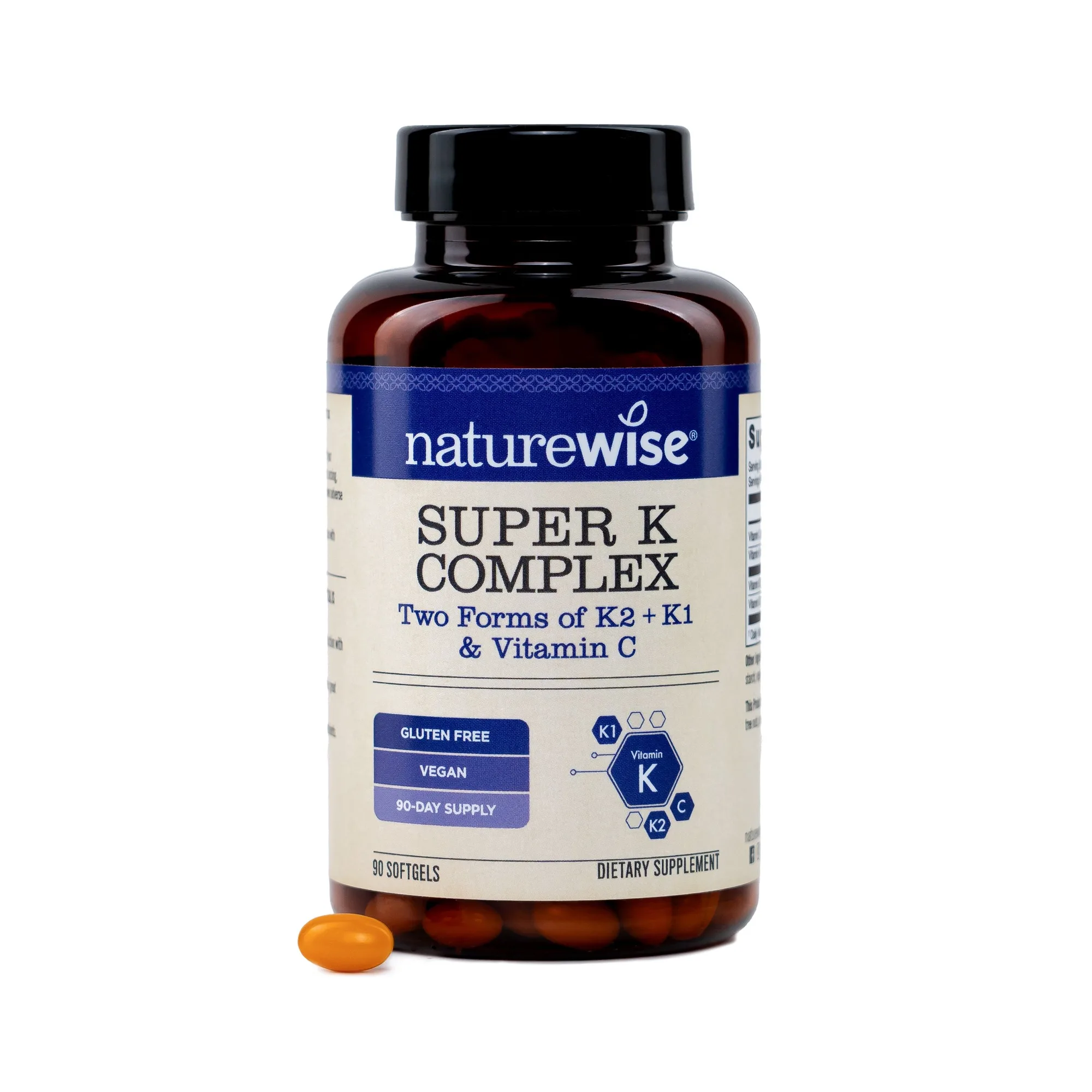
Super K Complex
Who should choose a vitamin K complex?
Best for
- Anyone looking to support both bone density and arterial health with one supplement
- People who eat limited leafy greens or fermented foods and want a broad K intake
Not ideal for
- Someone who only needs blood clotting support—K1 alone may be enough
- Those on blood thinners like warfarin, unless their doctor approves