Quick answer
The Visit from the Rhine Valley expansion replaces your visitor deck with 80 new cards that emphasize wine production and selling over victory point chasing. This guide walks you through setup, gameplay integration, and common pitfalls.
Why replace the entire visitor deck?
Unlike most expansions that add cards to your existing deck, Visit from the Rhine Valley asks you to remove all other visitor cards (from Viticulture, Tuscany, and Moor Visitors) and play only with its 80-card deck. This creates a focused experience where every visitor action ties directly to making and selling wine, rather than scoring points through alternate paths.
The trade-off: you lose the variety and occasional high-scoring combos from the original visitors. If your group enjoys the chaotic point grabs of the base game, this expansion may feel restrictive. But if you want a tighter, more thematic wine business simulation, it delivers exactly that.
What you need before playing
You need a copy of Viticulture Essential Edition (or the original Viticulture plus the Tuscany Essential Edition board). The expansion includes only the 80 visitor cards and a rule sheet. No new boards, tokens, or worker placement spaces are included.
Because the cards have unique backs, you cannot shuffle them with other visitor decks. Plan to store them separately and swap out the entire deck when you want a Rhine Valley session.
How to set up and play with Visit from the Rhine Valley
- Remove all existing visitor cards: Take every visitor card from Viticulture, Tuscany, and Moor Visitors out of the game. Store them separately. The Rhine Valley deck must be used alone. Common mistake: leaving a few old visitors in the deck. Because the card backs are different, you will see which cards are coming, ruining the surprise.
- Shuffle the Rhine Valley deck and place it in the visitor card area: Shuffle all 80 cards thoroughly and put them face down in the same spot where the visitor deck normally sits. The unique backs make it easy to identify the deck at a glance. Checkpoint: confirm that no other visitor cards are mixed in. A quick visual scan of the card backs will catch any strays.
- Draw and play visitors as usual, but expect a different rhythm: During the game, when you take a visitor action, draw from the Rhine Valley deck. The cards reward actions like planting, harvesting, and selling wine. You will see fewer cards that give instant victory points or let you manipulate the turn order. Common mistake: assuming the cards work the same as the base deck. Read each card carefully—many have new effects that interact with the wine aging and selling mechanics more directly.
- Adjust your strategy to focus on wine production: Since the deck emphasizes the wine business, prioritize building a vineyard, planting grapes, and constructing a cellar early. Cards that help you sell wine or fulfill orders become more valuable than those that grant victory points outright. Checkpoint: if you find yourself short on wine midway through the game, you may have neglected your vineyard setup. Rebalance your worker placements toward grape and wine production.
- Store the deck separately after the game: Return the Rhine Valley cards to their original packaging or a dedicated deck box. Keep them away from other visitor decks to avoid accidental mixing before your next session. Common mistake: tossing the cards into the base game box. The unique backs make them easy to spot, but it is still safer to store them separately so you always know where they are.
Product details
-
Viticulture: Visit from the Rhine Valley: This expansion provides 80 new visitor cards with unique backs, focusing less on victory points and more on the wine business itself. The deck replaces all other visitor cards, so every draw pushes you toward grape growing, wine making, and selling rather than alternative scoring strategies.
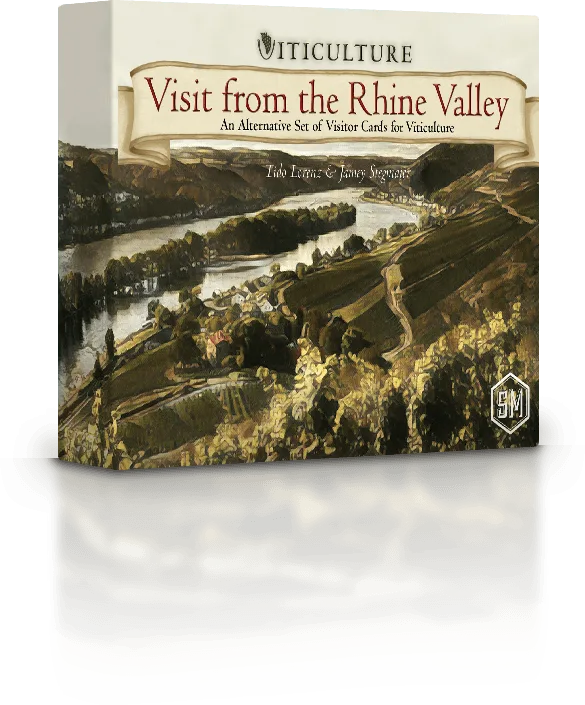
Viticulture: Visit from the Rhine Valley