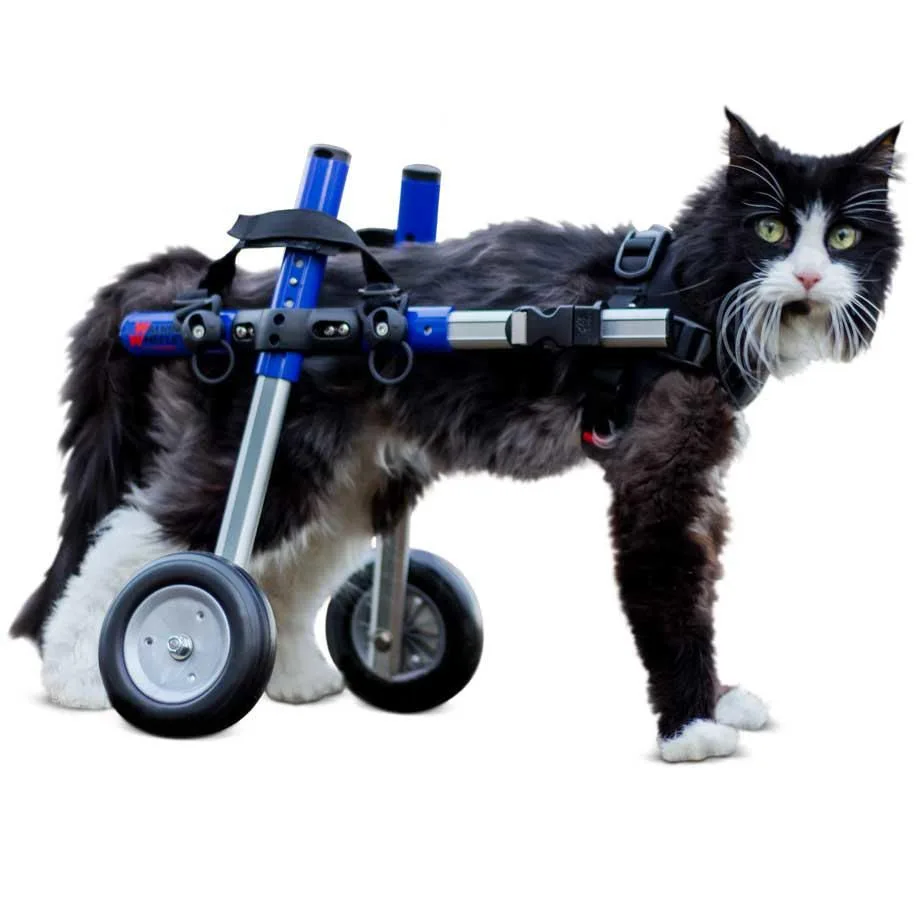
Quick Answer
The Walkin' Wheels Cat Wheelchair is a rear-support mobility cart for cats weighing 2 to 30 pounds who have paralysis, spinal condition recovery, or back-leg weakness from arthritis or degenerative joint disease. It is adjustable in height, length, and width, so the main buying decision is not size range but whether your cat's front legs can still steer and support the chest. If front legs are strong, a rear cart is usually the right first step. If front legs are also weak, a rear-only cart will not be enough.
What This Cat Wheelchair Actually Does
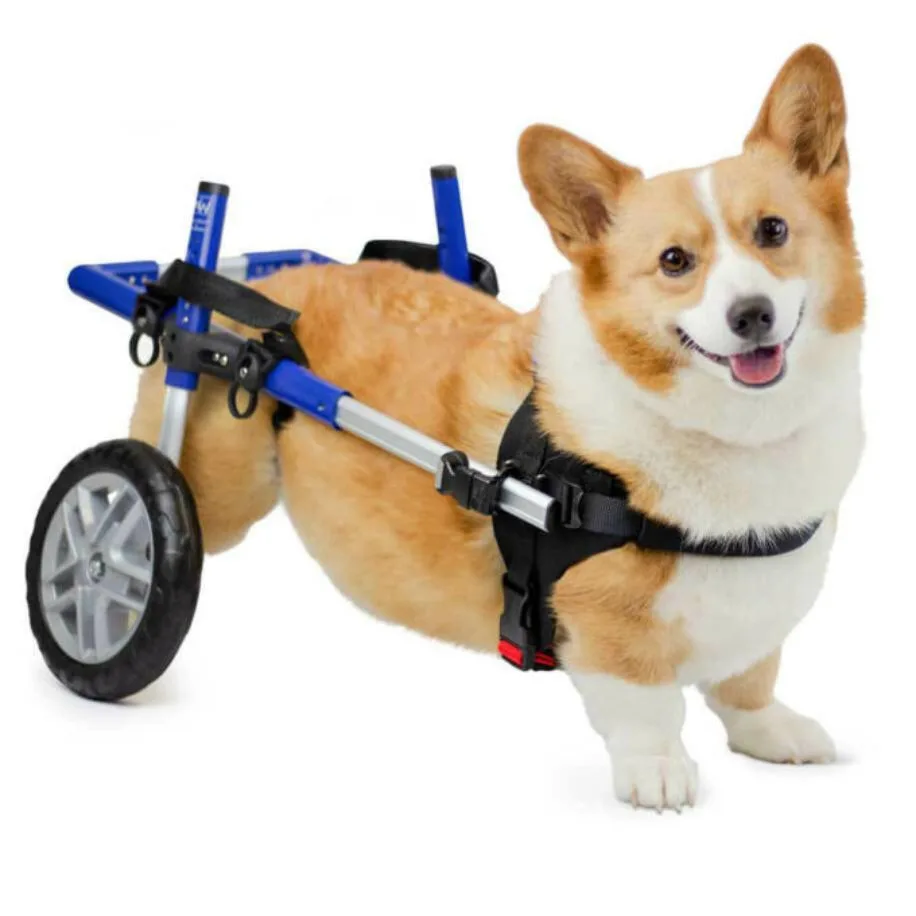
A rear-support cat wheelchair takes weight off the hind legs and lets your cat pull itself forward with the front legs. The Walkin' Wheels Cat Wheelchair is built for cats from 2 to 30 pounds and is fully adjustable in height, length, and width. That adjustability matters because cats come in very different shapes: a long, low cat and a tall, narrow cat can weigh the same but need different frame settings.
This is not a walking harness or a drag bag. It is a cart with wheels that supports the rear of the body while the cat moves. For a paralyzed cat, the cart keeps the hindquarters from scraping and gives the front legs a job they can still do. For a cat recovering from spinal surgery, it can allow controlled movement without free dragging.
Fit Checks Before You Buy
Measure your cat's weight first. The supplied range is 2 to 30 pounds. If your cat is outside that range, this specific cart is not the right match. Next, check front leg strength. A rear cart assumes the front legs can bear weight and steer. If your cat's front legs buckle or knuckle over, you need full support, not rear-only support.
Then check body length and chest depth. The cart adjusts in height, length, and width, but you still need a starting fit that keeps the frame under the body without pressing on the belly or throat. A cat that panics when restrained may need short, supervised introductions before the cart becomes useful.
Rear Cart vs Full Support: The Real Tradeoff
The Walkin' Wheels Cat Wheelchair is rear support only. That is an advantage for cats with strong front legs because it is lighter and less restrictive than a full quad cart. The tradeoff is that it cannot help a cat with front-leg weakness. If your cat has both front and rear limb weakness, a rear-only cart will let the front end collapse.
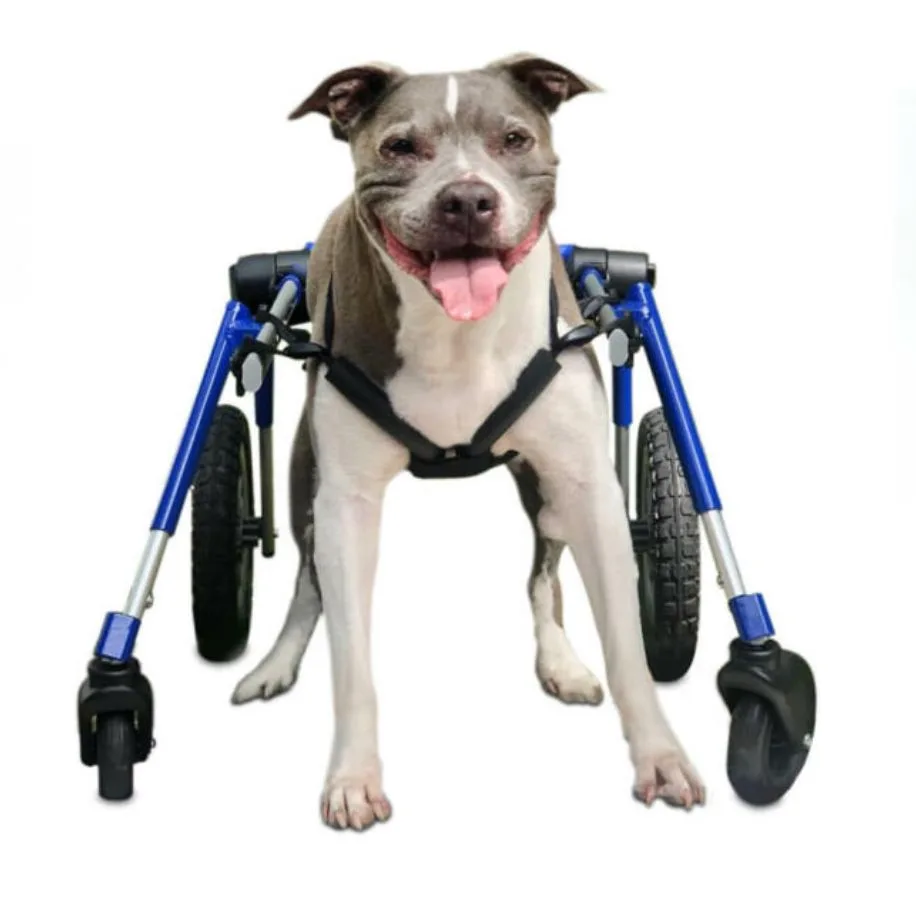
For dogs, Walkin' Pets solves that with front wheel attachments that convert a rear wheelchair into a full support quad wheelchair. For cats, the supplied catalog only lists the rear cat wheelchair, so there is no cat-specific front attachment in the product records provided. That is a real limitation: if your cat needs front support, ask the manufacturer directly before assuming a dog attachment will fit.
What to Expect in the First Two Weeks
Start with short sessions on a non-slip surface. Let your cat stand in the cart before expecting walking. Some cats take to wheels in minutes; others need several days of treats and low-pressure exposure. Keep the cart clean and check the frame settings as your cat's strength changes.
If your cat drags back legs because of a recent spinal injury, get veterinary clearance before using any mobility cart. A cart supports movement, but it does not replace medical treatment or physical therapy.
Decision Rules for a Paralyzed Cat Wheelchair
- Rule 1: Front legs strong, rear legs weak: Choose the Walkin' Wheels Cat Wheelchair. It supports the hindquarters while your cat steers with the front legs. Best match for rear paralysis or rear weakness with good front strength.
- Rule 2: Front legs also weak or knuckling: A rear-only cat cart will not prevent the front end from collapsing. Ask the manufacturer about full-support options before buying. Do not buy rear-only support if front legs cannot bear weight.
- Rule 3: Cat weighs under 2 or over 30 pounds: The supplied Walkin' Wheels Cat Wheelchair range is 2 to 30 pounds. Outside that range, this cart is not the right fit. Confirm weight with a scale, not an estimate.
- Rule 4: Recent spinal injury or surgery: Get veterinary clearance before using any mobility cart. A cart supports movement but does not replace treatment. Medical clearance comes before product choice.
Product Facts
- Walkin’ Wheels CAT Wheelchair: The Walkin' Wheels Rear Cat Wheelchair is designed to help cats weighing between 2 and 30 pounds regain mobility and is fully adjustable in height, length, and width. The wide weight range and three-way adjustability mean most cats can be fitted, but you still need to confirm front leg strength before choosing rear-only support.
- Walkin' Wheels SMALL Dog Wheelchair: The Walkin' Wheels SMALL Dog Wheelchair is created for small pets weighing between 11 and 25 pounds and provides hind leg support for rear leg weakness, paralysis from IVDD or DM, and difficulty walking. This is a dog product, not a cat product, but it shows the same rear-support principle. Do not substitute a dog wheelchair for a cat without confirming fit and safety with the manufacturer.
- Walkin' Wheels MEDIUM Front Wheel Attachment: The Walkin' Wheels MEDIUM Front Wheel Attachment is designed for pets weighing 26–69 lbs and transforms a MEDIUM or MEDIUM/LARGE Rear Walkin' Wheels Wheelchair into a Full Support (Quad) Wheelchair. It illustrates the full-support option for dogs with both front and rear weakness. No equivalent cat front attachment is listed in the supplied catalog, so cat owners should not assume this attachment fits a cat cart.
Who This Cat Wheelchair Is For
Best for
- Cats weighing 2 to 30 pounds with rear leg paralysis or weakness
- Cats recovering from spinal conditions who need controlled rear support
- Cats with arthritis or degenerative joint disease affecting the back legs
- Owners who want an adjustable rear-support cart for a cat with strong front legs
Not for
- Cats with front leg weakness that need full support
- Cats outside the 2 to 30 pound range
- Owners looking for a front-wheel attachment specifically made for cats
- Cats with an untreated medical condition that has not been evaluated by a veterinarian