Start with the simplest explanation: a break in the seal
When a wearable pump suddenly feels weaker, the first suspect is usually the seal between the cup and your breast, or between the pump's parts. A tiny gap, a misaligned flange, or a damp connection point can bleed off suction before it ever reaches you. Before you assume the motor is failing, take the pump apart, check that every part is seated exactly as it should be, and reassemble it slowly. Many 'weak suction' complaints resolve at this step.
If your pump uses a cup capacity like the 8 oz listed for the Lansinoh Wearable Pump, make sure you are not overfilling past the maximum line. Overfilling can interfere with airflow and make the pump feel like it is struggling, even when the suction level is set correctly.
A practical troubleshooting order for weak suction
Work through these checks from least to most involved. Stop as soon as suction returns to normal.
- 1. Reassemble the pump from scratch: Take all parts apart, inspect for anything folded, pinched, or upside down, and put them back together according to the manual. Even one misaligned piece can cause wearable breast pump suction loss.
- 2. Check the flange fit: A flange that is too large or too small can break the seal. The Lansinoh Wearable Pump includes four flange sizes, so if you are using the wrong one for your body, try a different size before assuming the pump is at fault.
- 3. Inspect for moisture or residue: Water droplets or milk residue in the tubing or connection points can reduce suction. Make sure parts are completely dry before assembly. The Lansinoh pump is dishwasher safe, but parts still need to dry fully.
- 4. Review your suction settings: The Lansinoh Wearable Pump offers 8 adjustable levels up to 280 mmHg and 3 pumping styles. If suction feels weak, confirm you are in the right phase and style for your session, and try increasing the level one step at a time.
- 5. Look for worn or damaged parts: Valves, membranes, and seals can wear over time. If you have used the pump regularly for months, a replacement part may be the fix. Check the manufacturer's guidance for part replacement intervals.
What the Lansinoh Wearable Pump offers for suction control
-
Wearable Breast Pump: Hospital-strength suction with 8 adjustable levels up to 280 mmHg. If you are not getting the suction you expect, confirm you have cycled through the levels and are not stuck on a low setting.
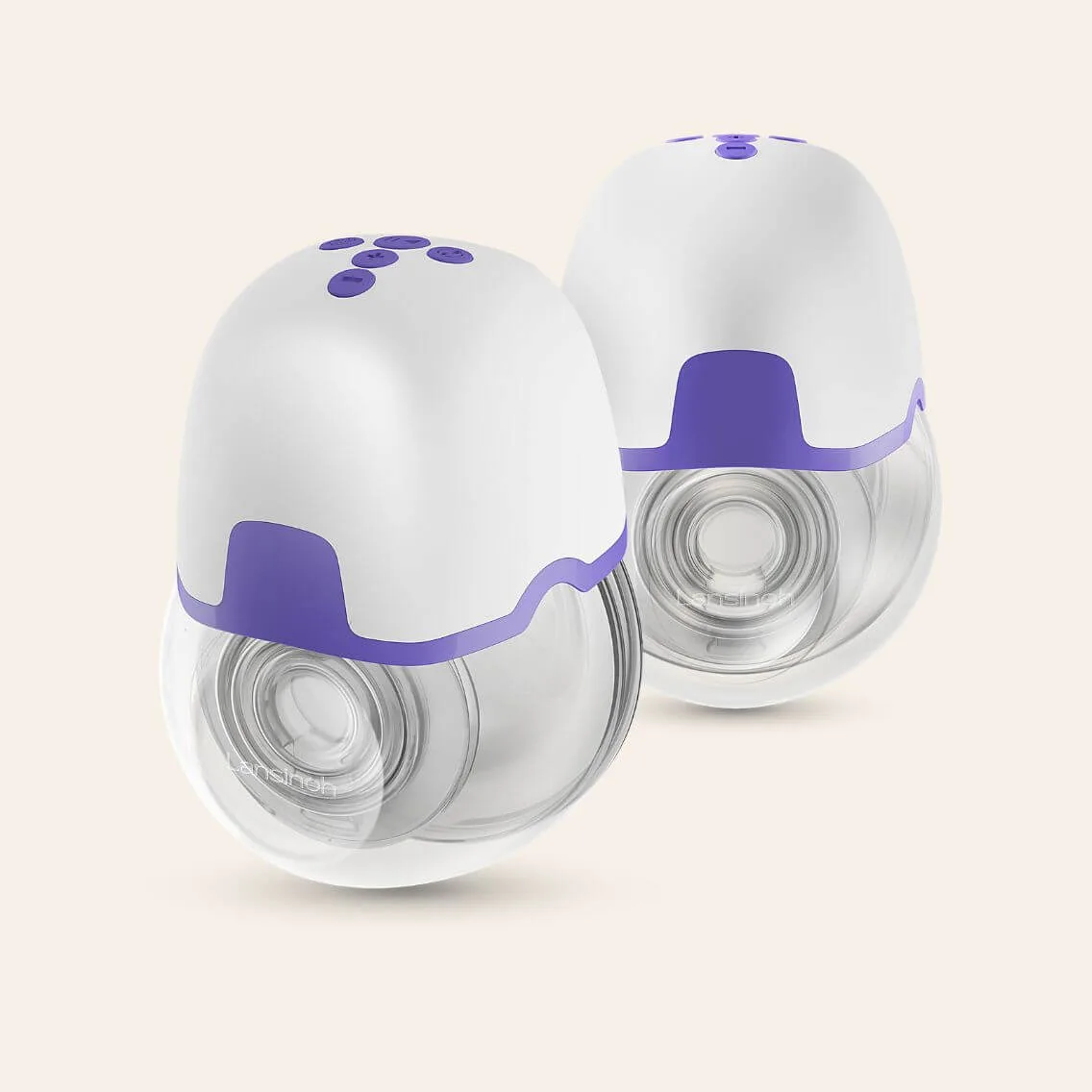
Wearable Breast Pump
-
Wearable Breast Pump: 2-phase technology and 3 pumping styles. Different phases and styles change the suction pattern. A style that does not match your current let-down phase can feel weaker than it is.
-
Wearable Breast Pump: Only 4 parts to clean and assemble, and dishwasher safe. Fewer parts means fewer places for a seal to fail. It also makes it easier to inspect every component during troubleshooting.
When the problem is not the pump: fit and body factors
Sometimes the pump is working exactly as designed, but the fit or your body's response has changed. Flange size needs can shift over the course of your breastfeeding journey, so a size that worked in the early weeks may no longer be optimal. The Lansinoh Wearable Pump includes four flange sizes precisely because one size does not fit all. If you have recently changed breast size or are experiencing discomfort, revisit your flange fit before blaming the motor.
Stress, fatigue, and timing can also affect let-down, which may make suction feel weaker even when the pump is functioning normally. Try a relaxed session at a different time of day, or use a warm compress before pumping, to see if output improves without any mechanical changes.
Signs the pump itself may need service or replacement
If you have worked through assembly, fit, cleaning, and settings without improvement, consider these possibilities.
- No change after reassembly and drying: If suction is weak even with a perfect seal and dry parts, the motor or internal components may be failing. Contact the manufacturer for warranty support.
- Intermittent suction: Suction that cuts in and out can indicate a loose connection or a failing motor. Double-check that all parts are locked in place, then seek service if the issue persists.
- Unusual noise: A pump that suddenly sounds louder or grinds may have a mechanical problem. Stop using it and contact the manufacturer.
What the supplied information does not cover
The provided product record does not include a maintenance schedule, specific replacement intervals for valves or membranes, or detailed instructions for diagnosing motor faults. For those specifics, refer to the manual that came with your pump or contact Lansinoh directly. Do not attempt to open or repair the pump motor yourself, as that may void your warranty and pose a safety risk.