Quick answer
The Gap and the Gain is a goal-setting framework that contrasts focusing on what you lack (the Gap) with measuring how far you've come (the Gain). Shifting to the Gain mindset helps you see progress, stay motivated, and build momentum in personal development.
Why the Gap holds you back
When you constantly compare your current results to an ideal future or someone else's success, you're operating in the Gap. This perspective highlights only what's missing, leading to frustration, burnout, and reduced motivation. It's a common trap in goal setting that can stall progress even when you're moving forward.
How the Gain builds momentum
Focusing on the Gain means measuring your progress from where you started to where you are now. This approach reinforces positive psychology principles by celebrating small wins, which keeps you engaged and resilient. Over time, the Gain mindset creates a feedback loop of achievement and confidence.
When to use each perspective
While the Gain is generally more productive for sustained motivation, the Gap can serve as a diagnostic tool when you need to identify specific areas for improvement. The key is to use the Gap sparingly and deliberately, then return to the Gain to acknowledge your progress and plan your next steps.
Frequently asked questions about the Gap and the Gain
What is the Gap in goal setting?
The Gap is the mental space where you compare your current situation to an ideal future or someone else's success. It focuses on what you lack, which can demotivate you and make progress feel invisible.
What is the Gain in goal setting?
The Gain is the practice of measuring your progress from your starting point to where you are now. It highlights achievements and growth, reinforcing motivation and a sense of accomplishment.
How do I shift from the Gap to the Gain?
Start by acknowledging your starting point, then regularly note specific progress you've made. Use a journal or a simple checklist to track wins, no matter how small. Over time, this habit rewires your brain to see growth. Commit to a weekly 5-minute review of your gains to reinforce the habit.
Can the Gap ever be useful?
Yes, but only as a temporary diagnostic tool to identify specific areas for improvement. Use it briefly, then return to the Gain to plan your next steps without losing sight of your progress.
Related reading
-
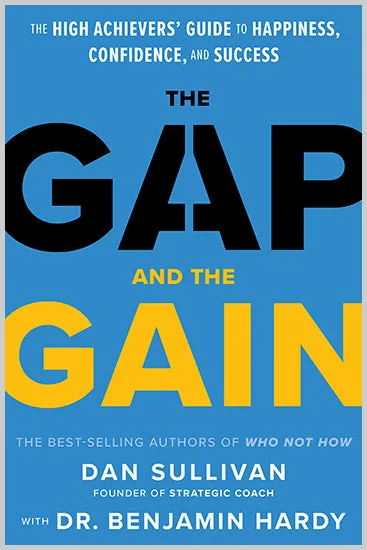
The Gap and The Gain: Dr. Benjamin Hardy shares Dan Sullivan's teaching that unsuccessful people focus on the Gap, while successful people focus on the Gain—a concept known only to Strategic Coach clients until now. This book gives you a practical framework to apply the Gain mindset in daily goal setting, backed by positive psychology and real-world coaching insights.
The Gap and The Gain