Quick Answer
Pack your carry-on with one packing cube for each category: tops, bottoms, undergarments, and tech/accessories. Use compression cubes for bulkier items to save space and keep everything visible.
Why Packing Cubes Work for Carry-Ons
Packing cubes turn a messy suitcase into a tidy set of compartments. Instead of digging through layers of clothes, you can pull out the cube you need. This is especially helpful when you are in a hurry or trying to repack in a small hotel room.
For carry-on travel, cubes also help you use vertical space. You can stack cubes side by side or on top of each other, making it easier to fit everything into a bag that must stay within airline size limits.
Compression Cubes vs Regular Cubes
Compression cubes have an extra zipper that squeezes out air, making your clothes flatter and more compact. This is great for bulky items like sweaters or jeans. However, they do add a little weight and can make clothes more wrinkled if you overstuff them.
If you are not packing bulky items, regular cubes may be enough. The key is to match the cube type to what you are packing.
How to Pack a Carry-On with Packing Cubes
- Sort your items by category: Separate your clothes into groups: tops, bottoms, undergarments, and accessories. This makes it easier to assign each category to a cube and find things later. Checkpoint: If you have more than four categories, consider using a smaller cube for accessories or combining them with another category.
- Choose the right cube size for each category: Use a large cube for bulky items like jeans or jackets, and medium cubes for tops and bottoms. Small cubes are perfect for undergarments and socks. Checkpoint: If a cube is too full, it will not compress well. Leave some room for the compression zipper to work.
- Roll or fold clothes to fit the cube shape: Rolling clothes works well for t-shirts and casual items, while folding is better for dress shirts to reduce wrinkles. Place items flat in the cube and fill the corners. Checkpoint: Avoid overfilling the cube—if you cannot close the zipper easily, remove an item or two.
- Use the compression zipper to save space: After closing the main zipper, zip the compression panel to squeeze out air. This flattens the cube and frees up space in your carry-on. Checkpoint: Do not compress delicate fabrics like silk or linen, as they may crease more.
- Place cubes in your carry-on strategically: Put heavier cubes at the bottom near the wheels and lighter ones on top. This keeps the bag balanced and easier to carry. Checkpoint: If you need quick access to something, place that cube on top or in an outer pocket.
Packing Cubes That Make Carry-On Packing Easier
-
Baggallini Medium Compression Packing Cube: This medium compression cube has clear panels for easy visibility and ventilated mesh to keep items fresh. You can see what is inside without opening the cube, and the mesh helps air circulate so clothes stay fresher during travel.
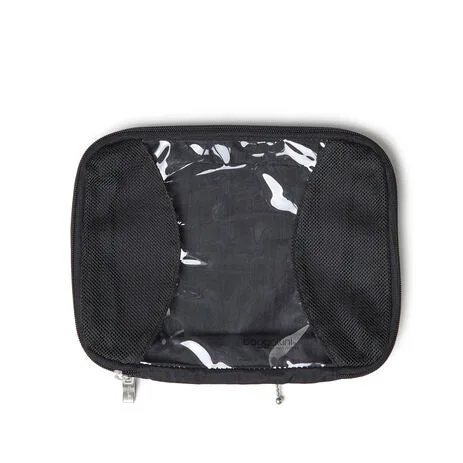
Baggallini Medium Compression Packing Cube
-
Baggallini 2 Medium / 1 Large Compression Packing Cubes: This set includes two medium and one large compression cube, all with clear panels and ventilated mesh. Having multiple sizes lets you sort your items by category and use the large cube for bulkier pieces like jackets or jeans.
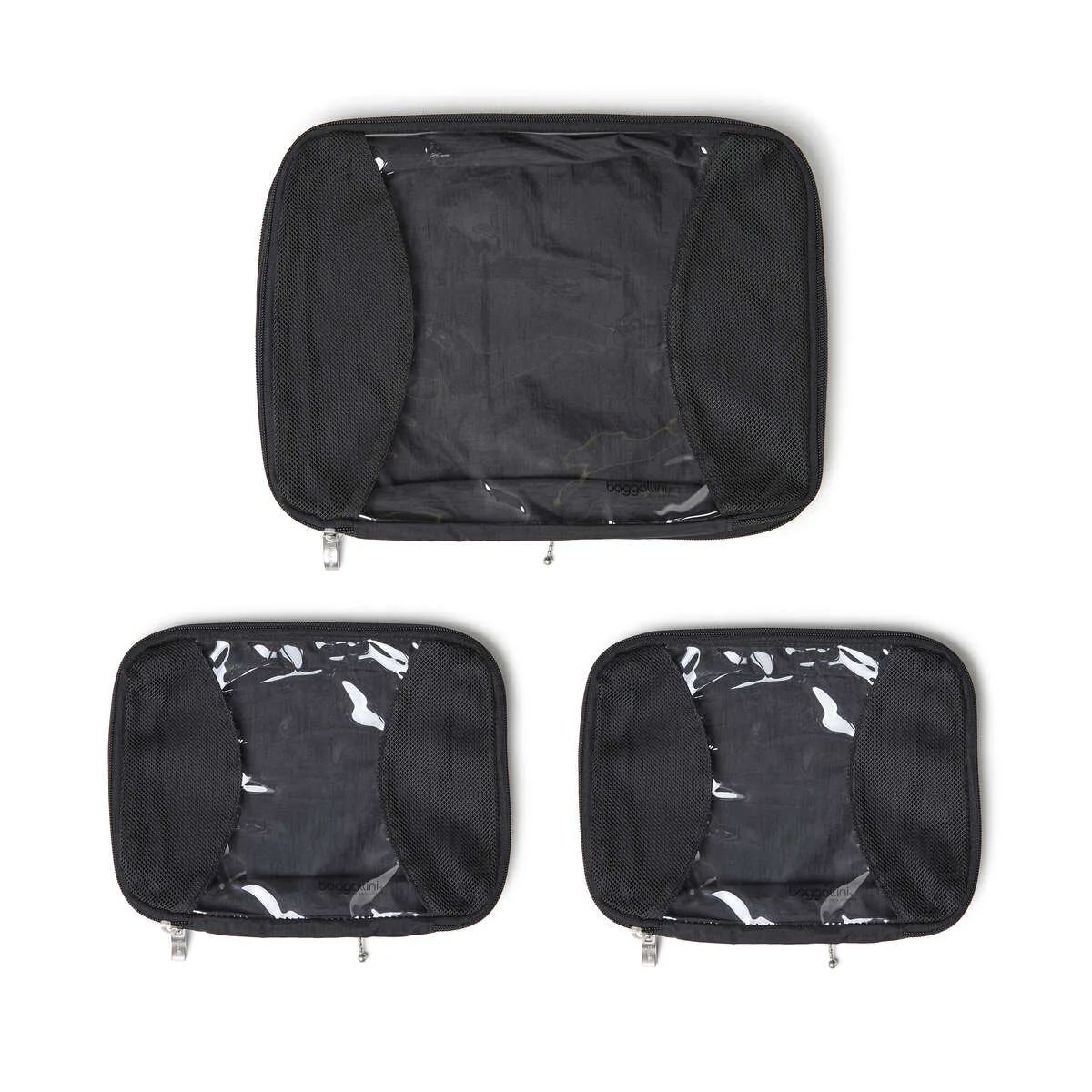
Baggallini 2 Medium / 1 Large Compression Packing Cubes