Quick answer
For most indoor rooms, mount your camera 7–9 feet high, angled down 30–45°, and aimed away from windows or bright lamps. If you rent or want a no-drill setup, choose a camera wall mount adhesive that matches your exact camera model—custom-fit brackets hold better and keep pan-and-tilt working.
Height and angle that actually reduce false alerts
A camera at eye level catches faces but also catches every passing pet and TV flicker. Raising it to 7–9 feet and tilting down 30–45° keeps the field of view on the floor and doorways, not on heat sources or moving curtains. If the camera is too high and angled flat, you get ceiling and light fixtures instead of people. Test the live view on your phone before committing: you want head-and-shoulders of a person at the far door, not the top of their head.
Match the mount to your camera model, not just the wall
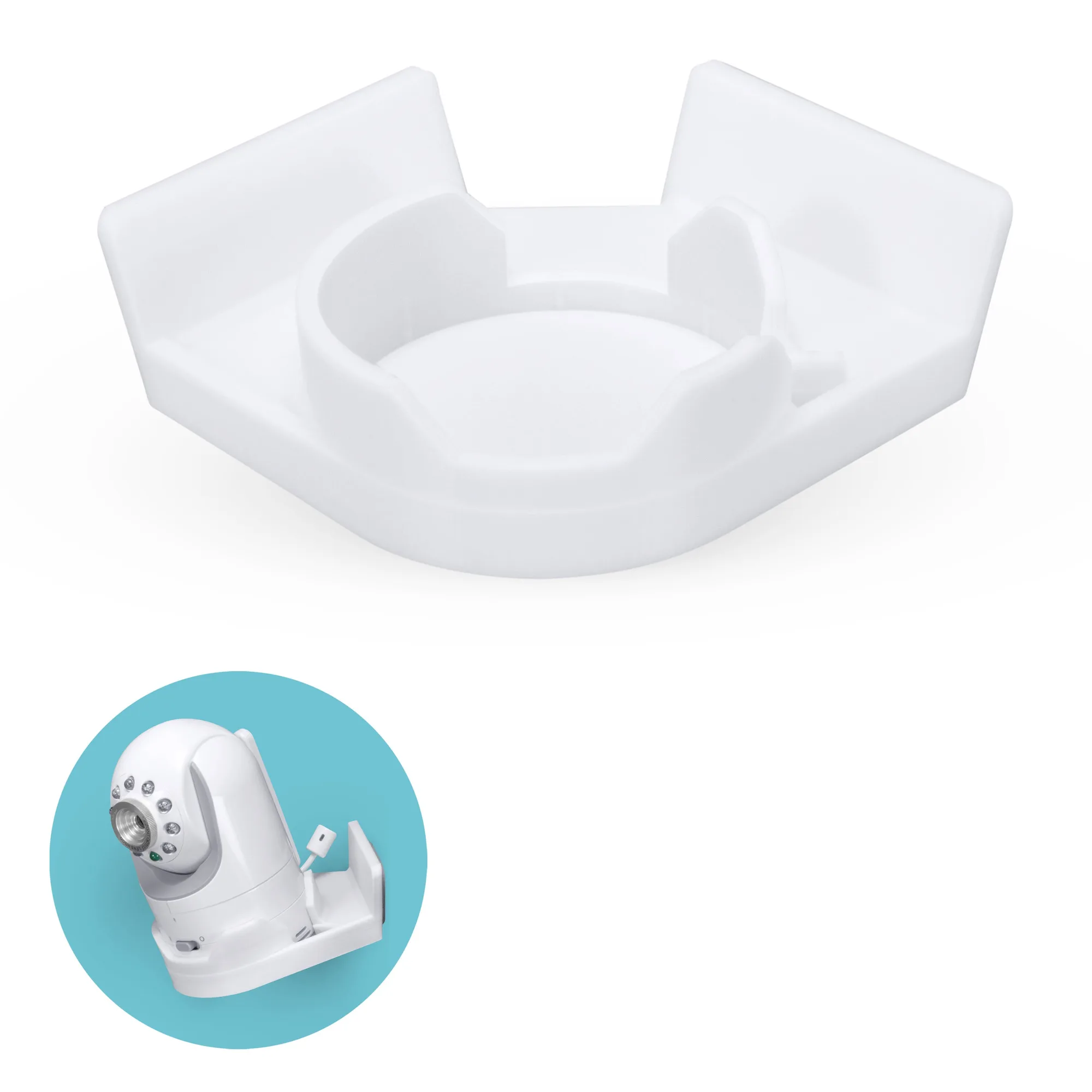
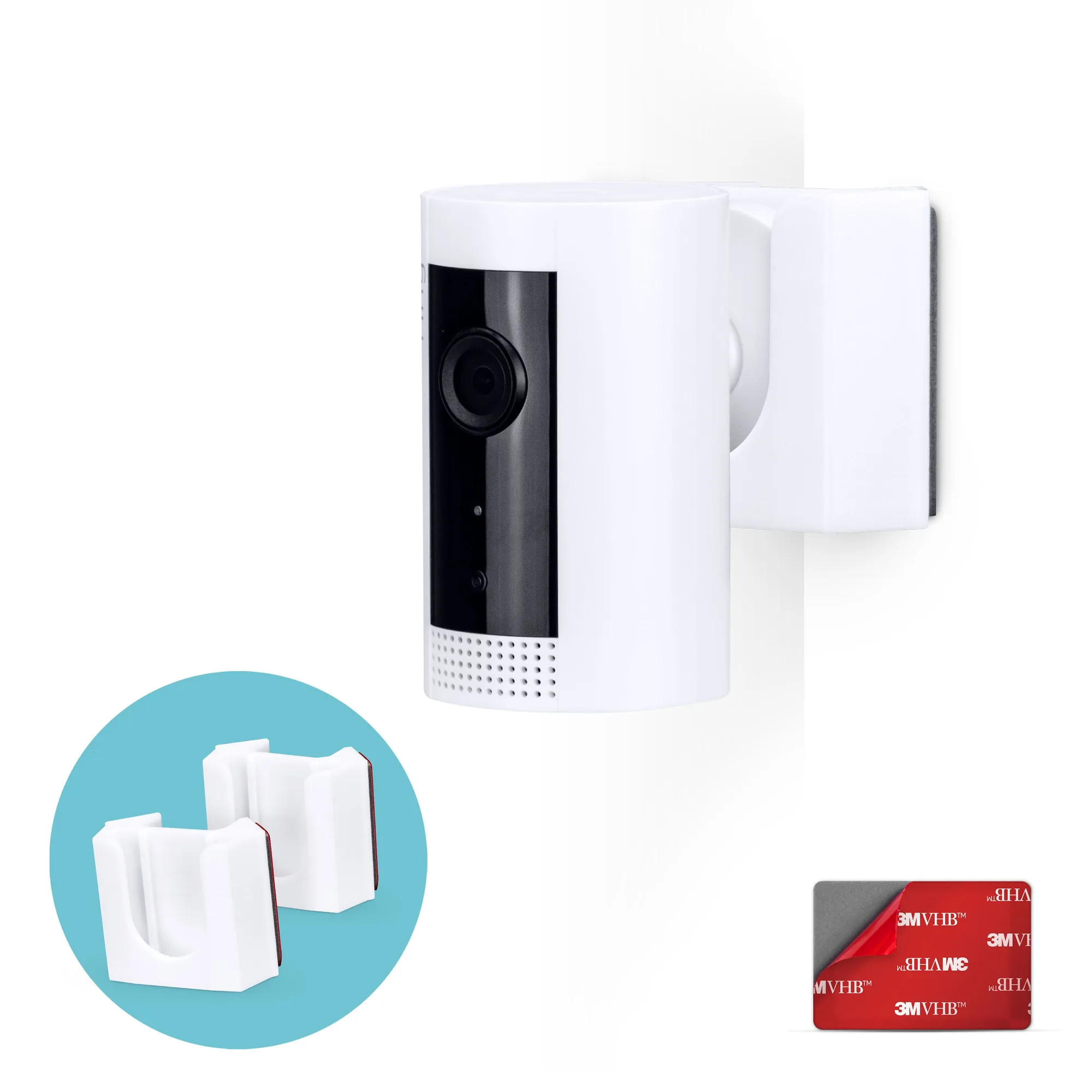
Adhesive mounts are the fastest option for renters, but the tape only holds if the bracket is shaped for your camera. A universal bracket with a flat plate can block a pan-and-tilt camera or leave the lens pointed at the ceiling. Custom-fit shelves and corner holders keep the camera seated and the lens clear. For example, the Corner Wall Mount For Ring Indoor is made only for the Ring Indoor camera—it will not fit other Ring models or brands—so check the model number before buying. The Infant Optics DXR-8 Adhesive Wall Mount Shelf is similarly custom-designed for the DXR-8, with a friction-fit that lets you move the camera between mounts without tools.
Adhesive vs screws: what the surface decides
3M VHB tape—the kind used on many no-drill mounts—bonds well to painted drywall, tile, and smooth wood, but it fails on textured wallpaper, brick, or dusty surfaces. Clean the spot with isopropyl alcohol, press firmly for 30 seconds, and let it sit for at least 6 hours before mounting the camera. Screws are the better choice for ceilings, heavy cameras, or anywhere you cannot risk a fall. If you are not sure, start with adhesive on a low-traffic wall and check it after a week.
Placement rules for routers and mesh points
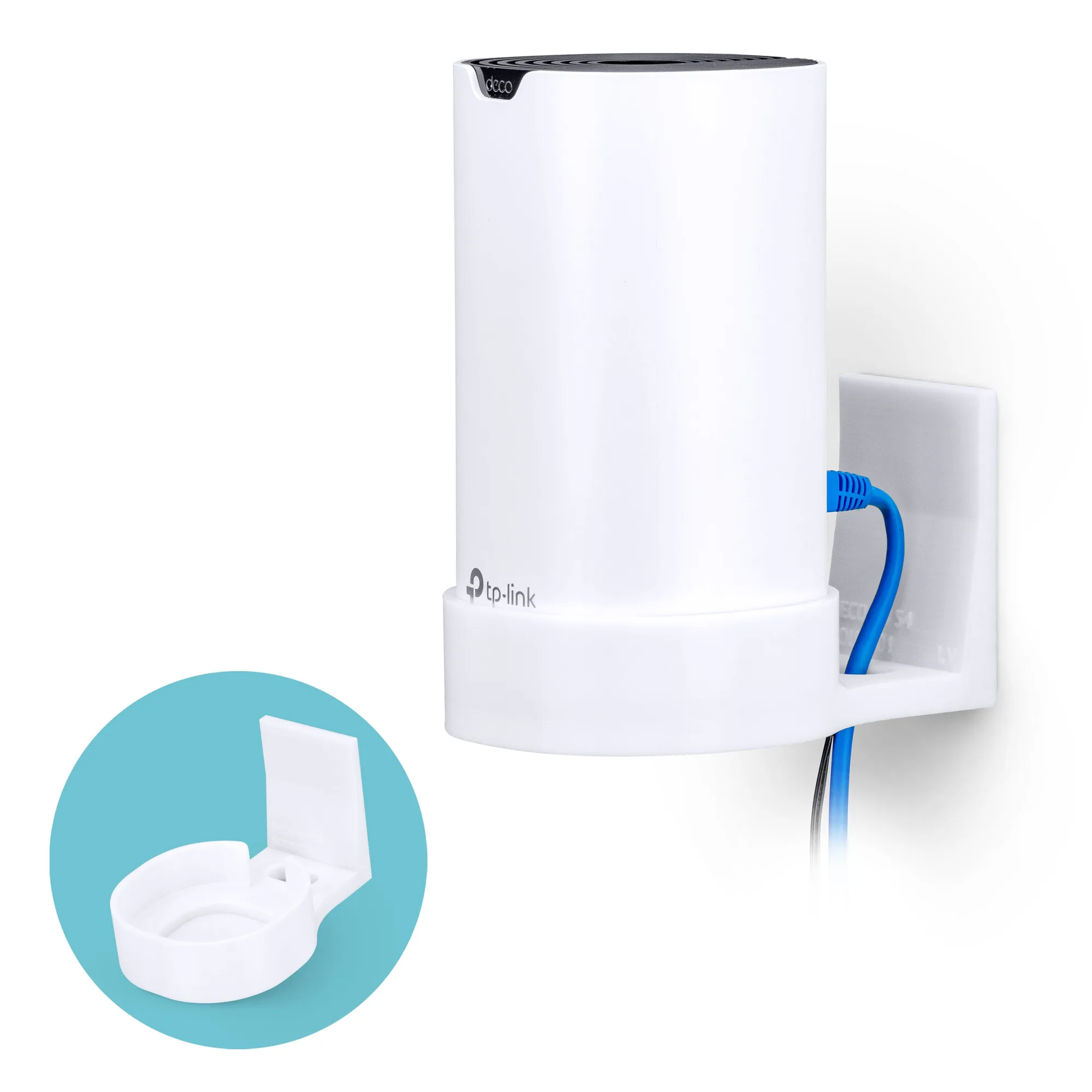
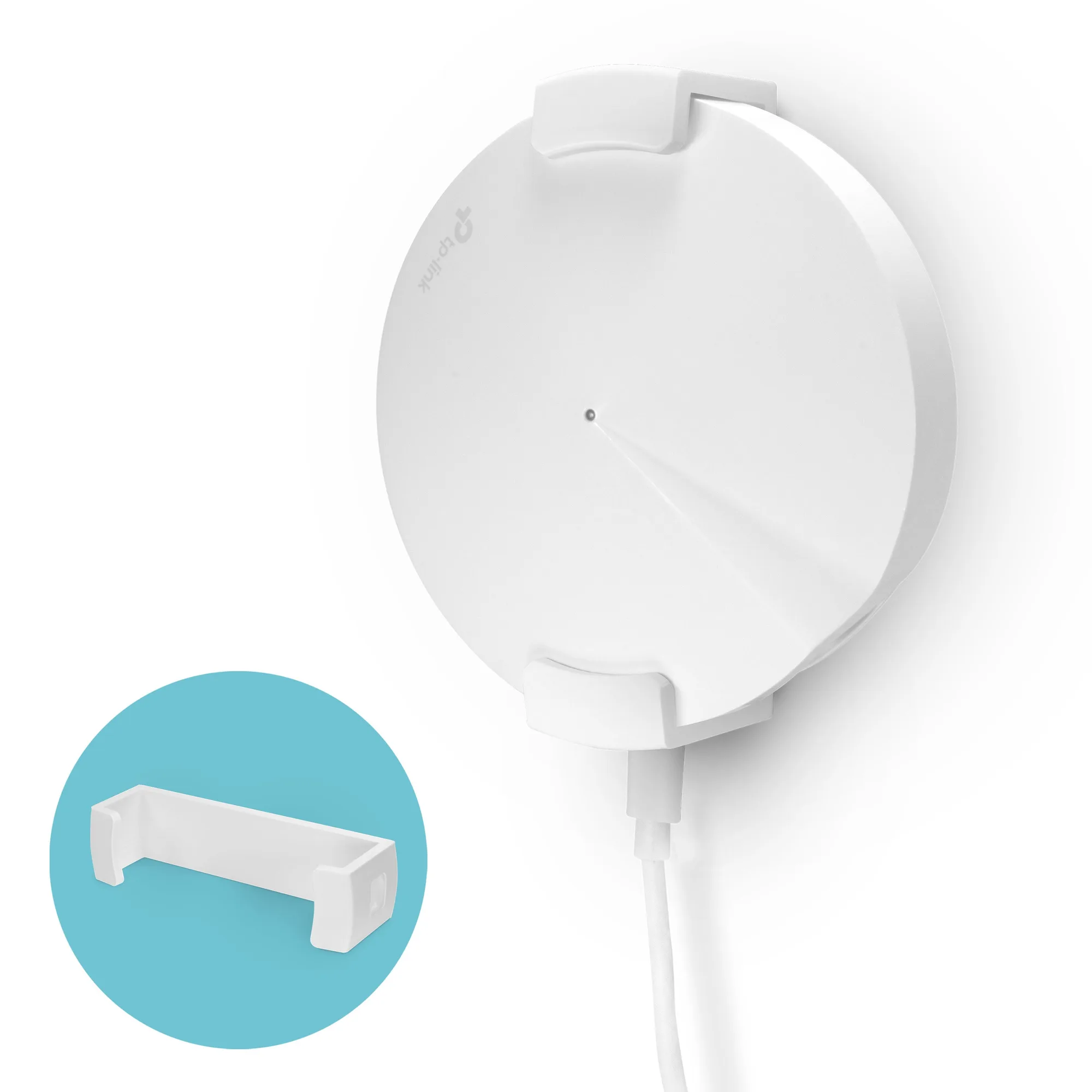
Your camera needs a strong Wi-Fi signal, so where you put the router or mesh node matters as much as the camera height. Mesh units on the floor lose range to furniture and walls. Wall-mounting a Deco M4 or S4 higher up can improve reception without moving your main router. The same logic applies to a Deco M5 or P7: a wall or ceiling bracket keeps the unit off the floor and in a clearer path to your cameras. Before you buy a mount, confirm the exact model—these brackets are shaped for specific Deco units, not universal.
Decision rules for indoor camera mounting
- If you rent or cannot drill: Choose a camera wall mount adhesive that is custom-fit to your exact camera model. Clean the surface, press firmly, and wait at least 6 hours before attaching the camera. Best for smooth painted walls and lightweight indoor cameras.
- If you need pan-and-tilt to work: Avoid flat universal brackets that block the camera base. Pick a shelf or corner holder shaped for your model, like the Infant Optics DXR-8 shelf, which is designed not to interfere with pan and tilt. Check the product description for the exact model name before buying.
- If the camera weighs more than a pound or goes on a ceiling: Use screws into a stud or a proper ceiling mount. Adhesive tape is strong in shear but can fail in heat or on textured surfaces. When in doubt, screw it.
- If Wi-Fi drops when the camera is on: Raise your mesh router or access point. A wall mount for your Deco M4, S4, M5, or P7 can lift the unit off the floor and improve line-of-sight to the camera. Fix the signal path before you buy a second camera.
Products that solve specific mounting problems
- Corner Wall Mount For Ring Indoor (2 Pack) Security Camera - Adhesive Holder, No Hassle Bracket, Strong 3M VHB Tape, No Screws, No Mess Install: Corner Wall Mount For Ring Indoor (2 Pack) uses 3M VHB tape and installs without screws; it is compatible only with the Ring Indoor camera. A no-drill corner mount for renters or anyone who wants a Ring Indoor camera aimed down a hallway without tools. The model-specific fit means it will not work with other Ring cameras.
- Infant Optics DXR-8 Adhesive Wall Mount Shelf - Easy To Install, No Screws or Mess: Infant Optics DXR-8 Adhesive Wall Mount Shelf is custom-designed for the DXR-8 baby monitor with a friction-fit that allows quick placement and does not affect pan and tilt. Lets you move the baby monitor between rooms without re-taping, and keeps the pan-and-tilt range clear for full-room viewing.
- TP-link Deco M4 & S4 Adhesive Wall Mount Holder - No Screws, Easy to Install: TP-link Deco M4 & S4 Adhesive Wall Mount Holder places the mesh unit higher on the wall without tools. Raising a Deco M4 or S4 off a table can improve Wi-Fi coverage to your cameras, especially in apartments where the router sits low.
- TP-Link Deco M5 & P7 Wall & Ceiling Mount Adhesive Bracket, Easy to Install: TP-Link Deco M5 & P7 Wall & Ceiling Mount Adhesive Bracket is designed for the Deco M5 and P7 and can be mounted on a wall, ceiling, shelf, or most flat surfaces. Gives you flexibility to place the mesh point where the signal is strongest, not just where a table happens to be.
Who this advice fits
Best for
- Renters who need no-drill indoor camera placement
- Homes with a single-story layout and standard 8–9 ft ceilings
- Baby monitor users who move the camera between rooms
Not for
- Outdoor cameras exposed to rain or extreme heat
- Very heavy or professional PTZ cameras over 2 lb
- Textured or wallpapered walls where adhesive tape will not bond