Quick answer
If your sunglasses give you headaches, the most common culprits are a frame that’s too tight, heavy lenses, or a tint that tricks your eyes. We’ll walk through each symptom and what to do about it.
Why frame pressure matters
A frame that clamps too hard on your temples or behind your ears can compress nerves and blood vessels, triggering a tension headache within 30 minutes of wear. This is especially common with metal or thick plastic frames that lack adjustable nose pads.
If you notice red marks or a throbbing sensation at your temples after removing your sunglasses, the frame is likely the problem. Look for lightweight designs with adjustable fit features.
Lens weight and your neck
Heavy lenses—common in large aviator or oversized shield styles—can strain your neck and shoulders, which then radiates tension up into your head. The effect builds gradually, so you might not connect it to your sunglasses until the headache sets in.
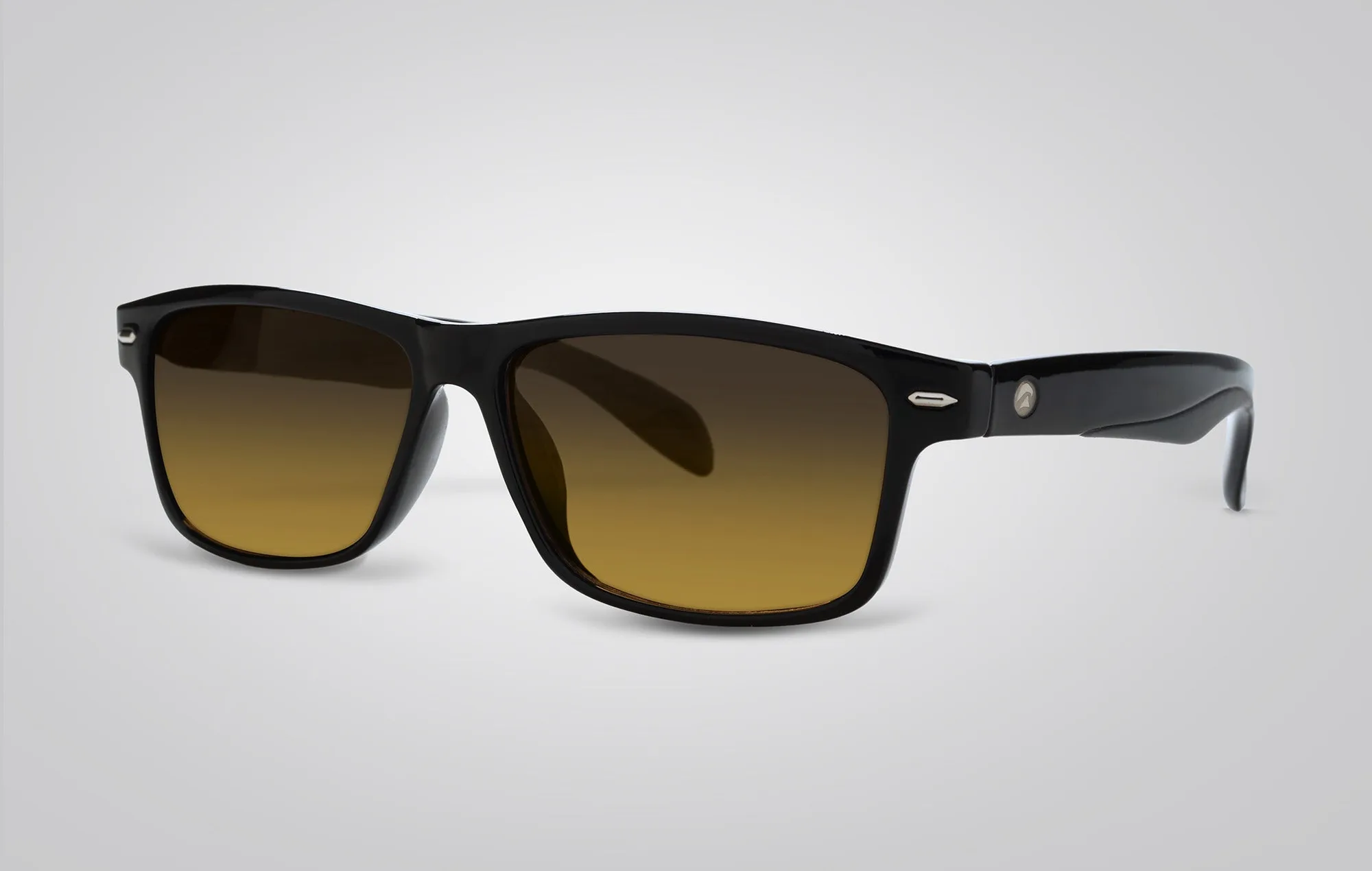
Switching to a lighter frame or thinner lens material (like polycarbonate) can reduce that load. The Casey Sunglasses, for instance, use lightweight but durable TriLenium® 7 lenses that help minimize fatigue.
The tint trap
Not all tints are equal. Very dark lenses that don’t block the right spectrum can force your pupils to dilate more, letting in more unfiltered light and causing eye strain. Polarized gradient lenses, like those in the Casey, are designed to reduce glare and block scattered blue light without making your eyes work harder.
If you suspect tint, try a medium-gray or brown lens that maintains natural color perception. Avoid cheap lenses that only darken without UV protection.
Diagnose and fix your sunglass headache
- Symptom: temple pressure or ear soreness: Check if the frame is too tight. Loosen the arms using a small screwdriver or gently bend the temples outward. If the frame is non-adjustable, consider a wider or more flexible style.
- Symptom: neck or shoulder tension after wearing: Weigh your sunglasses on a kitchen scale. If they exceed 30 grams, switch to a lighter frame or thinner polycarbonate lens. The Casey is a good lightweight option to try. If you can’t find a lighter pair, limit wear to 2 hours at a time.
- Symptom: eye strain or headache after 20-30 minutes: Check if the lens tint is too dark or lacks polarization. Swap to a polarized gradient lens—like the Casey’s TriLenium® 7—that reduces glare without forcing your eyes to adapt. If symptoms persist after trying these fixes, the sunglasses may not be right for your prescription needs. See an optometrist.
Product spotlight
-
Casey Sunglasses: The Casey features TriLenium® 7 polarized gradient lenses designed to block scattered blue light and 99.9% of the sun’s harmful UV rays. This means less eye strain and a reduced chance of a headache from lens tint, while still providing full UV protection.
Casey Sunglasses