Quick answer
In most cases, a silicone toy that feels tacky, draggy, or less squishy than you remember is coated in a film of dust, lint, or dried lubricant, not permanently degraded. Wash it with a mild, fragrance-free soap, rinse thoroughly, and let it air dry before you assume the material has changed. Only a visible tear, a persistent sticky patch that survives cleaning, or a strong new odor means the toy itself has reached the end of its useful life.
Symptom: the surface feels tacky or draggy
Silicone is naturally grippy, and that grip increases the moment anything sits on the surface. Dust, clothing fibers, and the residue left by water-based lubricant all create a thin film that changes how the toy glides. A toy that felt silky last month can feel like it is catching on your skin today without any change in the silicone itself.
This is the most common reason a silicone toy feels different, and it is also the easiest to fix. Warm water, a small amount of mild soap, and your fingertips are enough. Avoid boiling or dishwashing a toy you have not cleaned first, because heat can bake residue onto the surface and make the tackiness harder to remove.
Symptom: the toy feels firmer or less squishy
Firmness is a fixed property of the silicone, so a toy does not gradually stiffen on its own. What changes is your perception: cold room temperatures make silicone feel firmer in the hand, and a toy that has been stored in a cool drawer will feel denser than the same toy warmed to body temperature. If you use the toy for a few minutes, the material warms and the squish usually returns.
If the toy genuinely feels different in a way that temperature does not explain, check whether you are comparing two different firmness ratings. A soft toy and a medium toy from the same maker can feel like different products even when the shape is identical.
Symptom: a shiny or chalky patch appears
Localized shiny spots often come from friction against a storage bag, a drawer edge, or another toy. Chalky white patches are usually mineral residue from hard water left behind after rinsing. Neither is automatically a defect, but both change the surface enough that the toy feels unfamiliar.
Rinse with distilled or filtered water if your tap water is very hard, and pat the toy dry with a lint-free cloth instead of letting it air dry on a towel. Store silicone toys separately or in a breathable pouch so they are not pressed against anything abrasive.
When the change is real wear, not residue
Silicone is durable, but it is not indestructible. A tear at the base, a nick along the shaft, or a sticky area that stays sticky after two proper washes are signs the material has been compromised. This can happen after contact with incompatible lubricants, prolonged exposure to direct sunlight, or repeated friction against a sharp edge.
Once the surface is physically damaged, cleaning will not restore it. A torn or persistently tacky toy should be retired rather than used, because the damaged area can harbor bacteria and may shed small pieces.
How to tell the difference in one wash
Wash the toy with mild soap and warm water, rinse until the water runs clear, and let it dry completely. If the surface returns to its familiar feel, the change was residue and you can keep using the toy as normal. If the tackiness, roughness, or stickiness remains in the same spot after drying, treat it as wear and stop using that toy.
For toys with textured surfaces, pay attention to whether the change is uniform or localized. A uniform change across the whole toy points to a cleaning or storage issue. A single changed patch points to damage or contact with something incompatible.
Diagnose the change before you replace the toy
- Tacky or draggy surface: Wash with mild, fragrance-free soap and warm water, rinse until clear, and air dry completely. If the surface returns to normal, the cause was residue from lubricant, dust, or lint. Keep the toy and switch to a lint-free storage pouch.
- Firmer or less squishy than before: Warm the toy in your hands or use it for a few minutes before judging firmness. Compare it against the original firmness rating rather than against memory alone. If it still feels wrong at body temperature, check whether you are comparing two different firmness ratings.
- Shiny, chalky, or rough patch: Rinse with filtered water and dry with a lint-free cloth. If the patch remains after drying, it is surface damage rather than mineral residue. Stop using the toy if the patch is sticky, torn, or shedding.
- Tear, nick, or persistent sticky spot: Do not try to repair or sand the surface. Damaged silicone can harbor bacteria and may shed small pieces during use. Retire the toy and replace it rather than continuing to use it.
Catalog details that affect how a toy ages
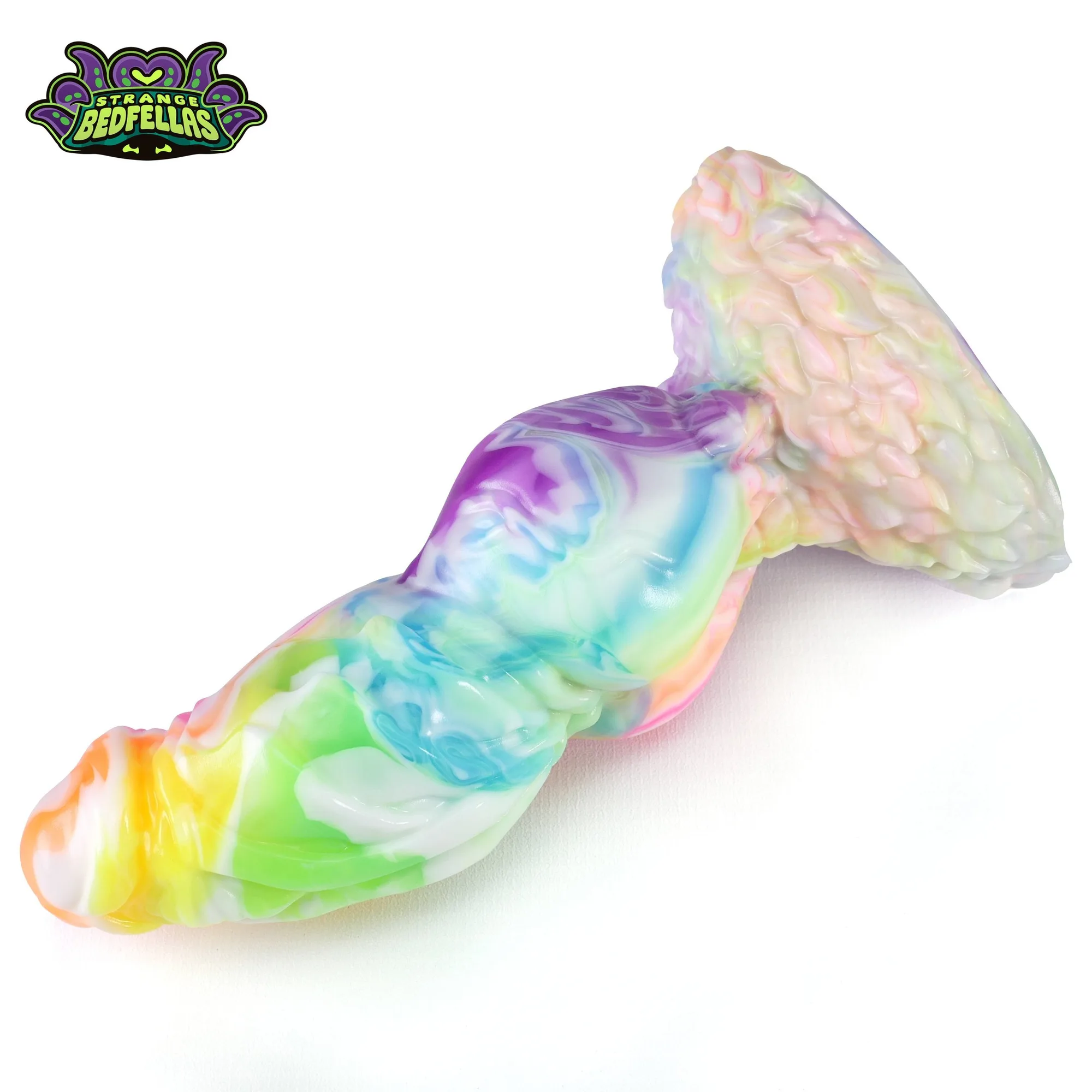
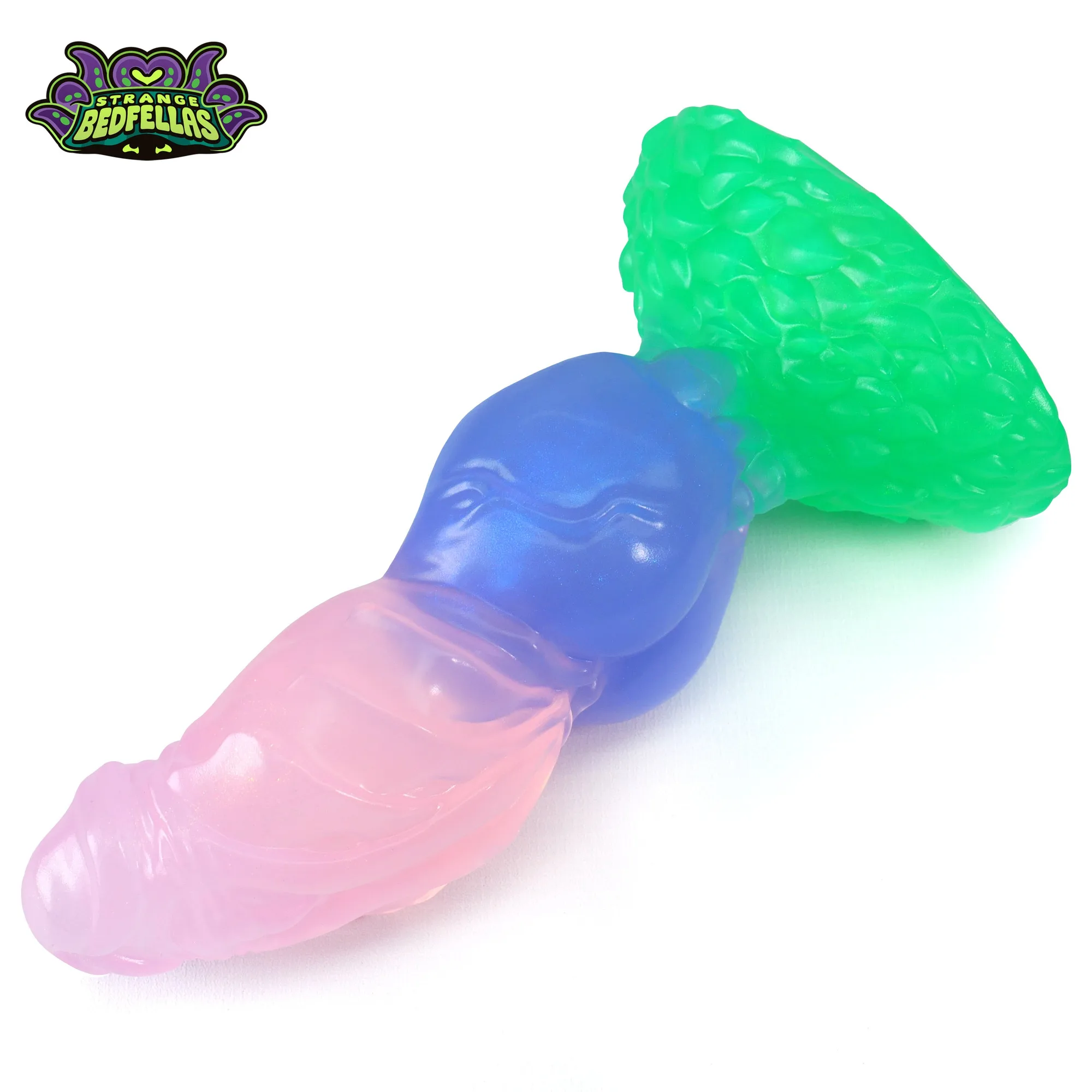
- Medium Tyv -- Near Clear 31* silicone -- T-5736: Medium Tyv -- Near Clear 31* silicone -- T-5736 has a total length of 7.25 inches, a usable length of 6 inches, a head diameter of 1.3 inches, and a widest shaft diameter of 2 inches, in Near Clear 31* firmness. Near Clear silicone shows surface residue and fine scratches more visibly than opaque colors, so a slightly tacky or cloudy patch is easier to spot on this toy and worth cleaning before you assume the material has changed.
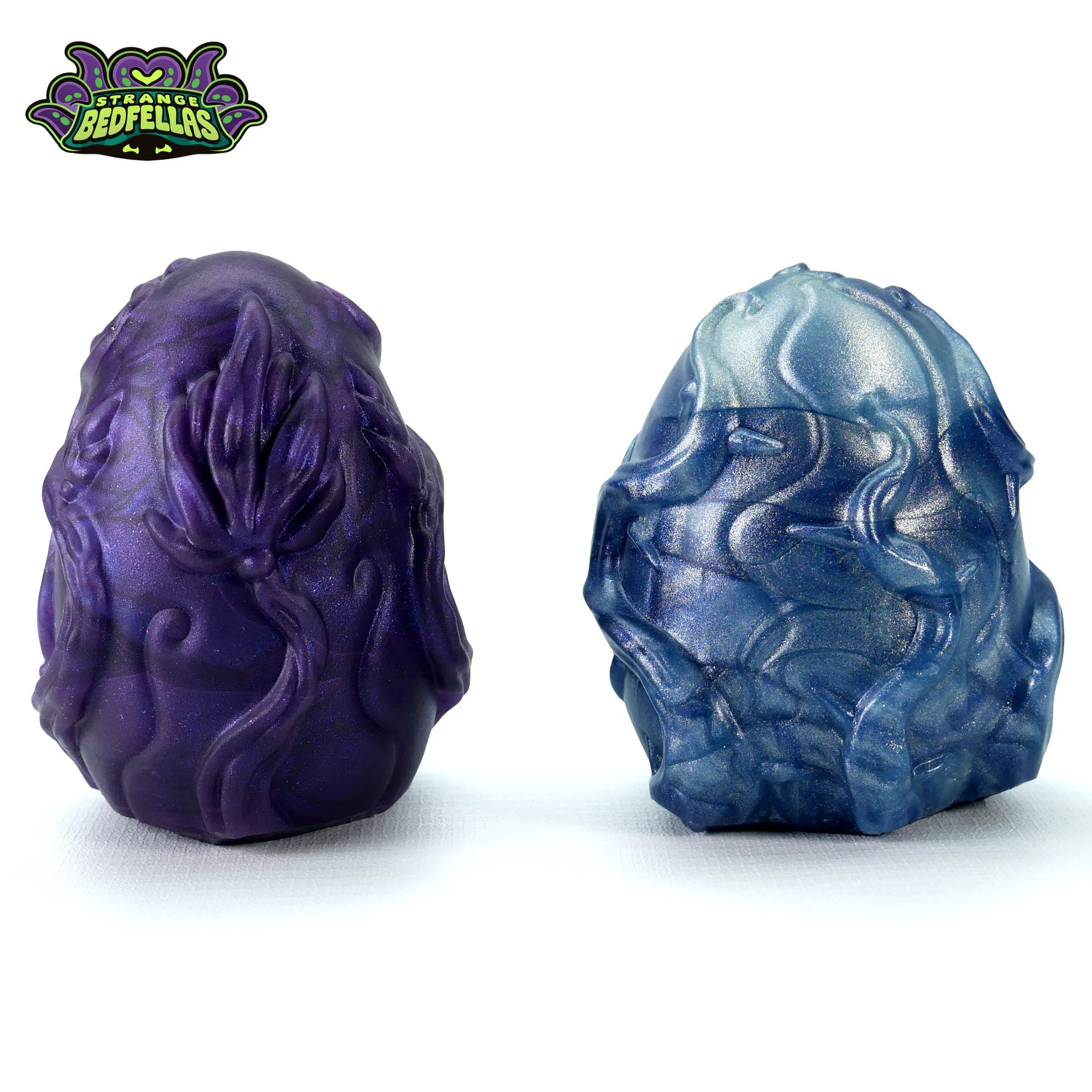
- Small Emme Egg Pair -- Soft silicone -- E-2094: Small Emme Egg Pair -- Soft silicone -- E-2094 is made in Soft (0030) firmness with a total length of 2.5 inches and a widest circumference of 6 to 7 inches depending on the style. Soft silicone is more prone to picking up lint and holding a film of lubricant, so the eggs may need a more thorough rinse than a firmer toy to return to their original feel.
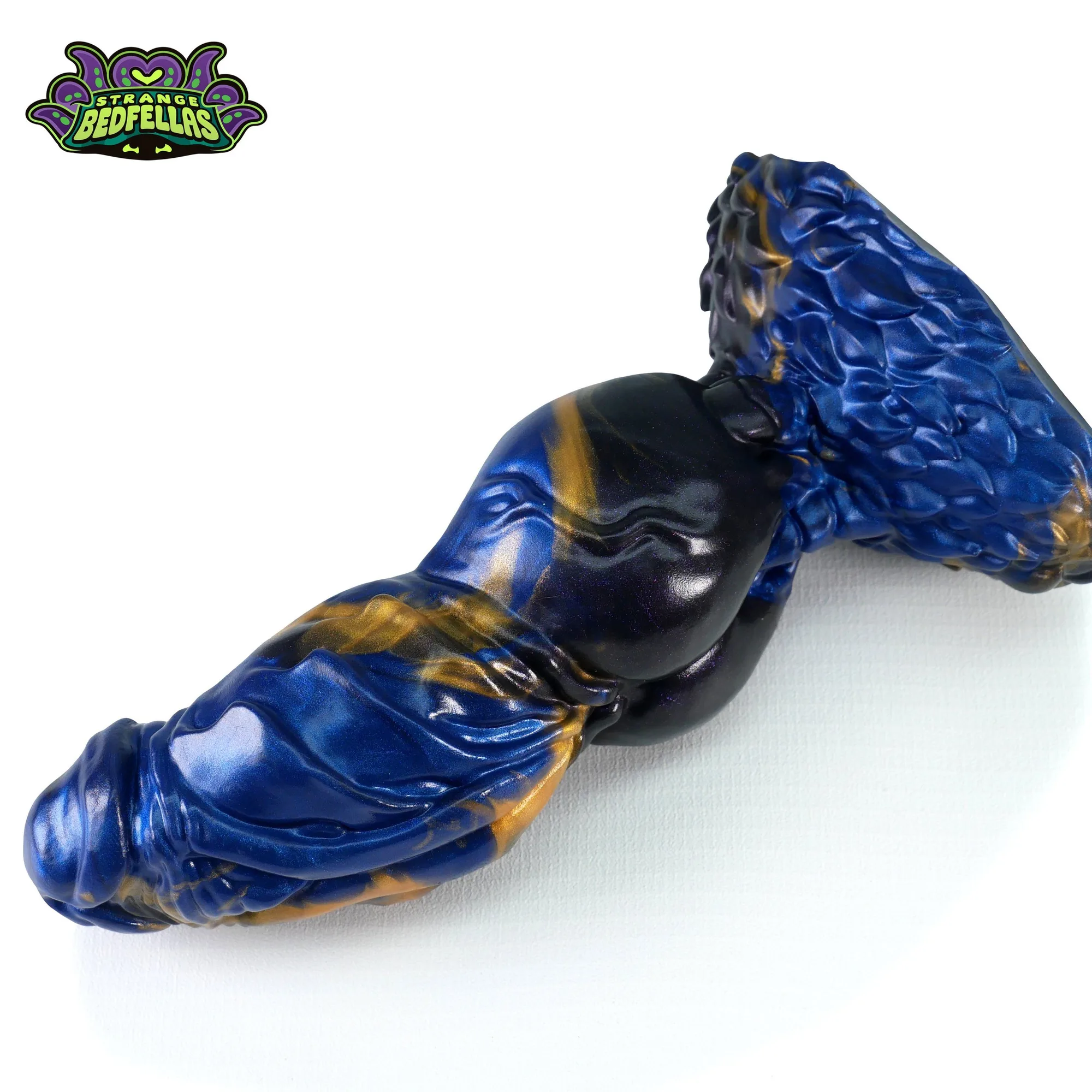
- Large Slavermaw -- Medium silicone -- SLM-46: Large Slavermaw -- Medium silicone -- SLM-46 is made in Medium (0050) firmness with a total length of 9 inches, a usable length of 7.75 inches, a tip diameter of 2 inches, and a widest shaft diameter of 2.5 inches. Larger toys have more surface area to clean and dry, and any residue left in the wider shaft or textured areas is a common reason the toy feels different on the next use.