Quick answer
Limited playing cards sell out because the print run is fixed and announced in advance—often just 50 to 150 decks—and collectors buy as soon as a drop goes live. Once that run is gone, the printer doesn't reprint it. If you want a specific deck, buy when it's available rather than waiting for a restock that may never come.
How a limited card drop actually works
A drop starts with a fixed print quantity set before the deck is announced. The brand prints that exact number, sells them through the store or a drop page, and closes the release when inventory hits zero. There is no open pre-order window that runs indefinitely, and there is no second printing unless the brand explicitly says so. The scarcity is the point: it gives the deck a defined end, which is what makes a limited run collectible rather than just another product on a shelf.
Why decks sell out in minutes instead of weeks
Speed comes from three things stacking together: small quantity, a known release time, and a buyer group that already knows the brand. When only 150 units exist and several hundred people are watching the same announcement, the sellout is arithmetic, not hype. Fulton's has run editions in this range before, including the Lucky Green Tuck at 150 made, and those numbers leave very little room for casual browsing after launch.
What a restock really means for a collector deck
A restock is almost never a reprint of the same limited deck. It usually means one of three things: leftover inventory found in storage, a small number of returns or held-back units, or a completely new variation with different art or packaging. If a deck was capped at 50 or 150 and the brand has confirmed that cap, treat any future appearance as a different product, not a second chance at the same one. Check the product page wording carefully—if it says the run is limited to a set number, that number is the ceiling.
How to prepare for a drop you actually want
Know the release time in your own timezone, not the brand's, and set a reminder for five minutes before. Log in and save your payment details ahead of the drop so you aren't typing card numbers while inventory disappears. If the deck matters to you as a collector, buy it at launch rather than waiting to see if it lingers—waiting is the single most common reason people miss a limited run.
FAQ: limited drops, restocks, and release timing
Will a sold-out limited deck be reprinted?
No, if the brand stated a fixed run. A 50-sheet or 150-deck cap is the total production number, and reprinting would break the promise that made it limited. A new colorway or variation may appear later, but it is a different product. Treat a confirmed print cap as final.
How do I know a drop is coming before it sells out?
Follow the brand's release schedule and email list rather than relying on social posts after the fact. Fulton's announces editions through its own channels, and the most useful habit is checking the schedule weekly instead of daily. Set a weekly reminder to check the release schedule.
Is it worth buying a limited deck if I plan to open it?
Yes, if you want to use it. A limited run is still a functional deck; the cap affects collectibility, not playability. If you plan to shuffle it regularly, expect normal wear and store it away from humidity and direct sun. Buy for use if you'll use it—scarcity alone isn't a reason to keep it sealed.
Examples of limited runs in the current catalog
- FULTON STREET MTA PLAYING CARDS (1972 VIGNELLI MAP) LIMITED UNCUT SHEET: Only 50 of these uncut sheets, pulled directly from the press of the US Playing Card Co., are available. A 50-unit ceiling means the sheet is a display piece with a hard cap—once those 50 are gone, there is no reprint to wait for.
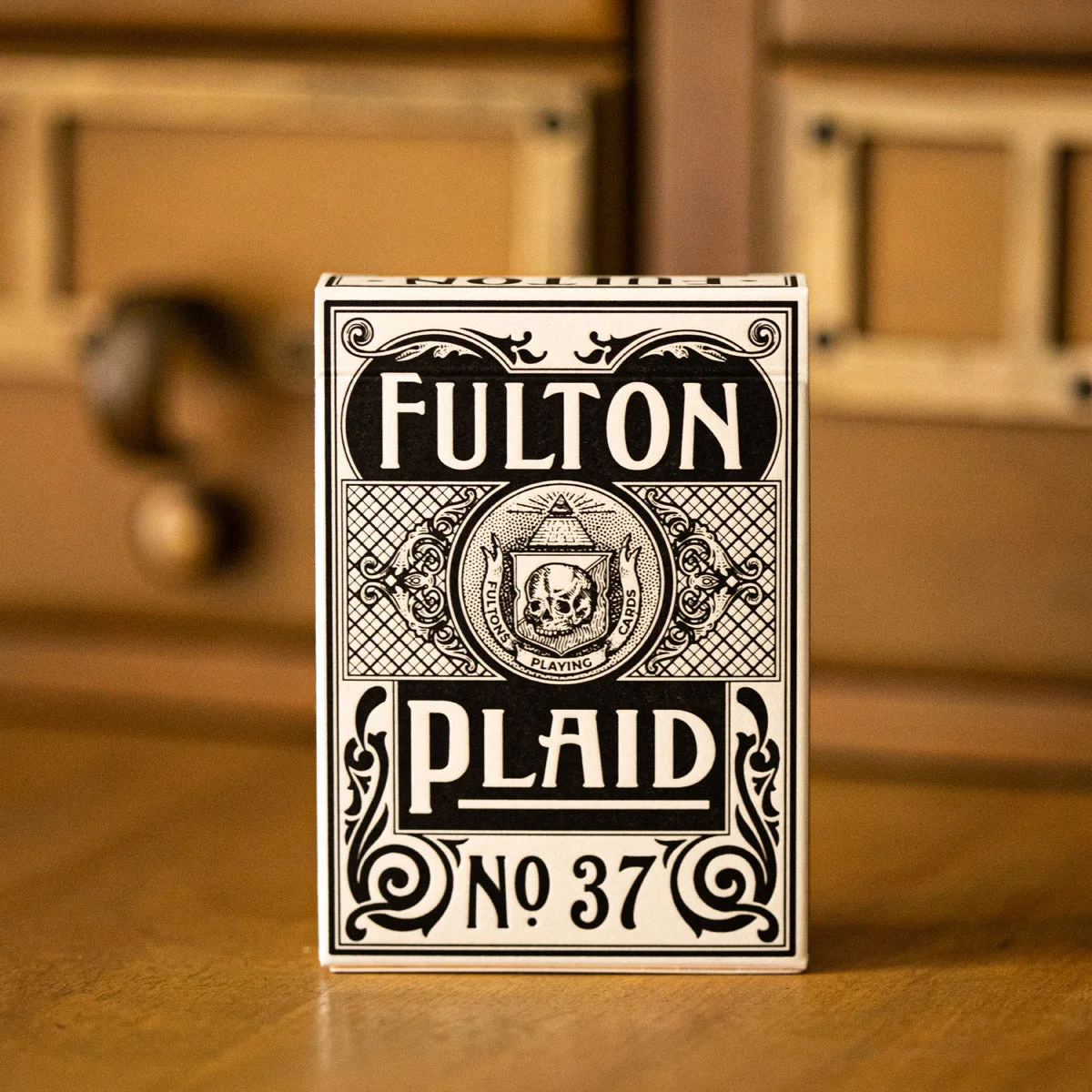
- FULTON PLAID PLAYING CARDS LUCKY GREEN TUCK EDITION: The Lucky Green Tuck Edition of Fulton Plaid is limited to 150 made and carries the custom pressed 037 Spade Seal marking it as part of the CLUB 37 Series. The seal is a quick visual check that you're holding the limited edition rather than a standard Plaid deck, which matters when buying secondhand.
- FULTONS NOIR "WHITE JAZZ" PLAYING CARDS: White Jazz is the inverted-color variation of Noir, featuring art unique to the white printed version. It shows how brands extend a release without reprinting the original—a new colorway is a separate product, not a restock of the first deck.