Quick answer
If your baby refuses the spoon, the most common reasons are developmental readiness, sensory aversion, or a mismatch between the spoon design and your baby's grip. Instead of forcing the issue, try offering a smaller, softer spoon designed for self-feeding, and let your baby explore the spoon as a toy first.
Common Causes of Spoon Refusal
Babies often reject spoons because they are not developmentally ready for the motor skills required to scoop and bring food to their mouth. Around 6-9 months, many babies prefer using their hands to explore textures and tastes. Another cause is sensory sensitivity: the feel of metal or hard plastic on gums or newly erupted teeth can be unpleasant. Finally, the spoon itself may be too large, too deep, or have a handle that is difficult for a baby's palm to grasp.
How to Encourage Spoon Feeding Without Pressure
Start by letting your baby hold the spoon during meals, even if they just bang it or chew on it. This builds familiarity. Pre-load the spoon with a small amount of food and place it on the tray or table so your baby can pick it up themselves. Use a spoon with a short, chunky handle that fits a baby's fist, like the Baby-Led™ Tiny Spoon, which is designed to help baby learn how to feed independently. Offer the spoon alongside finger foods so your baby can choose their method. Avoid hovering or trying to guide their hand; self-feeding is a skill they need to practice on their own terms.
When to Consider Other Approaches
If your baby consistently refuses the spoon after several weeks of low-pressure exposure, consider whether they are getting enough practice with hand-to-mouth coordination through finger foods. Some babies skip the spoon phase entirely and move directly to using their hands, then later to forks. If you are concerned about nutritional intake, you can offer purees on a pre-loaded spoon that your baby can pick up, or use a pouch feeder like the Baby-Led™ Gumline Feeder with the Ice Tray to freeze breast milk or purees for self-feeding. Always consult your pediatrician if your baby shows signs of distress or is not meeting other developmental milestones.
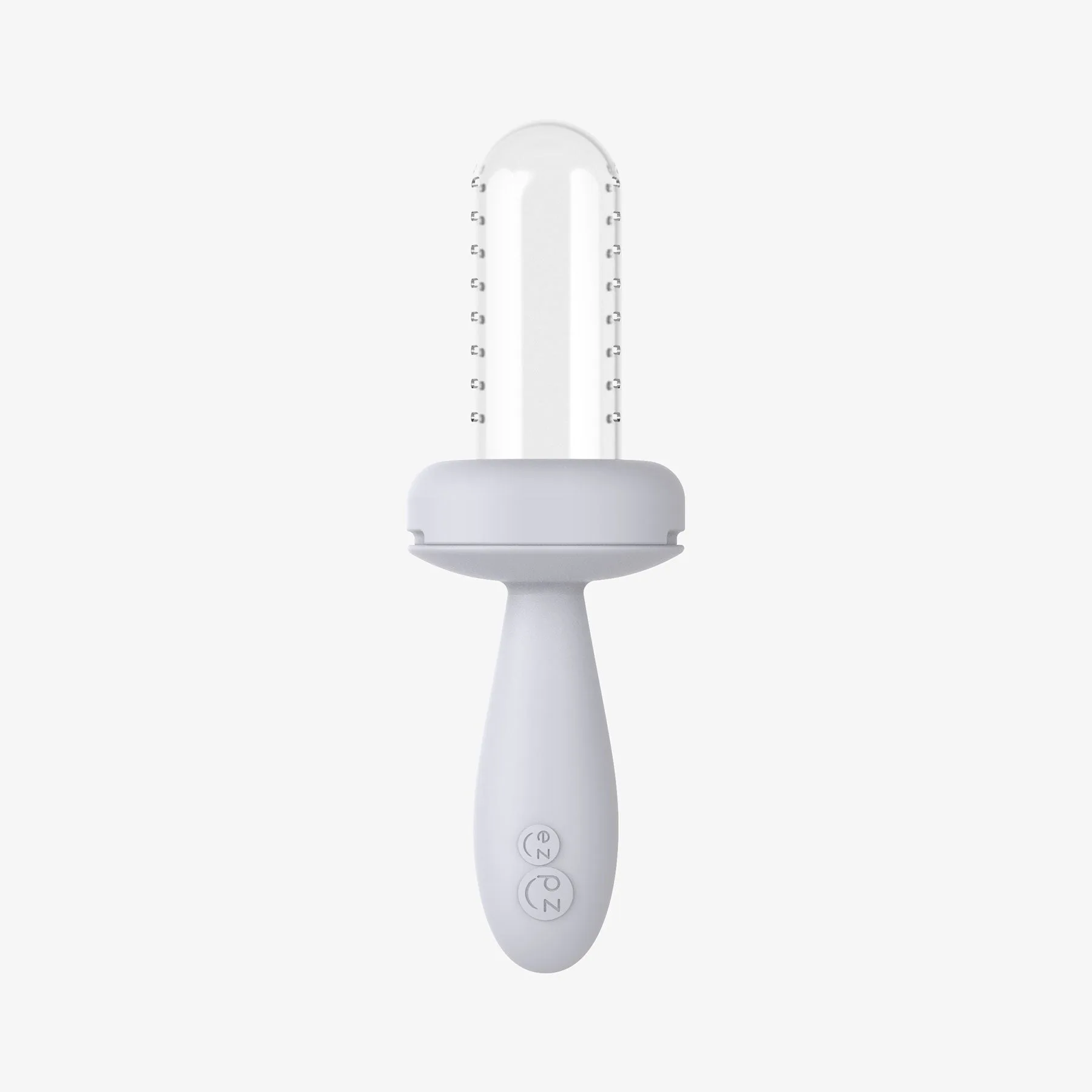
Baby-Led™ Gumline Feeder
Diagnosis: Spoon Refusal
- Symptom: Baby pushes the spoon away, turns head, or cries when a spoon approaches their mouth. This is a common behavior, not necessarily a feeding problem.
- Likely Cause: Developmental mismatch: baby wants to feed themselves but the spoon is too large, too hard, or the handle is too long for their grip. Sensory aversion to metal or hard plastic is also common. Try a soft, small, baby-led spoon made of silicone.
- Corrective Action: Let baby hold and explore the spoon independently. Pre-load it and place it on the table. Offer finger foods alongside. Use a spoon designed for self-feeding, like the Baby-Led™ Tiny Spoon. Focus on low-pressure exploration, not accuracy.
- When to Stop or Choose Another Option: If baby continues to refuse after several weeks, consider skipping the spoon and focusing on finger foods or using a pouch feeder. Persistent distress or poor weight gain warrants a pediatrician visit. Some babies never use a spoon and that's okay.
Products That Can Help
- Baby-Led™ Tiny Spoons: The Baby-Led™ Tiny Spoon is designed to help baby learn how to feed independently. It has a unique baby-led handle that helps baby develop self-feeding skills for their first bite and beyond. A spoon with a short, chunky handle is easier for a baby to grasp and control, reducing frustration and making self-feeding more successful.