Quick answer
A slipping paring knife usually means your grip, blade sharpness, or handle texture needs attention. Fix the root cause with the diagnosis below before you risk a cut.
Why a small knife demands a different grip
A paring knife is short and light, so it's tempting to hold it the same way you hold a chef's knife. That's the first mistake. A chef's knife uses a pinch grip near the blade for leverage; a paring knife often works best with a handle-forward grip that lets your thumb and index finger guide the tip. If you're using a full-hand grip on the handle, you lose the fine motor control that makes a paring knife useful for peeling and trimming.
Wet or smooth handles reduce friction
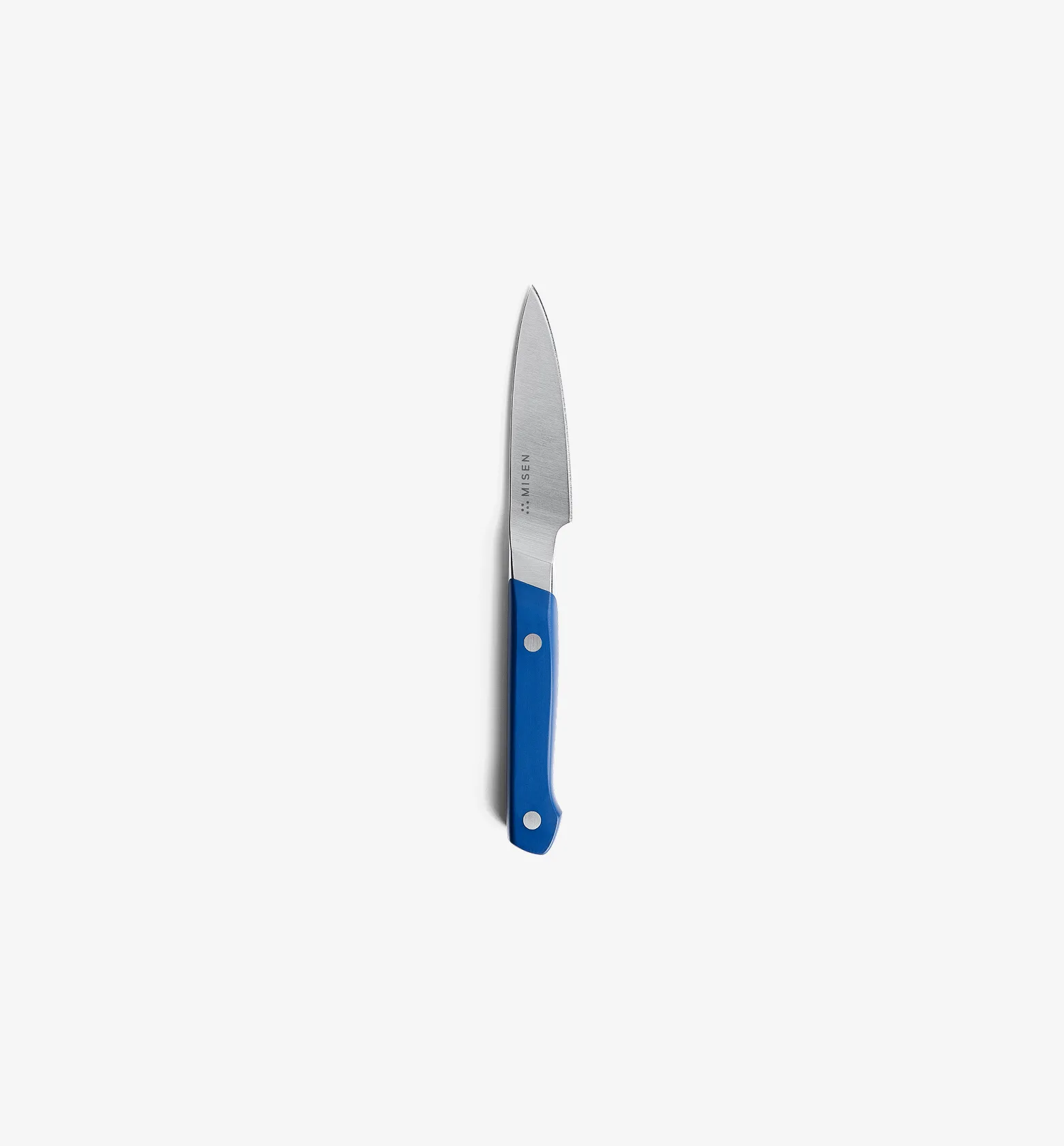
Washing your hands or the knife mid-task can leave moisture on the handle, making it slippery. Many metal or plastic handles become slick even when dry. A textured or coated handle—like the one on the Misen 3.5" Paring Knife—provides extra grip, but even that can lose traction if your hands are oily or wet. A quick dry of both hands and the handle before each cut often solves the problem without changing your technique.
Dull blades force you to push harder
When the blade isn't sharp, you instinctively press down harder to cut. That extra force makes the knife more likely to twist or slide off the food. A sharp paring knife should cut through a tomato skin or a peach with minimal pressure. If you find yourself muscling through a cut, pause and sharpen or hone the blade. A dull edge is a safety hazard, especially on a small knife where you have less blade surface to control.
Diagnose and fix your slipping paring knife
- Symptom: The knife rotates or shifts in your hand while cutting, especially on round or slippery foods like tomatoes, peaches, or onions.
- Likely cause: Grip too far back on the handle, wet or oily hands, or a dull blade that requires extra force. Check each in order. If your hands are clean and dry and the blade is sharp, move to the corrective action.
- Corrective action: Shift your grip forward so your thumb and index finger pinch the blade right above the handle. Dry both hands and the handle. If the knife still slips after sharpening, the handle material may be too smooth for your hand—consider a model with a textured or coated handle. If the knife still slips after trying this, the handle itself is likely the problem.
- Stop point: If you've adjusted your grip, dried everything, and sharpened the blade, but the knife still slides during normal use, the handle design is not a good match for your hand. Replace the knife rather than risking a cut.
Product that helps
-
3.5" Paring Knife (ACUTO440): Our smallest prep knife for peeling, trimming, and precision cuts. Perfect for handheld tasks like hulling strawberries or slicing a peach. Its textured handle and lightweight design reduce slipping, so you can focus on the cut rather than compensating with a death grip.
3.5" Paring Knife (ACUTO440)