Quick answer
Buy cast iron first if you want maximum heat retention for searing, frying, and baking at a lower price, and you don't mind the weight. Buy carbon steel first if you want a lighter pan that responds to heat changes faster and handles like a restaurant skillet. For most beginners, cast iron is the more forgiving and versatile starting point.
Weight and handling: the daily-use difference
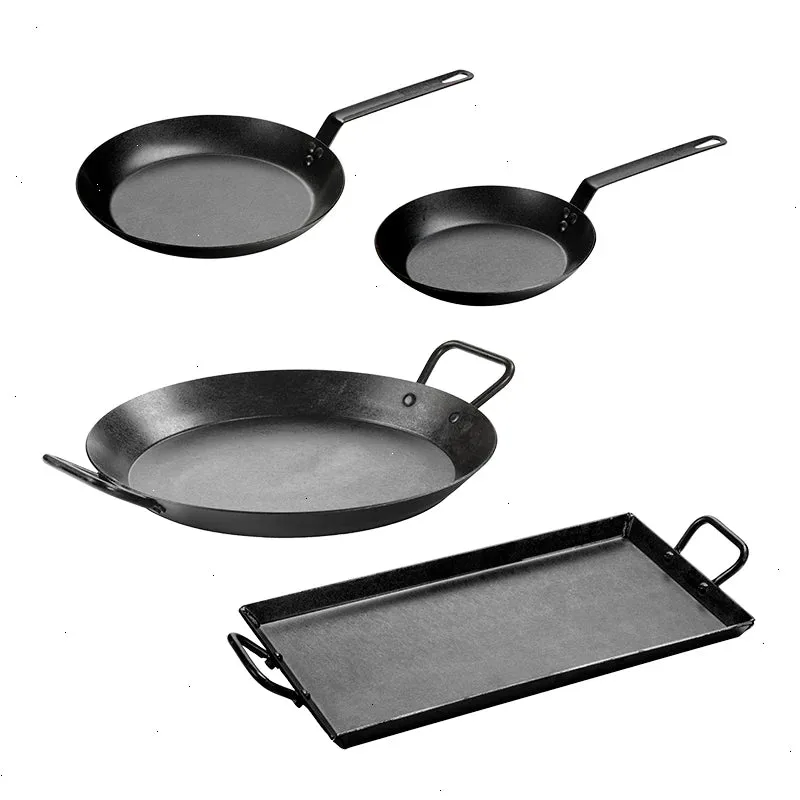
The clearest practical difference is weight. Carbon steel pans are noticeably lighter than cast iron of the same diameter, which makes tossing vegetables, flipping eggs, and moving the pan from burner to oven easier on your wrist. Cast iron's mass is the trade-off: it's heavier to lift, but that weight is exactly what gives it stable, even heat.
If you have wrist or shoulder issues, or you cook in a small kitchen where you're constantly shifting pans, carbon steel's lighter build is a real advantage. If you mostly sear and bake and don't move the pan much, cast iron's weight is a non-issue.
Heat retention vs heat response
Cast iron's great heat retention means it stays hot when cold food hits the surface, so you get a hard sear and consistent bakes. That's why cast iron bakeware like the Seasoned Cast Iron Large Loaf Pan works well for quick breads and sandwich loaves: the pan holds temperature so the bake stays even.
Carbon steel heats up faster and cools down faster, so you can adjust temperature mid-cook. That responsiveness is great for stir-fries and delicate proteins, but it also means the pan can lose heat quickly when you add a lot of cold ingredients at once. If your priority is a screaming-hot sear that doesn't drop, cast iron has the edge.
Seasoning, care, and cost
Both pans are naturally seasoned and improve with use, but cast iron is generally less expensive and more widely available in pre-seasoned form. Lodge cast iron comes ready to use straight from the foundry, and a care kit with a scraper, scrub brush, and handle holder makes maintenance simple.
Carbon steel often costs more for a comparable size and may arrive with a protective coating you need to scrub off before seasoning. Neither material is dishwasher-safe, and both need to be dried promptly to avoid rust. If you want the lowest-friction start, cast iron's out-of-the-box readiness is hard to beat.
Trade-offs at a glance
- Weight: Carbon steel is lighter and easier to maneuver; cast iron is heavier but stable on the burner. Choose carbon steel if you toss food or have wrist strain; choose cast iron if you want a pan that stays put.
- Heat behavior: Cast iron retains heat longer for searing and baking; carbon steel responds faster to temperature changes. Cast iron for steady high heat; carbon steel for quick adjustments.
- Cost and upkeep: Cast iron is often cheaper and comes pre-seasoned; carbon steel costs more and may need initial seasoning. Beginners on a budget should start with cast iron.
Cast iron options that cover the basics
- Seasoned Cast Iron Heart Mini Cake Pan: Seasoned Cast Iron Heart Mini Cake Pan with a naturally seasoned, quick-release surface that won't dent, bend, or warp. Shows cast iron's strength in baking: the pan holds its shape at high heat and releases baked goods cleanly, so you can decorate and serve without sticking.
- Seasoned Cast Iron Large Loaf Pan: Seasoned Cast Iron Large Loaf Pan with great heat retention for perfect bakes, ready to use straight from the foundry. A concrete example of cast iron's even heat for quick breads and sandwich loaves, and it arrives pre-seasoned so there's no prep step.
- Seasoned Cast Iron Care Kit: Seasoned Cast Iron Care Kit includes canola oil seasoning spray, a polycarbonate pan scraper, a silicone handle holder rated to 500°F, and a stiff-bristle scrub brush. Covers the essential maintenance tools so you can clean and re-season without guesswork, which extends the life of any cast iron pan.
Which should you buy first?
Buy cast iron first if you
- Want maximum heat retention for searing, frying, and baking
- Prefer a lower upfront cost and a pan that's ready to use out of the box
- Cook hearty, high-heat meals and don't mind the weight
Buy carbon steel first if you
- Have wrist or shoulder issues and need a lighter pan
- Want fast heat response for stir-fries and delicate sauces
- Are willing to season a pan yourself and pay more for lighter weight