Quick answer
To brew cascara coffee cherry tea, steep 5 grams (about 1 tablespoon) of dried cascara in 8 ounces of water heated to 200-205°F (93-96°C) for 5 minutes. This yields a sweet, tart cup with raisin and rosehip notes. Unlike coffee beans, cascara is the dried fruit skin, so it brews like a tea and contains caffeine, though typically less than a cup of coffee. Adjust the amount or time to taste.
What cascara coffee cherry tea actually is
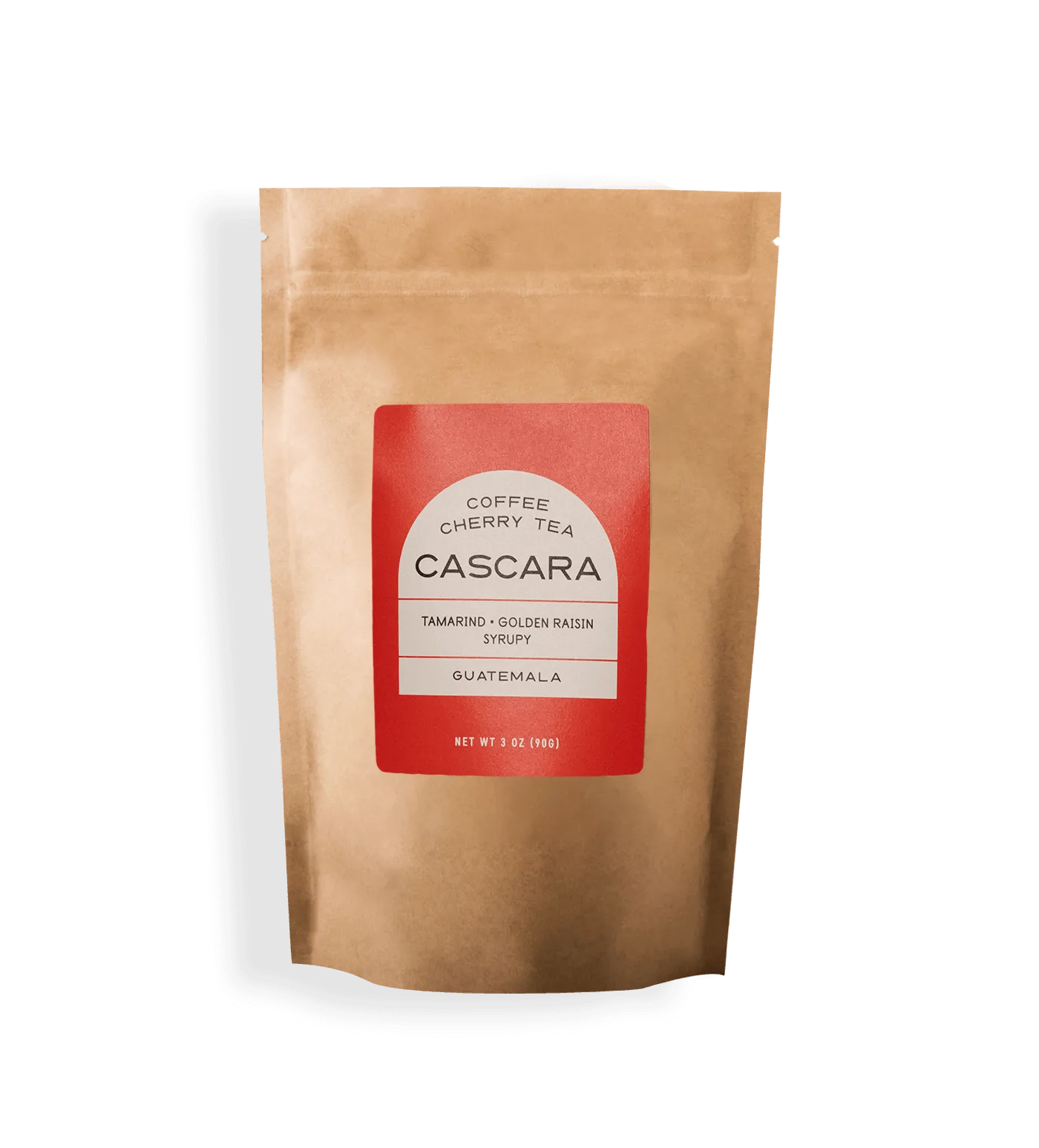
Cascara is the dried skin and pulp of the coffee cherry, the fruit that surrounds the coffee bean. Instead of being discarded during processing, the fruit is dried and sold as a tea-like infusion. It is not coffee and not a true tea leaf; it is a fruit tisane with its own flavor profile. The Buena Vista micro-mill cascara we carry is selected for its intense sweetness, which balances a tart acidity and a rosehip aromatic. Each bag contains 90 grams of tea, enough for roughly 18 cups at the suggested strength.
How much caffeine is in cascara tea?
Cascara contains caffeine because the coffee cherry fruit itself has some, but the amount is generally lower than a standard cup of coffee. The exact level varies by steep time, water temperature, and how much cascara you use. If you are sensitive to caffeine, start with a shorter steep (3 minutes) and a smaller amount (3 grams) to gauge your response. If you want a stronger lift, increase the cascara to 7 grams and steep for 6 minutes. There is no standard caffeine label on most cascara products, so treat your first cup as a test.
What does coffee cherry tea taste like?
Expect a cup that is fruity and gently sweet, with a tart edge. The Buena Vista cascara we carry is described as having intense raisin sweetness, a tart acidity, and a rosehip aromatic. Some drinkers also notice notes of dried fig, hibiscus, or a mild herbal finish. It is not roasty or bitter like coffee. The flavor is closer to a light fruit tea than to a coffee substitute. Because it is not a true tea leaf, it does not have the tannic astringency of black tea unless you oversteep it.
Simple cascara tea recipe (hot)
This recipe makes one 8-ounce cup. You will need a scale or measuring spoon, a kettle, and a mug or small teapot. If you do not have a scale, 1 tablespoon of dried cascara is a good starting point. For a cleaner cup, use a fine-mesh strainer or a French press to separate the fruit from the liquid. Avoid boiling the water vigorously; let it cool slightly after boiling.
- Measure 5 grams (about 1 tablespoon) of dried cascara into your mug or infuser.
- Heat 8 ounces of water to 200-205°F (93-96°C). If you do not have a thermometer, boil the water and let it sit for 1 minute.
- Pour the water over the cascara and start a timer.
- Steep for 5 minutes. Taste at 4 minutes; if you want more sweetness, go to 6 minutes.
- Strain the cascara and serve. The spent fruit can be composted.
Cold brew cascara method
Cascara also makes a refreshing cold infusion. Combine 10 grams (about 2 tablespoons) of cascara with 16 ounces of cold water in a jar. Cover and refrigerate for 8 to 12 hours. Strain through a fine-mesh sieve or coffee filter. The result is a smooth, tart concentrate; dilute with cold water or sparkling water to taste. Cold brew cascara tends to be less sweet and more tart than the hot version, so you may want to add a slice of orange or a teaspoon of honey. It keeps in the refrigerator for up to 3 days.
Common mistakes to avoid
The most common mistake is using boiling water, which can extract harsh, bitter notes and mute the fruit sweetness. Another is steeping too long; past 8 minutes, the tartness can become astringent. If you are used to brewing coffee, do not grind the cascara. It is already dried fruit pieces and does not need grinding. Finally, do not expect a coffee-like flavor. Cascara is its own drink; judge it on its own terms.
Step-by-step: brewing cascara coffee cherry tea
- Measure the cascara: Use 5 grams (about 1 tablespoon) of dried cascara per 8 ounces of water. If you prefer a stronger cup, start with 6 grams rather than steeping longer. Checkpoint: a kitchen scale gives the most consistent results; a tablespoon is fine for a first try.
- Heat the water to the right temperature: Bring water to 200-205°F (93-96°C). If you do not have a thermometer, boil and let it sit for 1 minute. Avoid pouring boiling water directly onto the cascara. Common mistake: using full rolling boil water, which can make the tea bitter and flatten the fruit notes.
- Steep for 5 minutes: Pour the hot water over the cascara and start a timer. Taste at 4 minutes. If you want more sweetness, steep up to 6 minutes. Do not exceed 8 minutes. Checkpoint: the liquid should be a deep amber or reddish-brown. If it looks pale, give it another minute.
- Strain and serve: Pour through a fine-mesh strainer or remove the infuser. Serve hot. For iced tea, let it cool and pour over ice. Next step: if the cup tastes too tart, add a small amount of honey or a slice of orange. If it tastes weak, use more cascara next time, not a longer steep.
The cascara we carry
- Cascara Coffee Cherry Tea: Cascara Coffee Cherry Tea from the Buena Vista micro-mill: intense raisin sweetness, tart acidity, and rosehip aromatic. Each bag contains 90 grams. 90 grams is enough for about 18 cups at 5 grams per serving. The specific flavor notes give you a benchmark for what to expect and how to adjust brewing.