Quick answer
For most beginners, the best cast iron skillet for beginners is a 10.25-inch seasoned cast iron skillet. It fits two chicken thighs or a single steak, works on the stove and in the oven, and costs less than a multi-piece set. If you want several sizes plus care tools in one purchase, a cast iron starter set like the Seasoned Cast Iron Starter Set is the more efficient route. Skip enameled cast iron for a first pan unless you know you want a different surface.
Match the pan to your stove and your usual portions
Choosing cast iron skillet size comes down to two measurements: your largest burner and your typical serving count. An 8-inch skillet handles one or two eggs, a single grilled cheese, or a small cornbread. A 10.25-inch skillet is the most flexible single-pan size for one or two people. A 12-inch skillet gives you room for a whole chicken, a family stir-fry, or several pancakes at once, but it can crowd a small burner and feels heavy when full.
If you cook for one or two people and have limited cabinet space, start with the 10.25-inch and add a 12-inch later only if you regularly cook larger meals. If you cook for three or more, a 12-inch pan or a set that includes multiple sizes will save you from cooking in batches.
- Small burner or small storage: 8-inch or 10.25-inch.
- Two people, everyday meals: 10.25-inch.
- Family meals or whole proteins: 12-inch.
Seasoned vs enameled for a first pan
Seasoned cast iron is bare iron with a baked-on oil layer. It is oven-safe, stovetop-safe, and can take high heat. It also needs drying and a light oil rub after washing to keep the seasoning intact. Enameled cast iron has a glass-like coating that does not need seasoning and resists acidic foods, but it costs more, can chip if dropped, and should not be heated empty or used over a hot campfire.
For a first pan, seasoned cast iron is the lower-risk choice. It is more forgiving of high heat, easier to repair if the surface dulls, and typically less expensive. Choose enameled only if you already know you want a non-reactive surface for long-simmered tomato or wine dishes and you are willing to treat the coating carefully.
When a starter set beats buying one pan
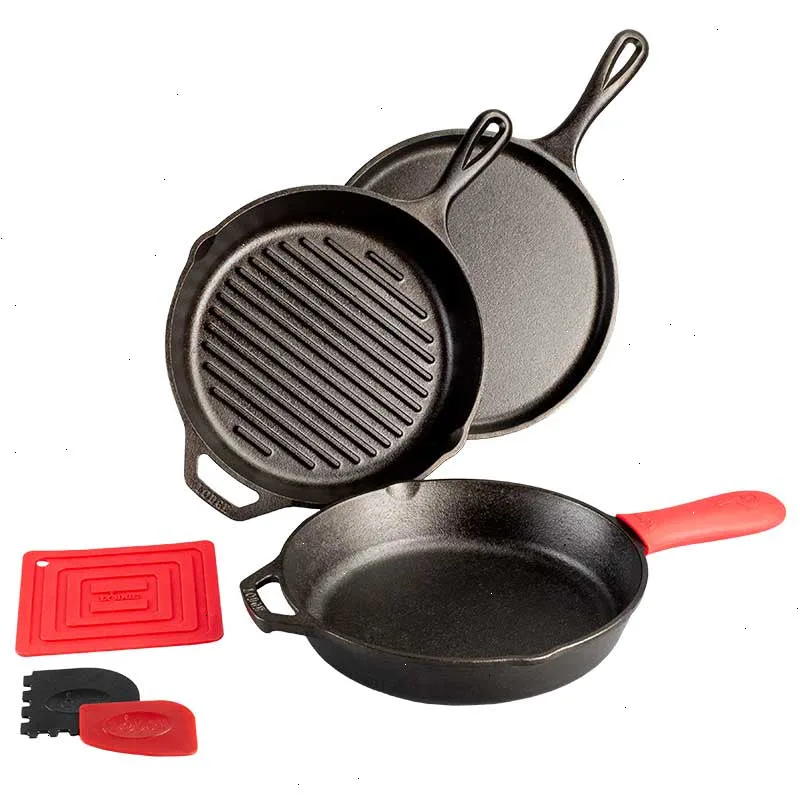
A cast iron starter set makes sense when you want to try several shapes without choosing each piece separately. Sets often bundle skillets with a griddle or grill pan plus cleaning accessories, which can cost less than buying the same pieces one at a time. The trade-off is that you may receive a piece you rarely use, and a set takes more storage space than a single skillet.
If you already know you only need one pan, buy the single 10.25-inch skillet. If you are unsure which size you will reach for most, a set lets you test sizes in your own kitchen before committing to a larger single purchase later.
Check these details before you pay
Look for a helper handle on 12-inch and larger pans; a full pan of food gets heavy fast. Check whether the handle is long enough to grip with a mitt and whether the pan is oven-safe to the temperatures you use. If the listing does not state a maximum oven temperature, treat that as missing information and contact the seller rather than assuming a number.
Also confirm what is included. Some sets list a skillet, a griddle, and care accessories, while others list only the cookware. Knowing the exact contents prevents buying a second pan you already own.
Decision rules for your first cast iron purchase
- Choose 10.25 inches if you cook for one or two: A 10.25-inch skillet fits a single steak, two chicken thighs, or a batch of cornbread without crowding a standard burner. This is the safest default size for a first cast iron pan.
- Choose 12 inches if you cook for three or more: A 12-inch skillet gives you room for a whole chicken or family-sized stir-fry, but it is heavier and needs more storage. Size up only when your usual meals actually need the surface area.
- Choose seasoned over enameled for a first pan: Seasoned cast iron handles high heat, can be re-seasoned at home, and usually costs less than enameled cast iron. Pick enameled only if you specifically want a non-reactive surface and will treat the coating gently.
- Choose a set if you want to test multiple sizes: A set bundles several pieces and care accessories, which can cost less than buying each piece separately. Skip the set if you already know you only need one skillet.
Beginner-friendly options from the catalog
- Seasoned Cast Iron Starter Set: Seasoned Cast Iron Starter Set includes an 8-inch skillet, a 10.25-inch skillet, a 10.5-inch round griddle, and a 10.25-inch round grill pan, plus cleaning and care accessories. One purchase covers the most common beginner sizes and shapes, and the included care tools remove a separate shopping step.
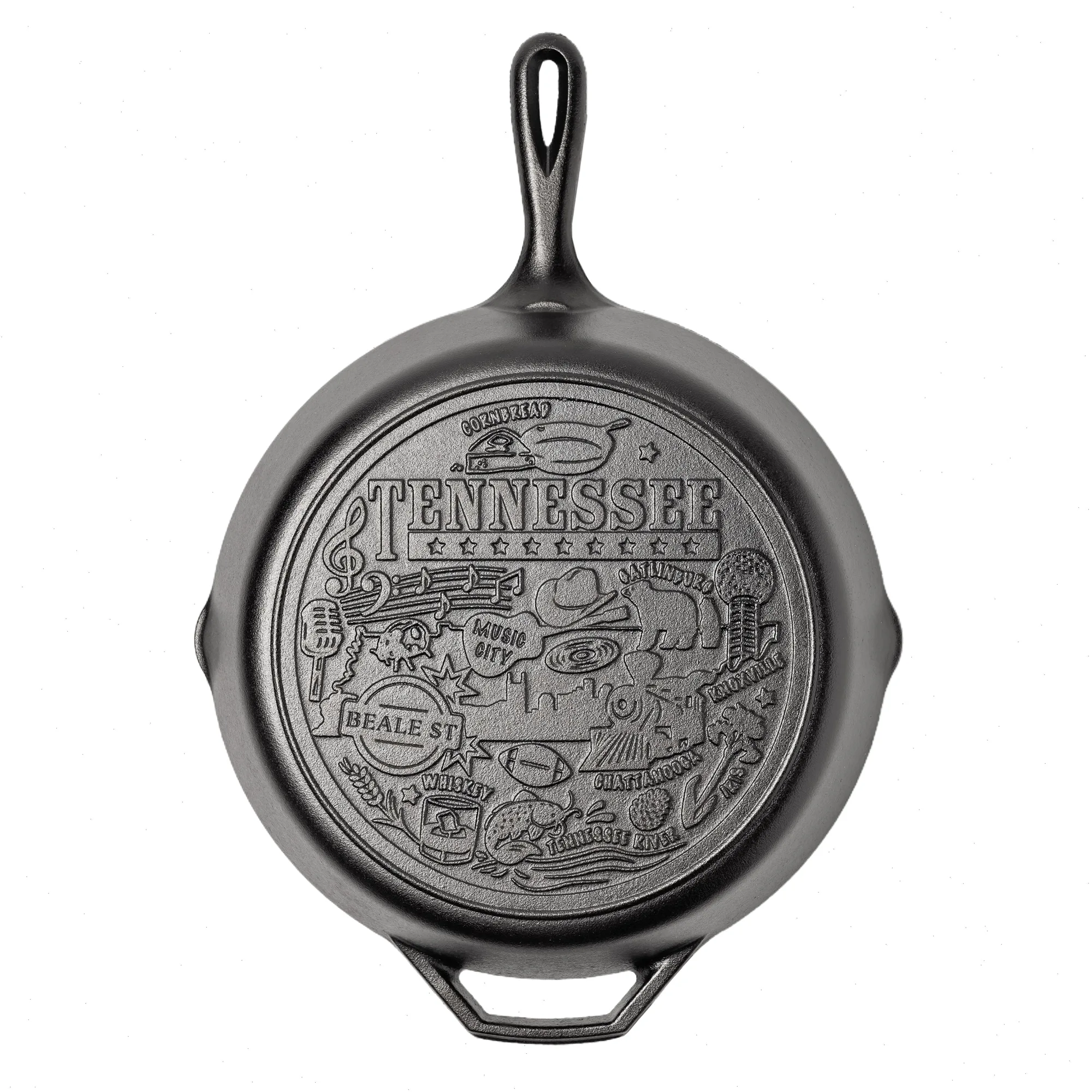
- American Road Trip: 12 Inch Seasoned Cast Iron Skillet, New York: American Road Trip: 12 Inch Seasoned Cast Iron Skillet, New York is a special edition 12-inch seasoned cast iron skillet. A 12-inch seasoned skillet is the right size if you cook for a family or want room for whole proteins, and the special edition design makes it a gift-friendly single pan.
Who this advice fits
Best for
- First-time cast iron buyers who cook for one or two people
- Shoppers who want one pan that works on the stove and in the oven
- Gift buyers looking for a single skillet or a bundled set
Not for
- Cookware collectors who already own several cast iron sizes
- Buyers who specifically want an enameled surface for long-simmered acidic dishes
- Anyone who needs a lightweight pan for frequent lifting