Quick answer
Choose a cleaver for heavy chopping through bone and dense vegetables; choose a boning knife for precise, flexible work around joints and sinew. Most home butchers benefit from owning both, but if you must pick one, your primary protein (bone-in vs. boneless) decides the winner.
Blade shape and flexibility matter more than you think
A cleaver’s wide, rectangular blade is built for power. Its heft lets you drive through cartilage and small bones with controlled force. The blade is stiff, which is exactly what you want when you need to split a chicken breast or chop through a pork shoulder blade bone.
A boning knife, by contrast, has a narrow, curved blade that is much more flexible. That flex lets the blade follow the contours of bones and joints, reducing waste and making it safer to separate meat from the skeleton. If you regularly debone whole chickens, trim silverskin, or fillet fish, a boning knife is the more precise tool.
Heft and control trade-offs
The weight of a cleaver (typically 8–14 oz) gives you momentum for chopping, but that same weight can be fatiguing during long trimming sessions. A boning knife (usually 3–5 oz) is much lighter and easier to maneuver for extended periods, but it lacks the mass to power through dense bone.
If you break down whole animals or large primal cuts regularly, the cleaver’s weight becomes an advantage. If you mostly portion boneless meat or debone poultry, the boning knife’s lighter feel will serve you better.
How to decide: cleaver or boning knife
- You break down whole chickens or bone-in roasts weekly: Start with a boning knife. Its narrow, flexible blade lets you separate leg quarters, remove backbones, and debone thighs with minimal waste. A cleaver can help split the breastbone, but the boning knife does the majority of the work. If you only buy whole chickens, a boning knife is the first purchase.
- You regularly cut through ribs, split pork shoulders, or chop through small bones: A cleaver is your primary tool. Its weight and wide blade make short work of cartilage and thin bones that would dull or damage a boning knife. Use the cleaver for the heavy jobs, then switch to the boning knife for detail work. For bone-in primal cuts, the cleaver saves time and effort.
- You mostly cook boneless meat (steaks, chops, fillets): A boning knife is sufficient for trimming fat, removing silver skin, and portioning. A cleaver is overkill unless you also prep hard vegetables like squash or turnips. A boning knife alone covers boneless prep; add a cleaver only if you need the chopping power.
Products mentioned in this guide
-
Damascus Steel Cleaver, 7": The Damascus Steel Cleaver has a 7-inch double-beveled blade and enough heft to handle harder vegetables, tendons, and bones. Its weight and stiffness make it ideal for breaking down bone-in cuts and dense produce that would strain a chef’s or boning knife.
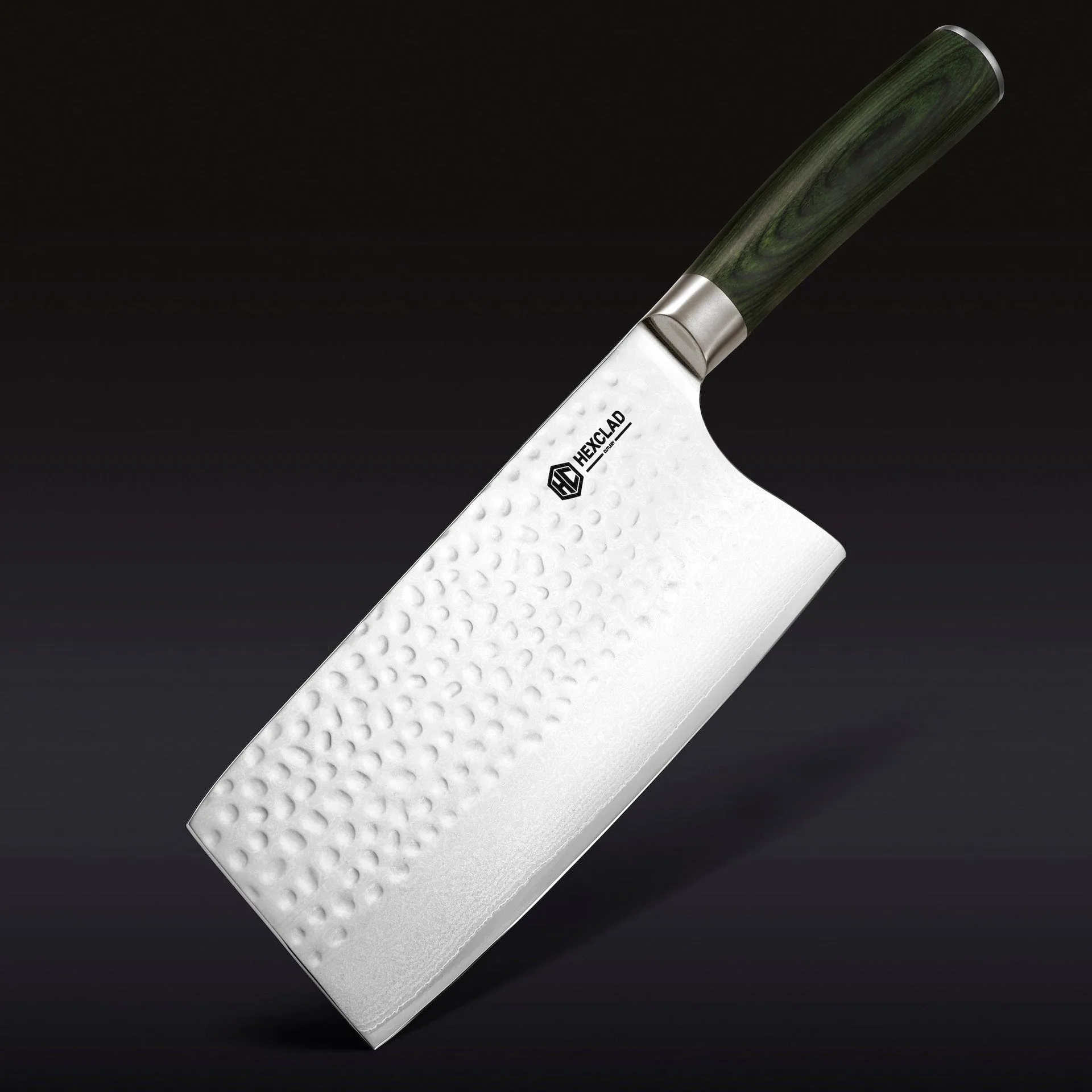
Damascus Steel Cleaver, 7"
-
Damascus Steel Boning & Fillet Knife, 6": The Damascus Steel Boning & Fillet Knife has a 6-inch long, flexible blade designed to maneuver around bones and joints. The flexibility lets you follow bone contours closely, which means less wasted meat and safer deboning of poultry, fish, and meat.
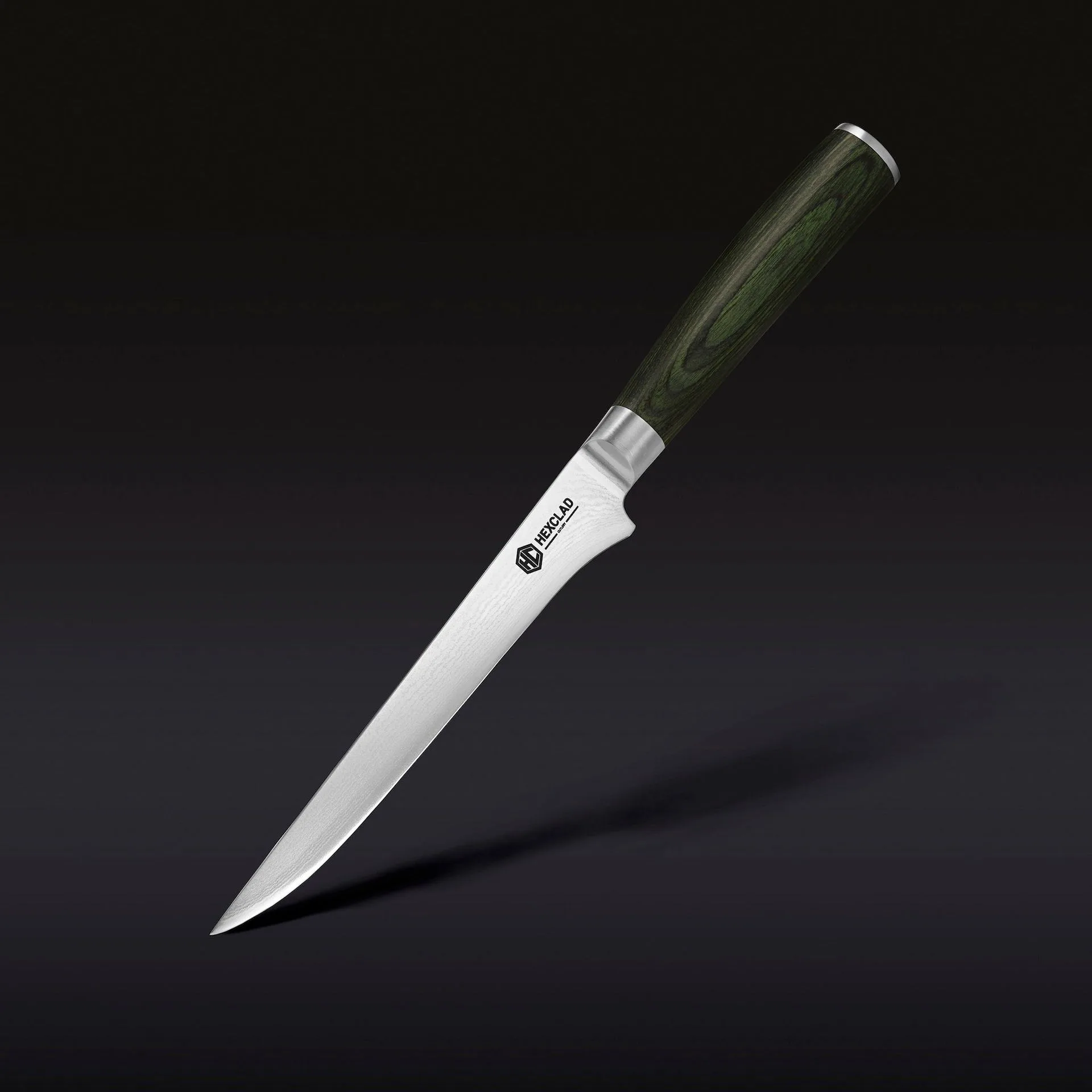
Damascus Steel Boning & Fillet Knife, 6"
Which knife fits your kitchen?
Best for
- Home cooks who break down whole chickens, trim roasts, or fillet fish regularly
- Butchers who need a flexible blade to follow bone contours and reduce waste
Not for
- Anyone who primarily chops through bone or dense vegetables — a cleaver is the better first choice
- Cooks who want one knife for all meat prep — you’ll likely need both a cleaver and a boning knife for different tasks