Quick answer
Most home cooks do not need a full 10- to 15-piece set. A better approach is to buy 3–5 pieces you will actually use: a 10–12 inch fry pan, a 2–3 quart saucepan, a 6–8 quart pot, and a sheet pan or roasting pan. Add a set later only if you consistently cook for a crowd or host often.
Cookware set vs individual pieces: which makes more sense?
Sets win on upfront price per piece and visual consistency. Individual pieces win on fit: you only pay for sizes and shapes that match your burners, storage, and cooking style. If you have a small kitchen or cook mostly for one or two people, individual pieces usually cost less overall because you skip the 8-inch pan and stockpot you would rarely touch. If you regularly cook for four or more and have the cabinet space, a set can be a reasonable shortcut.
How many pans do I actually need?
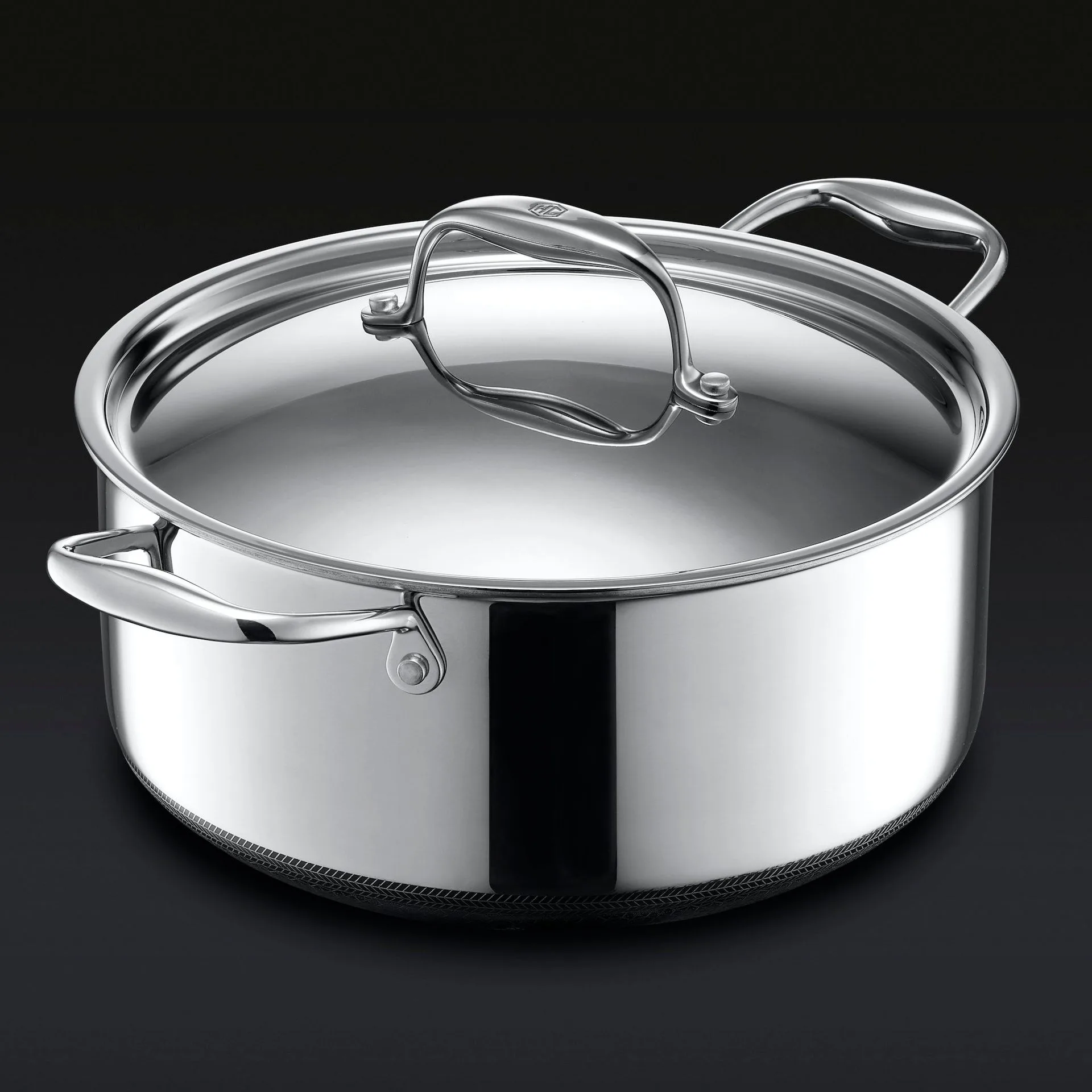
For most households, four pieces cover the majority of meals: one 10–12 inch fry pan, one 2–3 quart saucepan with a lid, one 6–8 quart pot for pasta or soup, and one rimmed sheet pan or roasting pan. A fifth piece, like a 3–4 quart sauté pan, helps if you make one-pan dinners. Anything beyond that should earn its space through weekly use, not the promise of a future dinner party.
What belongs in a starter cookware set?
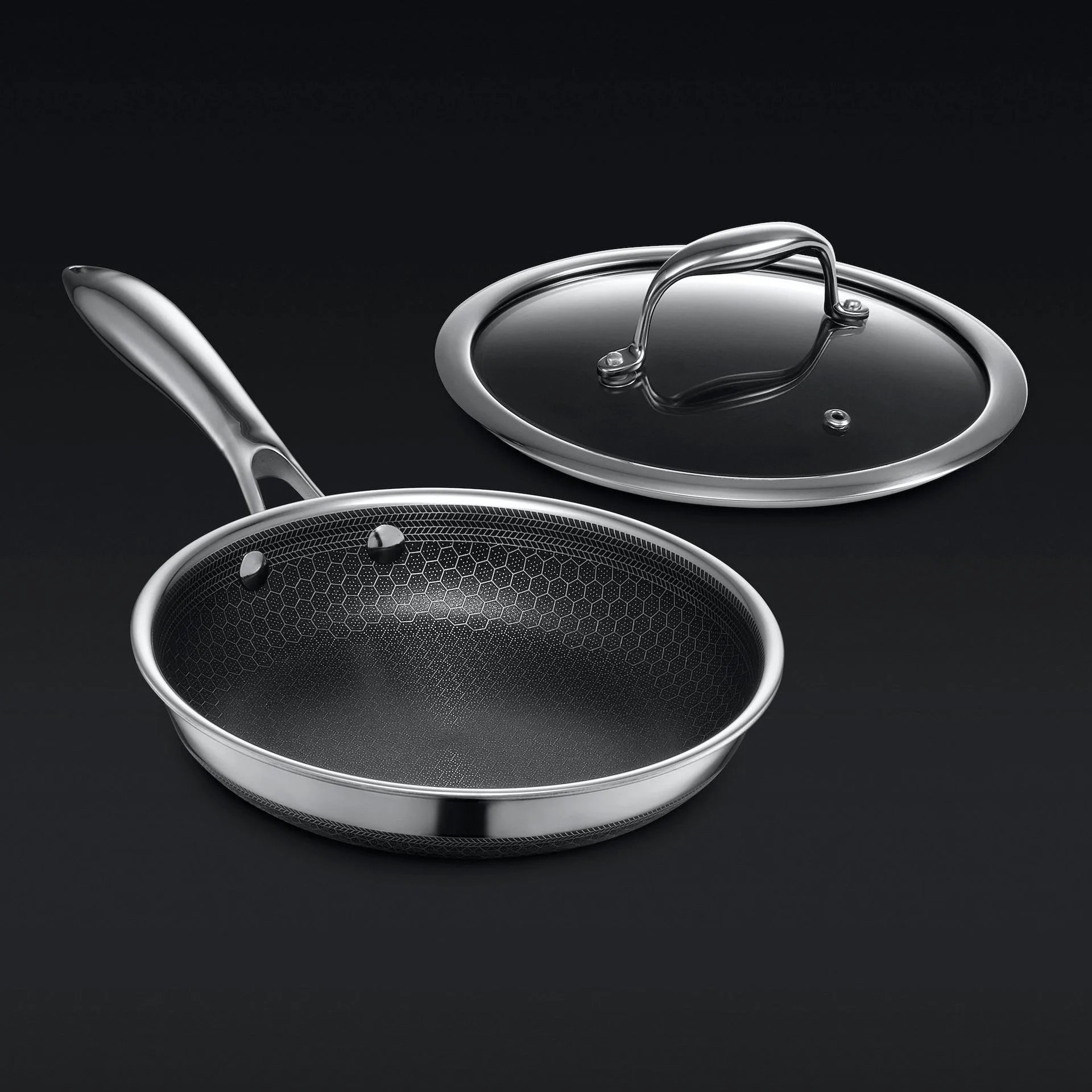
Start with pieces that do more than one job. A 12-inch fry pan can handle a frittata, two steaks, or four salmon fillets with room for vegetables. A small milk pot is surprisingly useful for melting butter, warming syrup, tempering chocolate, or making a delicate sauce. A compact roasting pan set covers weeknight chicken parm, enchiladas, cornbread, and roasted salmon. Together these three pieces replace most of what a bulky set would give you, without the storage burden.
Is a pots and pans set worth it if I already own a few pieces?
Only if the set fills specific gaps at a lower cost than buying those pieces separately. Compare the set's contents against what you already own and use. If a set includes a pan you have not needed in the past year, its per-piece savings are misleading. A better move is to add one or two pieces that solve a recurring problem, such as a larger fry pan for batch cooking or a small pot for sauces.
How do I build a cookware collection without overspending?
Buy in this order: fry pan first, then a saucepan, then a large pot, then a roasting pan or sheet pan. Replace a piece only when it fails or when you consistently run out of capacity. This staged approach spreads the cost and lets you learn which sizes you reach for. It also avoids the common trap of buying a set, using three pieces, and storing the rest.
What should I check before buying any piece?
Confirm oven safety, dishwasher compatibility, and whether the handles stay cool on your stovetop. If a product page does not list a specification, treat that as an unknown rather than assuming it. For example, if a pan does not state a maximum oven temperature, do not guess that it is broiler-safe. Also check the return policy so you can test the pan with your own cooking.
Quick answers to common set questions
Do I need a pots and pans set?
Only if you regularly cook for four or more and lack the individual pieces a set includes. Otherwise, buy the 3–5 pieces you will use weekly. If you can name the set’s pieces you will use at least twice a week, a set may be worth it.
How many pans do I need?
Four pieces cover most meals: a 10–12 inch fry pan, a 2–3 quart saucepan, a 6–8 quart pot, and a sheet or roasting pan. Add a sauté pan if you make one-pan dinners. Count your weekly meals; if four pieces cover them, stop there.
What is the best first piece to buy?
A 12-inch fry pan. It handles frittatas, two steaks, or four salmon fillets with vegetables, making it the most versatile single pan. Start with the pan you will use daily, then add pieces as you outgrow it.
Is a set cheaper than individual pieces?
Usually per piece, but only if you use every piece. If you skip two or three items, individual pieces often cost less overall. Compare the set’s contents to your actual cooking, not the sticker price.
What should I check before buying?
Oven safety, dishwasher compatibility, and handle comfort. If a specification is missing, treat it as unknown and check the return policy. Buy from a store that lets you test the piece with your own cooking.
Product facts that answer common set questions
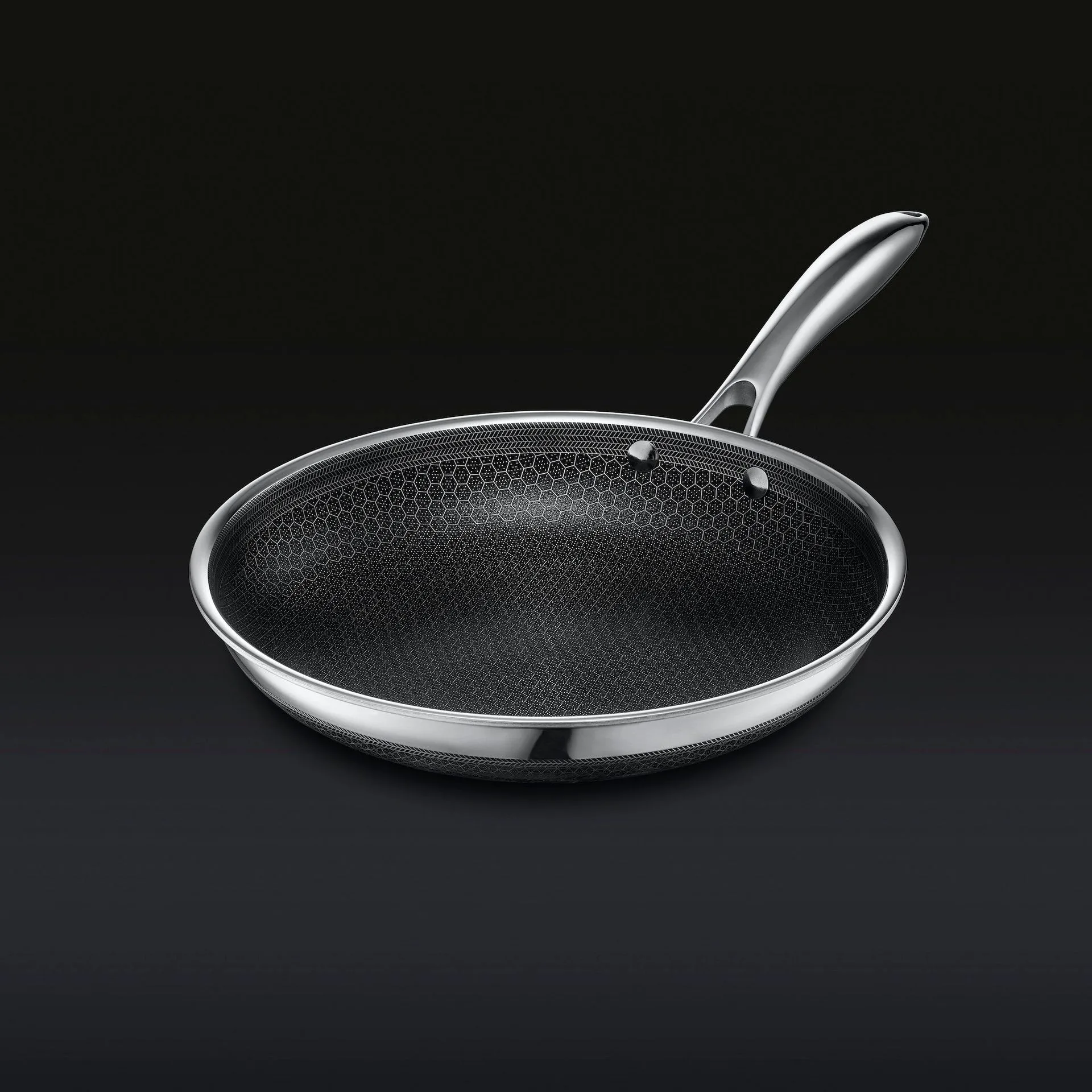
- Hybrid Fry Pan, 12": The HexClad 12" Pan is ideal when you’re cooking for a crowd and can cook two steaks at a time or at least four salmon fillets with room for veggies. A single large fry pan can replace the most-used pan in a set, so it is often the best first purchase.
- .5 QT Hybrid Milk Pot: The .5 QT Hybrid Milk Pot is sized to melt butter, warm milk or syrup, temper chocolate, or make delicate sauces, with double pour spouts and dishwasher-safe cleanup. A small pot covers tasks that a full set’s stockpot cannot do well, so it earns its place even in a minimal collection.
- Hybrid Roasting Pan Set, 4-pc: The Hybrid Roasting Pan Set, 4-pc includes smaller sizes for weeknight meals like Chicken Parm, enchiladas, cornbread, and roasted salmon, and is oven-safe to 900°F and dishwasher-safe. A roasting pan set handles oven meals that stovetop pans cannot, filling the gap between a fry pan and a full set.