Quick answer
Chocolate that stays soft almost always cooled too slowly or was never properly tempered. Re-melt it gently to about 45–50°C (113–122°F), cool it to roughly 27°C (80°F), then bring it back to 31–32°C (88–90°F) for dark or 29–30°C (84–86°F) for milk before using it. If it still won't set after two attempts, stop adding cocoa butter and switch to a coating chocolate designed for easy setting.
Rule out the room before you blame the chocolate
A kitchen warmer than about 24°C (75°F) keeps even well-tempered chocolate tacky at the surface. Move the tray to a cooler spot, ideally 18–21°C (65–70°F), and give it 20–30 minutes. If the surface firms up but the center stays soft, the problem is tempering, not the room. If nothing changes, continue to the diagnosis below.
Separate bloom from a true setting failure
Bloom looks like a cosmetic flaw: a dull, streaky, or grayish surface with white speckles, but the piece still snaps. Chocolate that won't set is structurally soft, bends instead of snapping, and feels greasy or smears on the fingers. Bloom is safe to eat and can be fixed by re-tempering. A true setting failure means the crystal structure never formed, so re-tempering is the only reliable correction.
Reset the chocolate with a controlled temper
Melt 70–80% of your chocolate over a water bath to 45–50°C (113–122°F) to clear all old crystals. Off the heat, stir in the remaining chopped chocolate until it drops to about 27°C (80°F). Then warm it back to 31–32°C (88–90°F) for dark or 29–30°C (84–86°F) for milk. Hold that working temperature while you dip or mold. If you don't have a thermometer, this step is guesswork — an instant-read or chocolate thermometer is the single most useful tool here.
When to stop and choose another chocolate
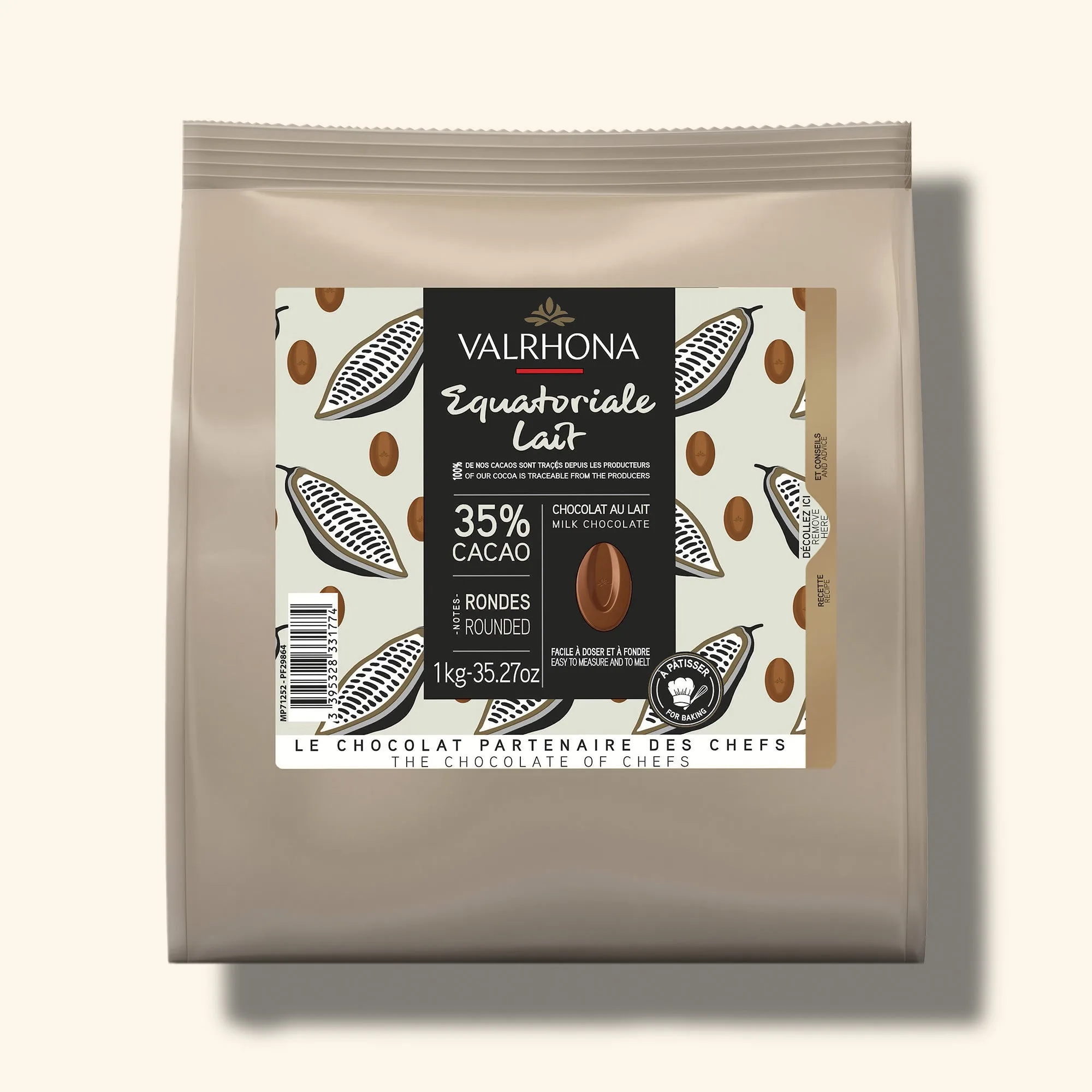
If two proper temper cycles still leave the chocolate soft, the batch may contain too much added fat or moisture, or it may be a chocolate that simply isn't formulated for coating. Don't keep adding cocoa butter — it lowers the melting point and makes setting harder. Instead, switch to a coating chocolate made for enrobing and molding. For example, Valrhona's Equatoriale Milk 35% is described as a milk chocolate specially designed for coating, which removes much of the tempering guesswork for candies, ganaches, and pralines.
Setting-failure diagnosis
- Surface tacky, center firm: The room is too warm or the chocolate was cooled too fast. Move it to 18–21°C (65–70°F) and wait 20–30 minutes. If it firms up, the temper was fine and only the cooling environment needs adjusting.
- Dull, streaky, or gray surface but still snaps: This is bloom, not a setting failure. The chocolate is safe to eat and can be re-tempered for appearance. Re-temper once; bloom is cosmetic.
- Soft, bendy, greasy, or smears: The chocolate never formed stable crystals. Re-melt to 45–50°C, cool to 27°C, then warm back to 31–32°C (dark) or 29–30°C (milk). If it stays soft after two proper cycles, stop adding cocoa butter and switch to a coating chocolate.
A coating chocolate that sets reliably
- Milk Baking Chocolate Equatoriale 35% - 35.27oz: Milk Baking Chocolate Equatoriale 35% is a milk chocolate specially designed for coating and is recommended for coating candies such as ganaches or pralines. If your current chocolate keeps staying soft, a coating-specific milk chocolate is a practical reset because it is formulated for easy, consistent setting.