Quick answer
Most unused Montessori toys are not broken toys. They are mismatched to the child's current stage, placed where the child cannot reach or see them, or left out so long they became wallpaper. Rotate the shelf, lower the toy to eye level, and offer it during a calm window before you replace it. If two weeks of those changes still produce zero engagement, the toy is probably wrong for this child right now.
Montessori
You bought the wooden toy. You set it on the shelf. Your child walked past it for three weeks. That is not a parenting failure and it does not mean the toy was a waste of money. It means the toy and the moment are out of sync, and that is fixable.
Before you buy anything else, run a short diagnosis. Most unused Montessori toys fall into four categories: wrong age stage, wrong placement, wrong timing, or too much competition on the shelf. Each one has a different fix, and only one of them requires a new purchase.
Symptom: the toy is ignored completely
A toy that gets no glance at all is usually either too advanced or too simple. A 2-year-old staring at a 52-letter spelling set will not touch it, because the task is out of reach. A 4-year-old ignoring a basic shape sorter is bored, not stubborn. Watch what your child does with the toy for 60 seconds without prompting. If they cannot figure out the first step, the toy is above them. If they finish it in 20 seconds and walk away, it is below them.
The fix is to move the toy up or down the difficulty ladder, not to replace it. For a toy that is too hard, do the first step yourself and leave it half-finished on the shelf. For a toy that is too easy, add a challenge: sort by color, then by size, then by shape. A toy that is genuinely in the child's zone of proximal development will hold attention for several minutes.
- Try the toy yourself first. If you find it fiddly, your child will too.
- Leave a toy partially set up so the child can finish what you started.
Symptom: the toy gets picked up, then abandoned in seconds
Short bursts of interest followed by dropping the toy often point to a placement problem. If the toy lives in a bin with twelve other things, the child has to dig past noise to find it. Montessori shelves work because each item has a clear, visible home. A toy that is buried is a toy that is forgotten.
Move the toy to a low, open shelf at the child's chest height. Put nothing else on that shelf for a week. If the toy is still abandoned, check the surface. A busy board on a slippery table will slide and frustrate. A pulling toy on thick carpet will not move. Match the toy to a surface where it can actually work.
- One toy per shelf section, not one bin per category.
- Check that the toy stays still or moves freely, depending on what it is meant to do.
Symptom: the toy was loved for a week, then dropped
This is the classic toy rotation problem, and it is the easiest to fix. Children do not need constant novelty, but they do need a shelf that changes. A toy that stays out for a month becomes part of the furniture. The child stops seeing it. This is not a sign the toy failed. It is a sign the toy needs a break.
Pull the toy off the shelf for two to three weeks. Store it out of sight. When you bring it back, place it at the front of the shelf and say nothing. Most children re-engage with a returned toy within a day. If the toy has been rotated out twice and still gets no interest, that is your signal to stop rotating and start reassessing.
- Keep 6 to 8 toys visible at a time, not 20.
- Rotate on a schedule you can actually keep, even if that is every two weeks.
Symptom: the child uses the toy, but not the way you intended
A child stacking wooden letters into a tower instead of spelling words is not misusing the toy. They are using it at their current level. Montessori toys are open-ended by design, which means the child leads. If you correct every unconventional use, the child learns that the toy comes with a test, and they stop choosing it.
Let the child explore the material first. Once they are comfortable, show one small extension: line up the letters in a row, or match one card to one letter. If the child resists the extension, back off. The goal is engagement, not correct answers. A toy that is played with freely will eventually be played with purposefully.
- Resist the urge to demonstrate the 'right' way on day one.
- Add one extension at a time, and only after free play is established.
When to stop fixing and choose another option
Give any fix two full weeks before you judge it. If you have rotated the toy, placed it correctly, matched it to the child's stage, and offered it during calm play windows, and the child still ignores it, the toy is wrong for this child right now. That is not a failure of the toy or the child. It is information.
At that point you have two honest choices. Store the toy for six months and try again when the child's interests shift, or pass it on and choose something that matches what your child already reaches for. Do not keep a toy on the shelf out of guilt. An unused toy takes up the space a used toy could fill.
- Two weeks of consistent fixes is enough data.
- Storing a toy is a valid outcome, not a waste.
Diagnosis chart: match the symptom to the fix
- No glance at all: The toy is above or below the child's current stage. Do the first step for them if it is too hard, or add a sorting challenge if it is too easy. If you cannot tell whether it is too hard or too easy, watch for 60 seconds without helping.
- Picked up and dropped in seconds: Placement or surface problem. Move the toy to a low open shelf alone, and check that the surface lets it work as intended. One toy per shelf section for one week is the test.
- Loved for a week, then ignored: Rotation problem. Remove the toy from sight for two to three weeks, then bring it back to the front of the shelf without comment. Two failed rotations means stop rotating and reassess the toy's fit.
- Used, but not as intended: The child is playing at their own level. Allow free exploration first, then introduce one small extension after comfort is established. Correcting unconventional play too early reduces engagement.
- Still ignored after two weeks of fixes: The toy is wrong for this child right now. Store it for six months or pass it on, and choose a toy that matches what the child already reaches for. This is a decision point, not a reason to keep trying the same fixes.
What the catalog tells you about matching toys to stages
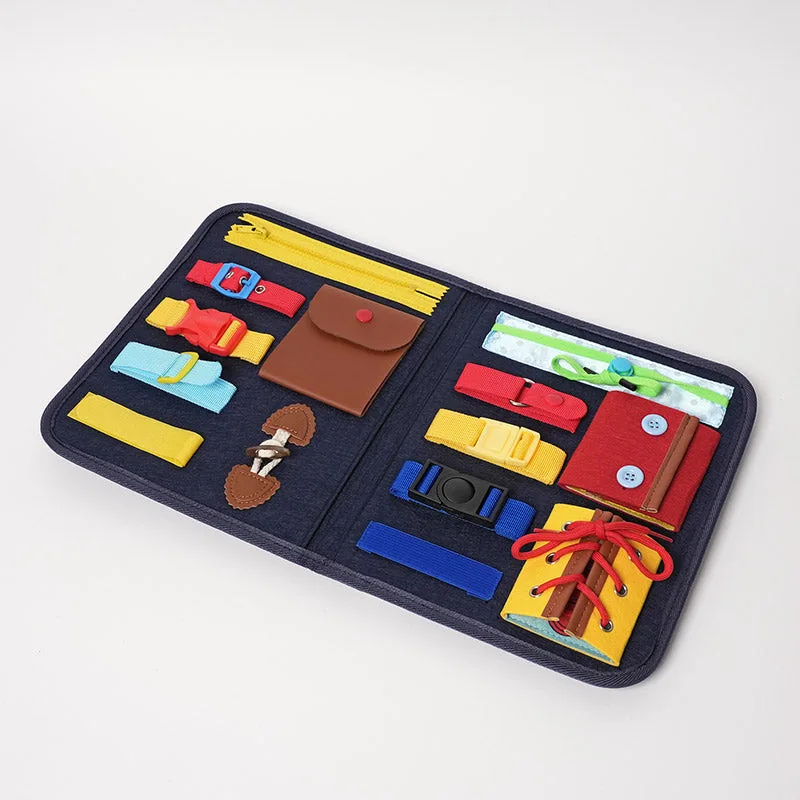
- Montessori Busy Board: Age 2+, 17.7" x 11.2" x 0.8", soft felt with strong bindings, spot clean only. The flat felt format is easy to leave out on a shelf and easy for a 2-year-old to grab, but spot-clean care means you should not treat it as a bath or outdoor toy.
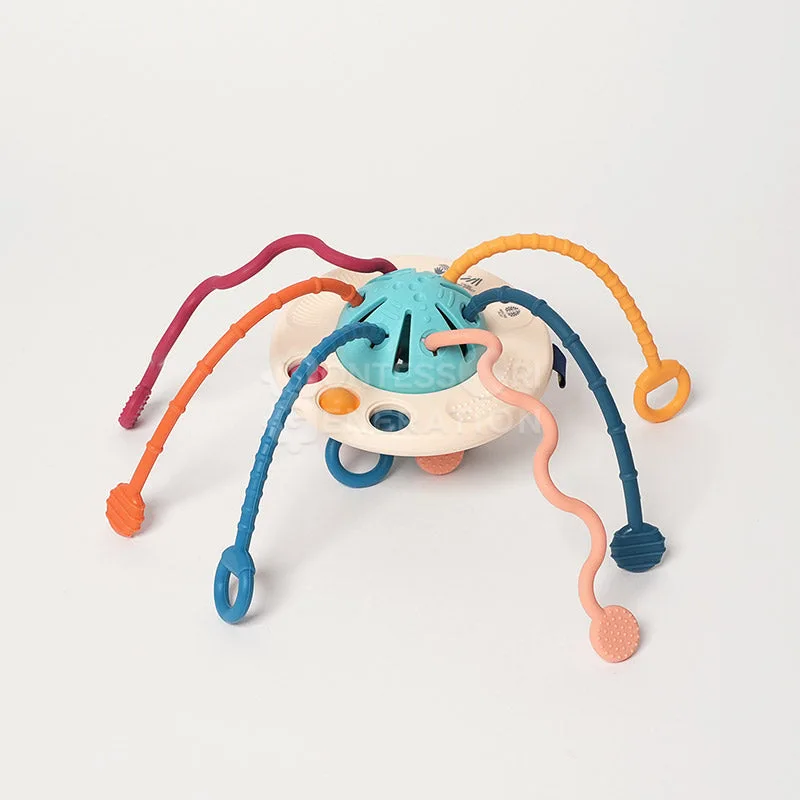
- Montessori Silicone Pulling Toy: Age 0+, 4.9" x 4.9" x 7.1", BPA-free and phthalate-free food-grade silicone, handwash with warm water and mild detergent. A true first toy for babies, so if an older toddler ignores it, the problem is age mismatch, not the toy itself.
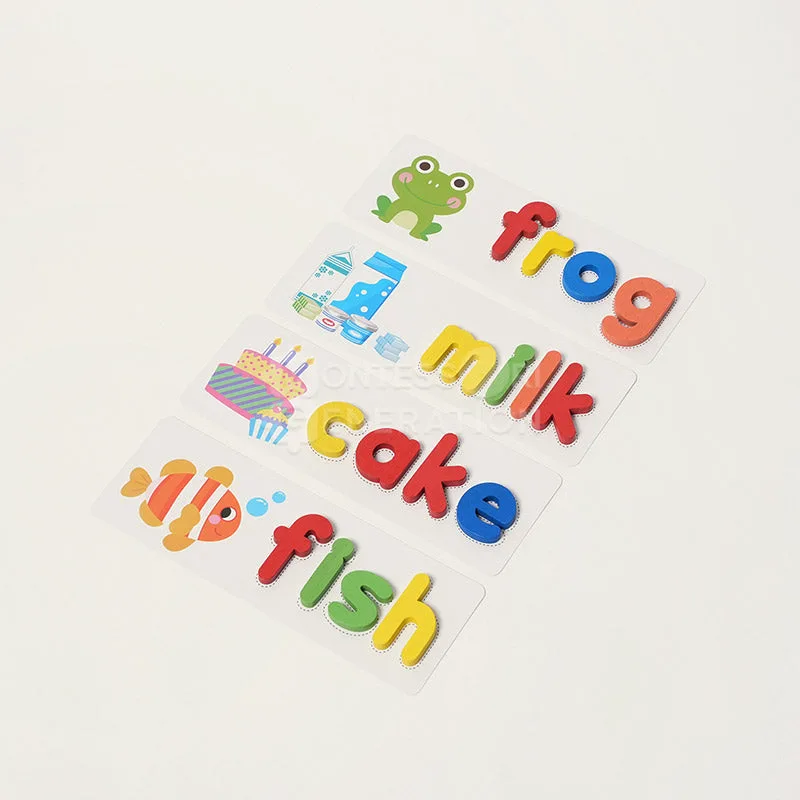
- Montessori Wooden Spelling Game: Age 3+, contains 52 wooden letters and 28 cards, non-toxic card paper and eco-friendly wood, cards spot clean only. The large letter count makes this a high-shelf-clutter risk. If it is dumped in a bin with other toys, the child will not sort through it, so keep it as a standalone shelf item.
- Montessori Petrol Station: Age 3+, contains 40 assembly pieces and 2 wooden vehicles, 19.3" x 15.4" x 6.3", eco-friendly wood with non-toxic paint. Forty pieces is a lot to manage. If this toy is ignored, the likely cause is that setup feels like work, so pre-build part of the track and leave it out ready to play.
An unused Montessori toy is a signal, not a verdict. Check the stage, the shelf, the surface, and the rotation before you spend another dollar. Most of the time, one small change is all the toy needed.