Quick answer
Devious is a two-player card game where each round you play one card from a three-card hand that your opponent arranges and places face-down. You want exactly one high-ranking faerie from each of the six tribes, because two or more of the same faerie ruins your score. Set up the deck, deal three cards each, arrange your opponent's hand face-down, then play one card per round and score at the end.
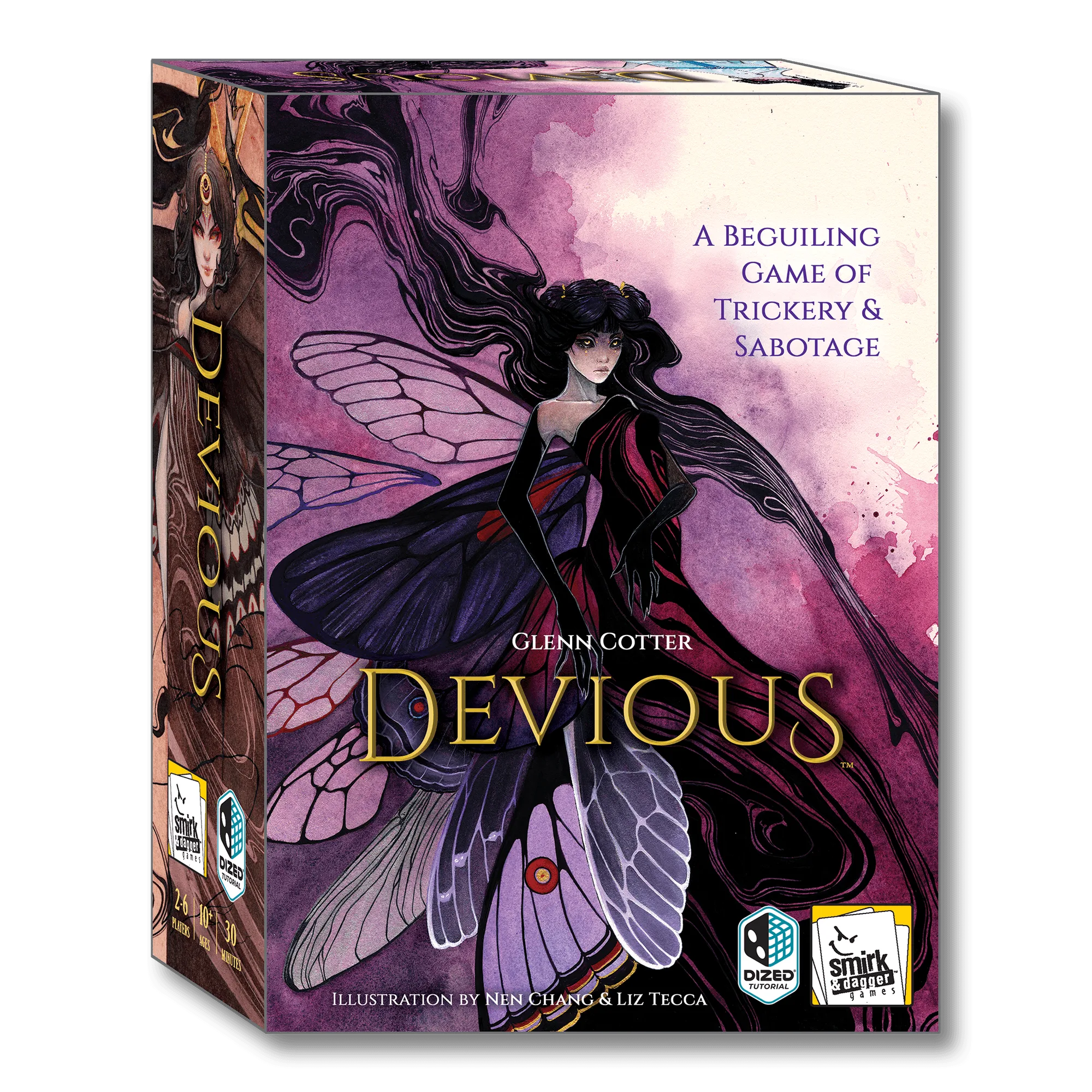
Devious
Most card games reward you for collecting matching sets. Devious does the opposite, and that single twist changes how you bluff, choose, and read your opponent. This guide walks through setup, the anti-set scoring rule, and the practical habits that separate a lucky win from a repeatable one.
Everything below uses the published rules of the game and the catalog description for Devious. Where the rulebook leaves a detail open, I flag it as a decision point instead of inventing a house rule.
What you need before the first round
Devious is a card game for two players built around bluffing, sabotage, and shifting fortunes. The deck contains faeries from six tribes, each with different ranks. Having a single high-ranking faerie from each tribe can earn you a big win, but having two or more of the same faerie will ruin your score. That tension is the whole game.
Because the game is card-driven, there is no board to assemble and no miniatures to sort. Clear a small table space, shuffle thoroughly, and decide who scores first. A clean shuffle matters more here than in many card games, because a clumped deck can hand one player an easy read on the tribes still in play.
- Checkpoint: agree on who scores first and who arranges first before dealing, so you are not re-dealing mid-round.
- Common mistake: shuffling lightly after a round. The anti-set scoring makes repeated tribe clusters unusually punishing.
Setup: deal three, then hand your fate to your opponent
Deal three cards to each player. Those three cards are your entire hand for the round. You do not draw more as you go, so every card you spend is gone. Before anyone plays, each player arranges the other player's three-card hand and places it face-down. Your opponent decides the order of the cards you will be forced to work through.
This is the setup step people rush, and it is the one that decides the round. When you arrange your opponent's hand, you are not trying to be fair. You are trying to bury the card they most want on the bottom and float the card that hurts them to the top. There is no hidden information in the arrangement itself, only in what your opponent thinks you value.
- Common mistake: arranging your opponent's hand to look clever rather than to constrain them. Ask what card you least want them to play next, and put it last.
- Checkpoint: both hands should be face-down and untouched before the first card is played.
The turn structure and the anti-set rule
Each round, you play a single card. Because your three-card hand was arranged and placed face-down by your opponent, you reveal the top card and play it, then move to the next. You are never choosing from a fully open hand, which is what makes Devious a game of damage control rather than pure optimization.
Scoring is where the anti-set rule bites. One high-ranking faerie from each of the six tribes can earn you a big win. Two or more of the same faerie will ruin your score. So a card that looks strong in isolation can be a liability if you already hold its twin. Track which tribes you have committed to, and treat a second faerie of the same tribe as a problem to solve, not a bonus.
- Checkpoint: before playing, name the tribe you are committing to. If you cannot, you are playing reactively.
- Common mistake: assuming higher rank is always better. Rank only helps when it is a single faerie of its tribe.
Reading the face-down hand
The face-down arrangement is the biggest information channel in the game. Your opponent chose the order of your cards, so their choices reveal what they fear. If they buried a card, that card is probably good for you. If they floated a card to the top, they likely want you to spend it early, which usually means it conflicts with a tribe you already hold or wastes a turn.
Use that read in both directions. When you arrange your opponent's hand, remember that a thoughtful opponent will interpret your ordering. Sometimes the strongest move is to arrange the hand in the most obvious, boring order, because a predictable arrangement gives away less than a clever one.
- Common mistake: over-reading a single round. One arrangement is a hint, not a confession. Track patterns across rounds.
Winning tips: play the long game, not the big card
The players who win Devious consistently are the ones who treat each round as a resource problem. You have three cards, one play per turn, and a scoring rule that punishes duplicates. That means your job is to convert a messy hand into a clean single-faerie-per-tribe position, even if it means playing a low-rank card now to avoid a duplicate later.
Sabotage is a legitimate and expected part of the game. When you arrange your opponent's hand, you are already sabotaging them. When you play, watch for the moment your opponent is forced into a duplicate and let them take it. You do not need to win every round; you need to lose fewer points than they do.
- Winning habit: count tribes, not points. If you hold one faerie from each of the six tribes, you are in a strong position regardless of rank.
- Common mistake: chasing a big win every round. A safe single-tribe round beats a blown-up duplicate round.
Where Devious fits at the table
Devious is a compact two-player card game, so it works well as a filler between heavier games or as a travel option. It is not a cooperative game and it is not a solo game; the bluffing and sabotage only function with a live opponent arranging your hand. If your group prefers open information and low conflict, this is not the right pick.
If you want to round out a small game shelf, Devious pairs naturally with other quick two-player card and dice games. Smirkanddagger carries Devious at a catalog price of USD 12.50, compared with a catalog comparison price of USD 24.99, which makes it an easy add-on rather than a centerpiece purchase.
- Best for: two players who enjoy bluffing, light sabotage, and short rounds.
- Not for: solo play, cooperative play, or groups that dislike direct interference.
Devious round checklist: six steps from shuffle to score
- Shuffle and deal three cards each: Give each player exactly three cards. This is the whole hand for the round, so do not add a draw step. Checkpoint: both players should have three cards and no more before arranging begins.
- Arrange your opponent's hand face-down: Take your opponent's three cards and place them face-down in the order you want them to play. Bury the card that helps them most; float the card that constrains them. Common mistake: arranging to look clever instead of to constrain. Ask what card you least want them to play next.
- Reveal and play one card per round: On your turn, reveal the top card of your face-down hand and play it. You do not choose from an open hand, so plan around the order your opponent set. Checkpoint: you should be able to name the tribe you are committing to before you play.
- Track tribes to avoid duplicates: Keep a running count of which tribes you have committed to. A second faerie of the same tribe ruins your score, so treat duplicates as a problem to solve. Common mistake: assuming a high rank is always good. Rank only helps as a single faerie of its tribe.
- Read the face-down arrangement: Use your opponent's ordering as information. A buried card is probably good for you; a floated card is probably one they want you to waste. Checkpoint: note one pattern per round and carry it into the next.
- Score the round and reset: Score single high-ranking faeries from each tribe as a big win and duplicates as a ruined score, then shuffle and deal again. Next step: if you want a spatial two-player alternative, try BOOoop for the same quick, interactive table feel.
Product facts that affect how you play
- Devious: DEVIOUS is a beautifully twisted anti-set collection card game full of bluffing, sabotage, and shifting fortunes. Having a single, high-ranking faerie from each of the 6 tribes may earn you a big win, but having two or more of a faerie will ruin your score. Each round you play a single card, but your 3-card hand is arranged and placed face-down by your opponent. This is the core rule loop. Because your hand is arranged by your opponent and you only play one card per round, your planning has to account for a hand order you did not choose.
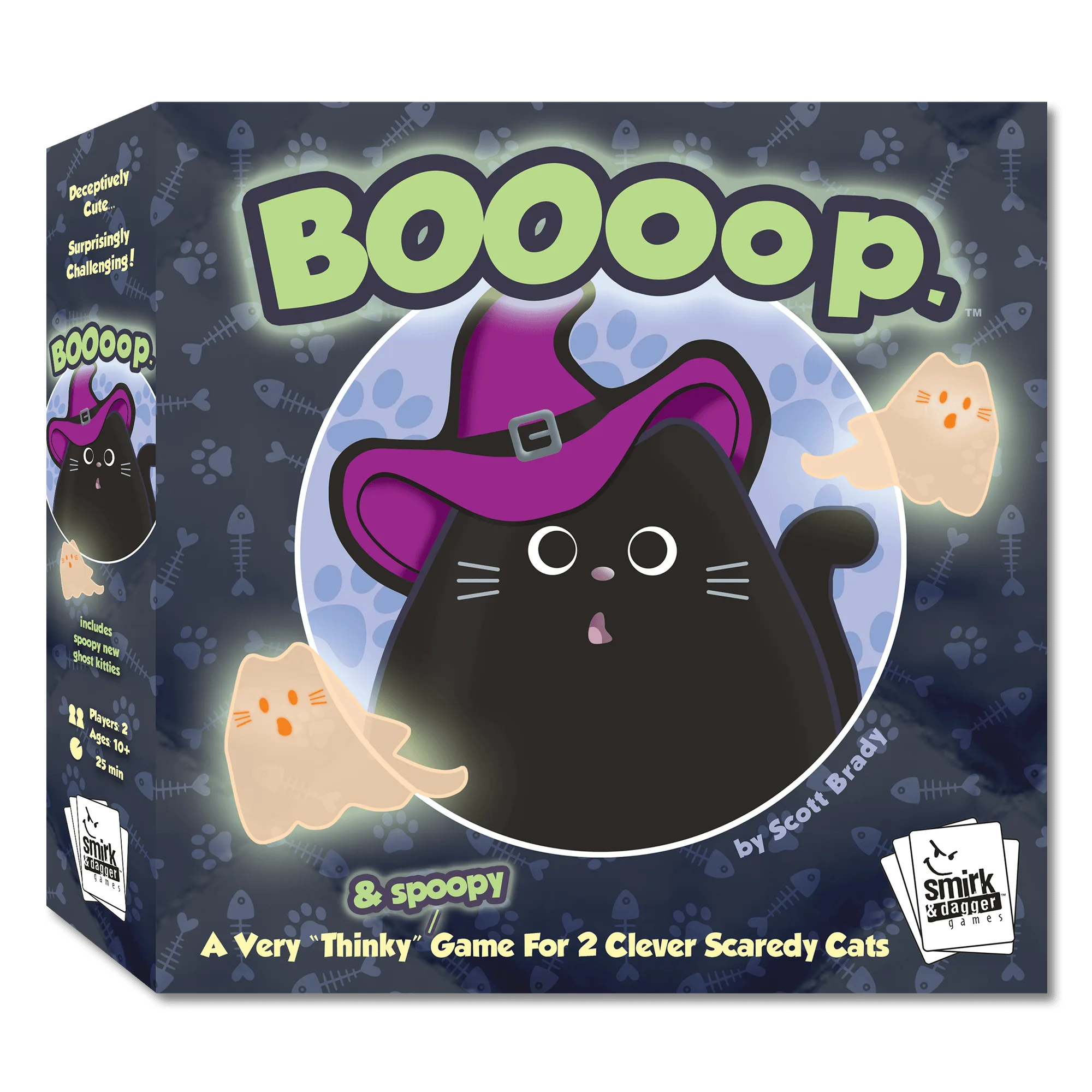
- BOOoop: a deceptively cute but thinky strategy game - now with Ghost Cats!: A spooky, fun Halloween edition of boop. Every time you place a kitten on the bed, it goes boop. Line up 3 kittens in a row to graduate them into cats, and then get 3 cats in a row to win, with both players constantly booping kittens around. If you like Devious for its quick, interactive two-player feel but want a spatial puzzle instead of a card game, BOOoop is the natural next step on the same shelf.
Devious rewards patience and reading people more than raw card strength. Deal three, let your opponent arrange your fate, and spend each round converting a messy hand into one clean faerie per tribe. Play the long game, and the duplicates will land on the other side of the table.