Quick answer
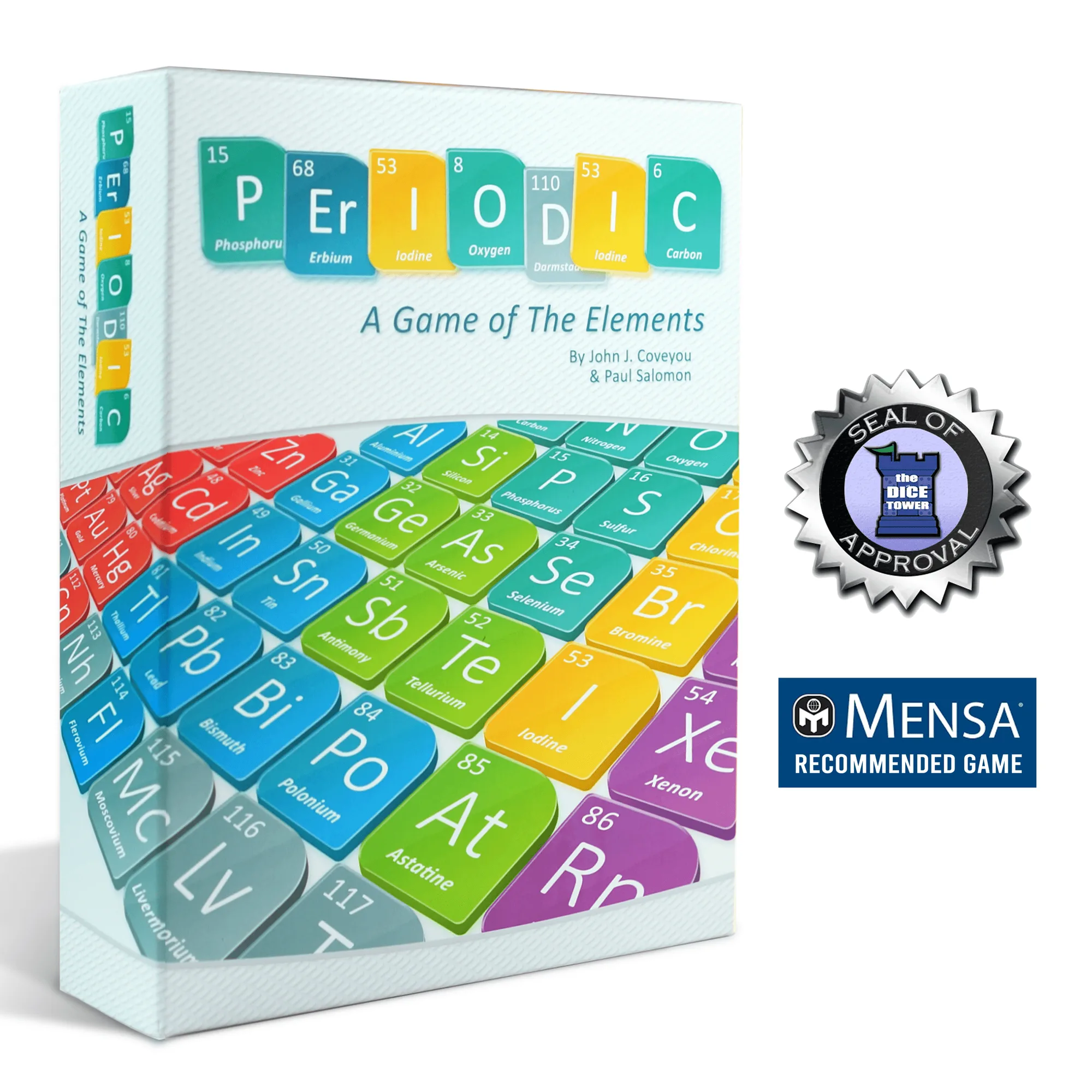
Periodic: A Game of the Elements is a 2-5 player strategy game for ages 10 and up that runs 40-60 minutes. You move your flask token around the periodic table board, spend energy to collect element tiles, and score by completing sets and claiming objective cards. Learn the movement and energy rules first, then play one open round before hiding anything.
What you are actually doing on the periodic table board
The board is laid out like the periodic table, and your token travels across it rather than around a track. Each turn you move, then resolve what your landing space gives you. Elements you collect feed the set collection side of the game, and the action economy comes from how much energy you can spend before your turn ends.
Because the board is a grid of elements instead of a loop, there is no single obvious route. That is the tactical movement part: two players can chase the same element and only one gets there first. Understanding this early stops new players from treating it like a race with one path.
Set up so the first turn makes sense
Shuffle and place the objective cards where everyone can read them, then seed the element tiles on their matching spaces. Give each player their starting energy and token. Before you deal the first turn, read the objective cards out loud — they tell you which elements are worth chasing and they change how the board is valued.
Periodic supports 2 to 5 players, and the board gets tighter as you add people. With five players, expect competition for the same high-value elements and plan to pivot more often.
- Checkpoint: every player can point to the element they are heading for on turn one before you start.
Run a turn in the right order
Take movement first, then resolve the space, then spend or bank energy as the rules allow. Doing it in that order matters because where you land determines what you can afford to do next. If you resolve effects before moving, you will spend energy on something you cannot reach.
Common mistake: players move, then realize they wanted a different element and try to move again. Decide your destination before you touch your token.
Energy is the real currency, not the elements
Elements are what you score, but energy is what lets you act. The action economy means a turn where you spend everything is usually worse than a turn where you collect one element and keep a buffer. New players burn out early and then watch two or three turns go by with nothing to do.
Watch the table, not just your own board. If the player to your right is clearly building toward one objective, you can often take the element they need at low cost to yourself.
- Checkpoint: if you end a turn with zero energy, ask whether that was forced or a choice.
Scoring: sets and objectives together
You score from the sets you complete and from objectives you claim. Sets reward breadth, objectives reward timing. A player who quietly completes three small sets can beat someone holding two flashy objectives they never finished.
Before the final rounds, count what each player needs. If someone is one element away from a set, that element becomes the most contested space on the board.
First-game pacing for a mixed-age table
Periodic is listed for ages 10 and up, and 40-60 minutes is realistic once everyone knows the flow. For a first game with younger players, play with open objective cards and allow one take-back per player in the first three rounds. Then remove both for game two.
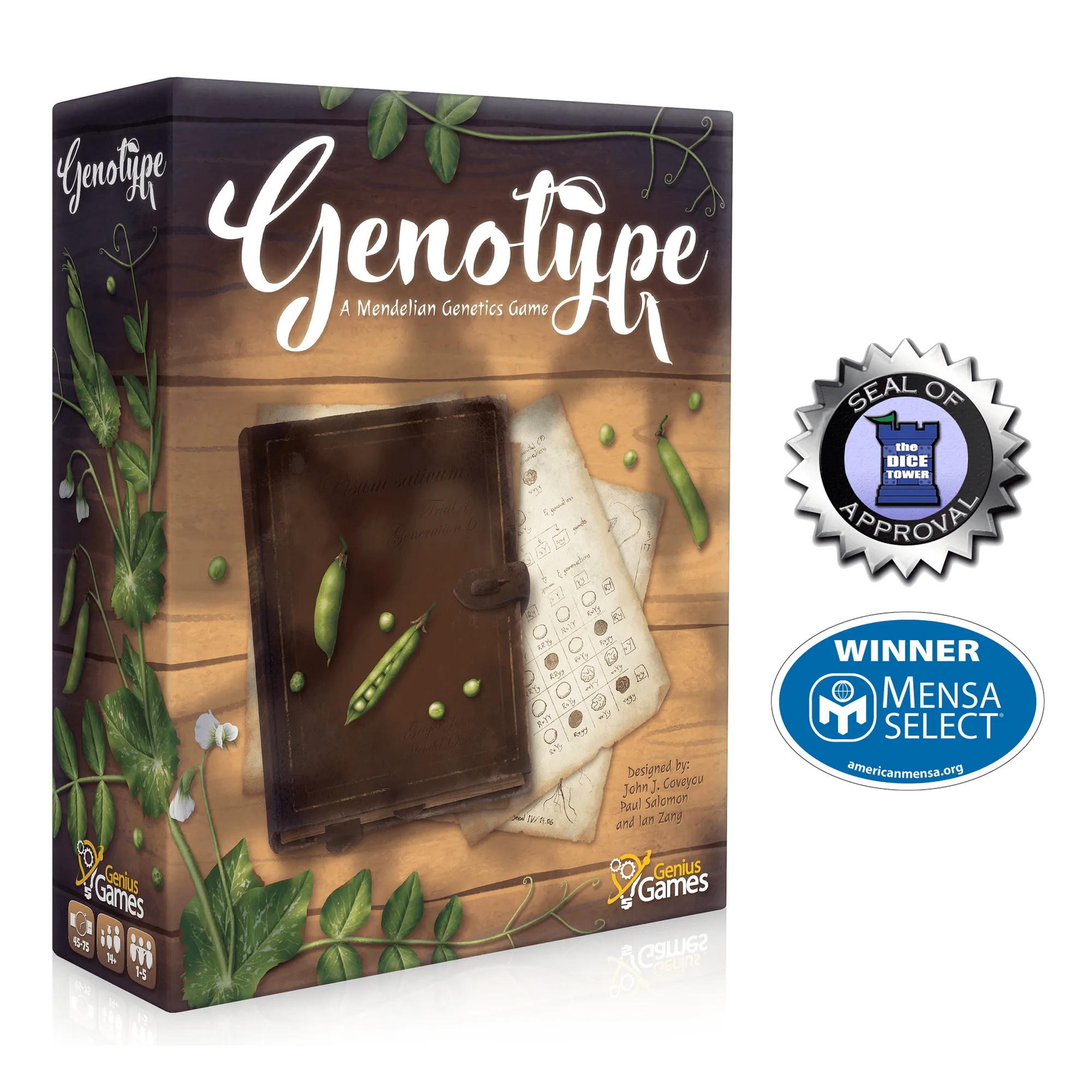
If you want a heavier genetics follow-up at the same table, Genotype: A Mendelian Genetics Game is a worker placement and resource management game for ages 14 and up, 1-5 players, 45-75 minutes. It is a step up in complexity, not a same-night substitute for Periodic.
Periodic first-game steps
- Read the objective cards before anyone moves: Lay out the objective cards where all players can read them and read each one aloud. These cards decide which elements are worth chasing this game. Checkpoint: every player names one target element before turn one.
- Teach movement and landing resolution as one action: Show that you move your token across the periodic table grid, then resolve the space you land on. Do not separate these into two lessons. Mistake to avoid: letting players resolve effects before committing to a destination.
- Play one open round with energy visible: Have everyone keep energy tokens in plain view for the first round and talk through the spend. You are teaching the action economy, not testing anyone. Checkpoint: no one ends the practice round at zero energy without knowing why.
- Explain set collection and objectives together: Show how a completed set scores and how an objective scores, side by side, so players see there are two paths to points. Mistake to avoid: players hoarding elements for one big set while objectives go unclaimed.
- Run the real game and drop the training wheels: Once the flow is clear, hide energy, keep objective cards public, and remove take-backs. Expect the first full game to land near the 40-60 minute range. Next step: if the table wants more depth, move up to Genotype at 14+ and 45-75 minutes.
Product facts
- Periodic: A Game of the Elements | 2021 MENSA Recommended Game | Dice Tower Seal of Approval | Strategy Board Game: Periodic: A Game of the Elements is a 2021 MENSA Recommended Game and a Dice Tower Seal of Approval recipient, for ages 10+, 2-5 players, 40-60 minutes. The player count and age range tell you whether it fits your table before you buy; the 40-60 minute window is a realistic first-game estimate.
- Periodic: A Game of the Elements | 2021 MENSA Recommended Game | Dice Tower Seal of Approval | Strategy Board Game: Its mechanics are action economy, tactical movement, and set collection, built around the periodic table, atoms, elements, and compounds. Knowing the three mechanics tells you what to teach first: movement, then energy spending, then set scoring.
- Genotype: A Mendelian Genetics Game | 2022 MENSA Select Award Winner | Dice Tower Seal of Approval | Strategy Board Game: Genotype: A Mendelian Genetics Game is a 2022 MENSA Select Award winner and Dice Tower Seal of Approval recipient, for ages 14+, 1-5 players, 45-75 minutes, with worker placement and resource management. Useful if your group wants a genetics-themed next step with a higher age floor and longer play time.