Quick answer
Season a carbon steel pan by heating it until it's hot, applying a thin layer of high-smoke-point oil, and letting it polymerize until the pan darkens. After every use, wash with hot water, dry thoroughly, and warm the pan on the stove to remove moisture. That routine builds a naturally nonstick surface and prevents rust.
Why carbon steel needs a seasoning layer
Carbon steel is iron with a low carbon content, so it conducts heat quickly and holds it well. Without a seasoning layer, the bare metal can rust and food will stick. Seasoning is polymerized oil bonded to the surface; it fills microscopic pores and creates a slick, protective coating. Every time you cook with fat, you add to that layer. If you strip it or let the pan stay wet, you expose the metal and have to start over.
You don't need a special product. Any neutral oil with a high smoke point, such as grapeseed, canola, or flaxseed, works. Avoid olive oil for the initial seasoning because it burns at a lower temperature and can leave a sticky residue.
How to clean carbon steel without ruining the seasoning
Many people treat carbon steel like cast iron and avoid soap, but modern dish soap is fine for a well-seasoned pan. Hot water and a soft sponge or stiff brush remove food without stripping the polymerized layer. For stuck-on bits, simmer a little water in the pan to deglaze, then scrape with a wooden spatula. Skip the dishwasher and never soak the pan; prolonged moisture is the fastest way to rust.
If you notice a metallic taste or the pan looks dull and gray after washing, you've likely removed some seasoning. That's normal. Dry it on the stove over medium heat for a minute, then add a few drops of oil and wipe it across the surface with a paper towel. The pan is ready for the next cook.
Preventing rust and fixing small spots
Rust appears as orange or brown speckles, usually after the pan sits wet or in a humid drawer. Catch it early. Scrub the spot with steel wool or a scouring pad until you see bare metal, wash and dry, then re-season that area. For a light rust film, a paste of baking soda and water can lift it without harsh chemicals. After any rust repair, heat the pan, apply a thin oil layer, and let it smoke off.
Storage matters as much as cleaning. Hang the pan or stack it with a paper towel between it and other cookware. If you live in a humid climate, a light wipe of oil before storing adds a barrier. Never put a carbon steel pan away damp, even for a few hours.
Re-seasoning a pan that has lost its coating
If food sticks everywhere and the pan looks patchy or gray, you can re-season from scratch. Scrub the pan down to bare metal with steel wool and hot soapy water. Dry it completely. Then follow the oven method: rub a very thin layer of high-smoke-point oil over the entire pan, inside and out, and bake it upside down at 450°F (230°C) for one hour. Let it cool in the oven. Repeat the oil-and-bake cycle two or three times for a durable base layer.
A common mistake is applying too much oil. Excess oil pools and turns gummy instead of polymerizing. Wipe the pan as if you're trying to remove all the oil, then bake. The thin film that remains is what you want. After re-seasoning, cook fatty foods like bacon or fried eggs for the first few sessions to strengthen the coating.
Step-by-step carbon steel seasoning and care
- 1. Start with a clean, dry pan: Wash a new or rusty pan with hot water and a little dish soap, then dry it completely on the stove over medium heat. Any moisture left on the surface will turn to rust under the oil. Checkpoint: the pan should be bone-dry and warm, not hot enough to smoke.
- 2. Apply a thin layer of oil: Add about a teaspoon of high-smoke-point oil (grapeseed, canola, or flaxseed) and rub it over the entire cooking surface with a paper towel. Then take a clean paper towel and wipe it as if you want to remove all the oil. The remaining sheen is enough. Mistake to avoid: leaving visible pools of oil. They turn sticky and uneven.
- 3. Heat until the oil polymerizes: Set the pan over medium-high heat for 3–5 minutes, or bake it upside down at 450°F (230°C) for one hour. The surface will darken and may smoke slightly. That smoke is the oil bonding to the metal. Checkpoint: the pan looks dry and slightly amber, not wet or tacky.
- 4. Cool and repeat for a stronger layer: Let the pan cool completely, then repeat the oil-and-heat cycle two or three times. Each round adds durability. For a quick stovetop touch-up, you can do one cycle after everyday cooking. Next step: cook fatty foods like bacon or fried eggs for the first few uses to reinforce the seasoning.
- 5. Clean with hot water and a soft sponge: After cooking, let the pan cool slightly, then wash with hot water and a soft sponge or stiff brush. Use a little dish soap if you like; it won't harm a well-seasoned pan. For stuck food, simmer water in the pan and scrape with a wooden spatula. Mistake to avoid: soaking the pan or putting it in the dishwasher. Both invite rust.
- 6. Dry on the stove and oil lightly: Return the pan to the stove over medium heat for one minute to evaporate all moisture. Then add a few drops of oil and wipe it across the surface with a paper towel. Store the pan in a dry place, hanging it or stacking with a paper towel between pans. Checkpoint: the pan should feel smooth and dry, never sticky or wet.
Carbon steel pans that fit this routine
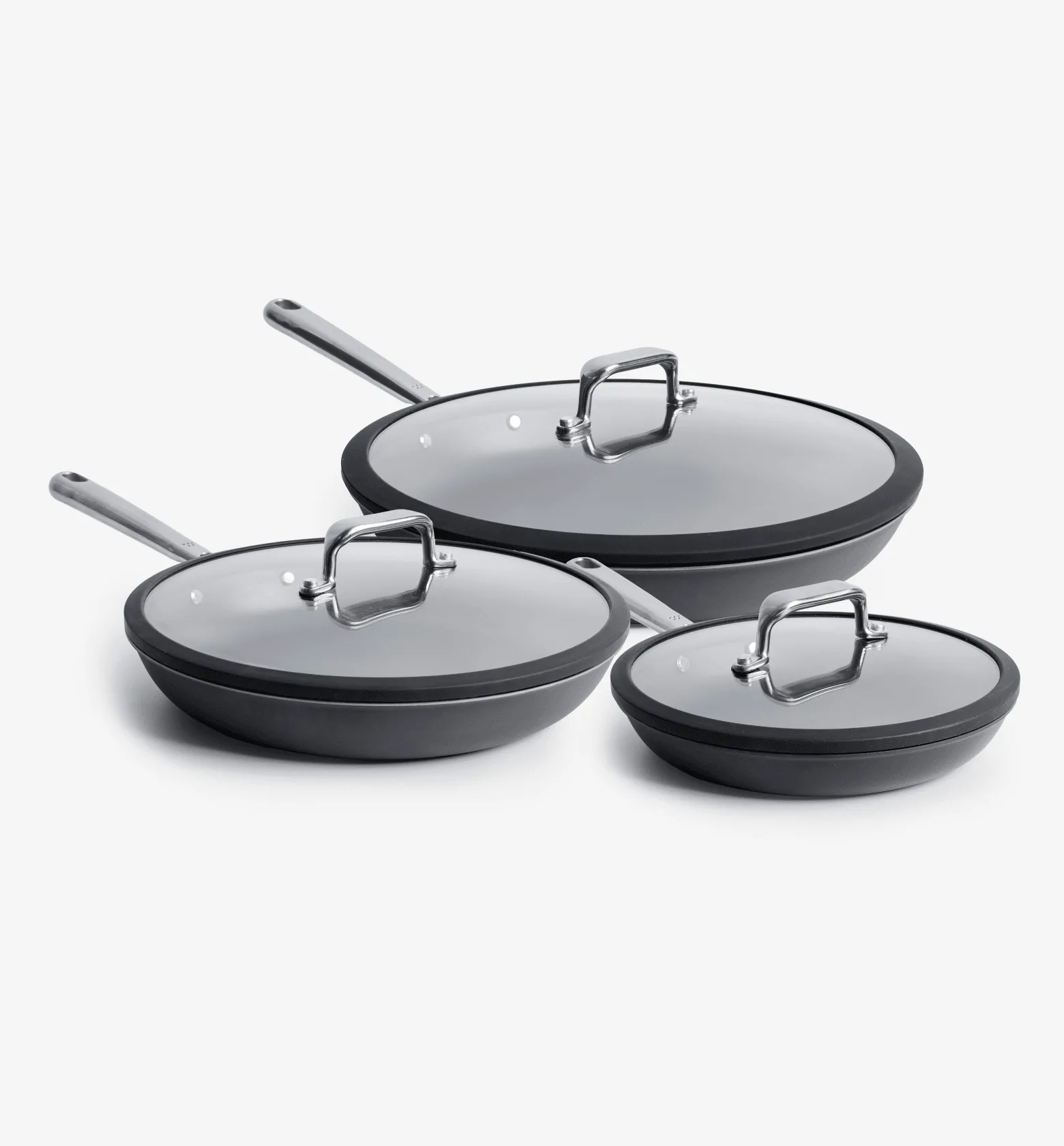
- 8” + 10” + 12” Pre-Seasoned Carbon Steel Frying Pan + Glass Lids: Pre-seasoned and ready to roll right out of the box, this set includes 8”, 10”, and 12” frying pans plus glass lids. You can start cooking immediately and use the lids to trap moisture when simmering, which helps prevent rust on the interior while the pan is in use.
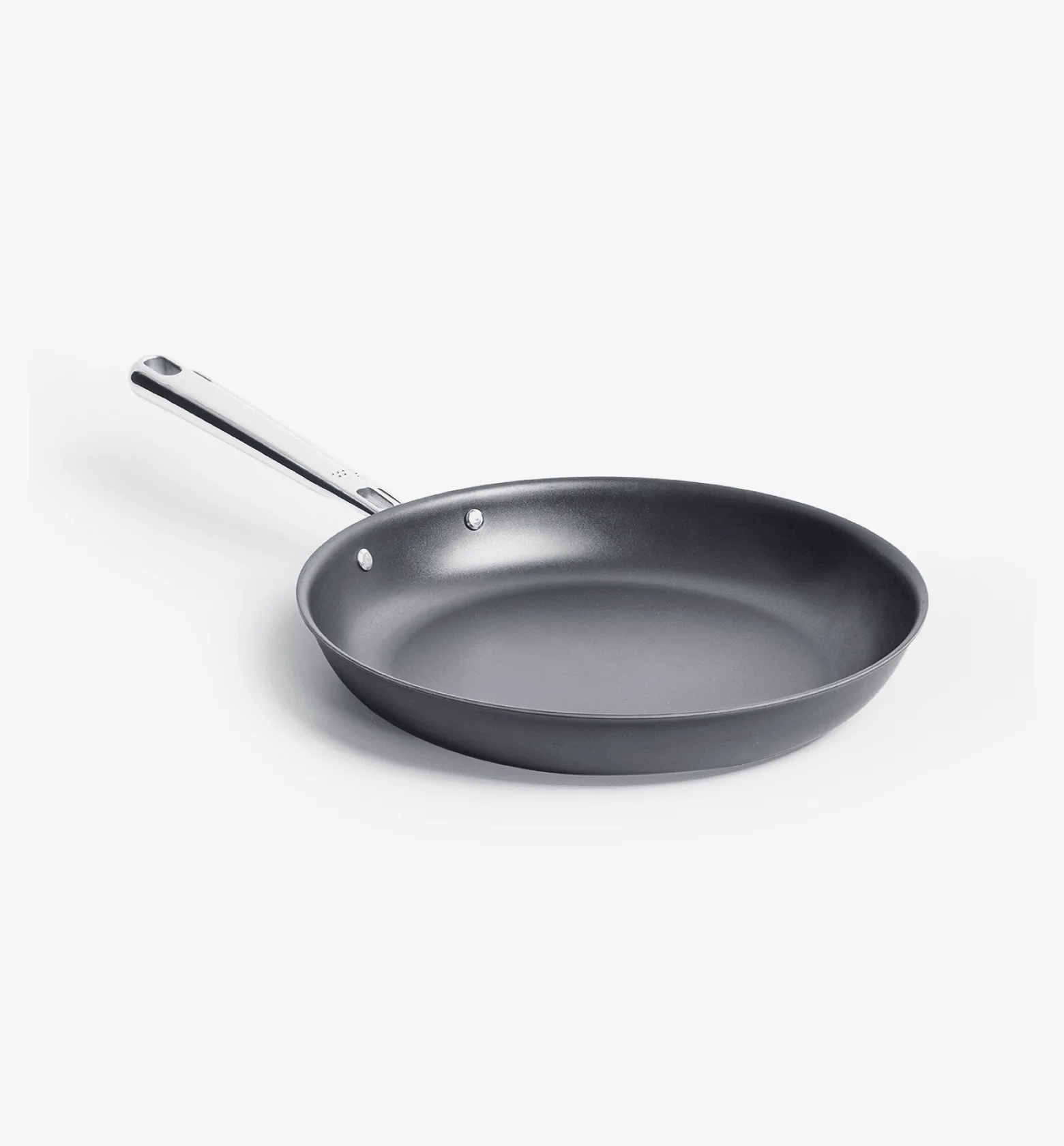
- 10" Pre-Seasoned Carbon Steel Frying Pan: A staff-favorite pan for serious searing and naturally nonstick cooking, pre-seasoned and ready to use. If you only need one pan, this 10-inch size is the most versatile for everyday eggs, proteins, and vegetables, and it arrives with a head start on seasoning.
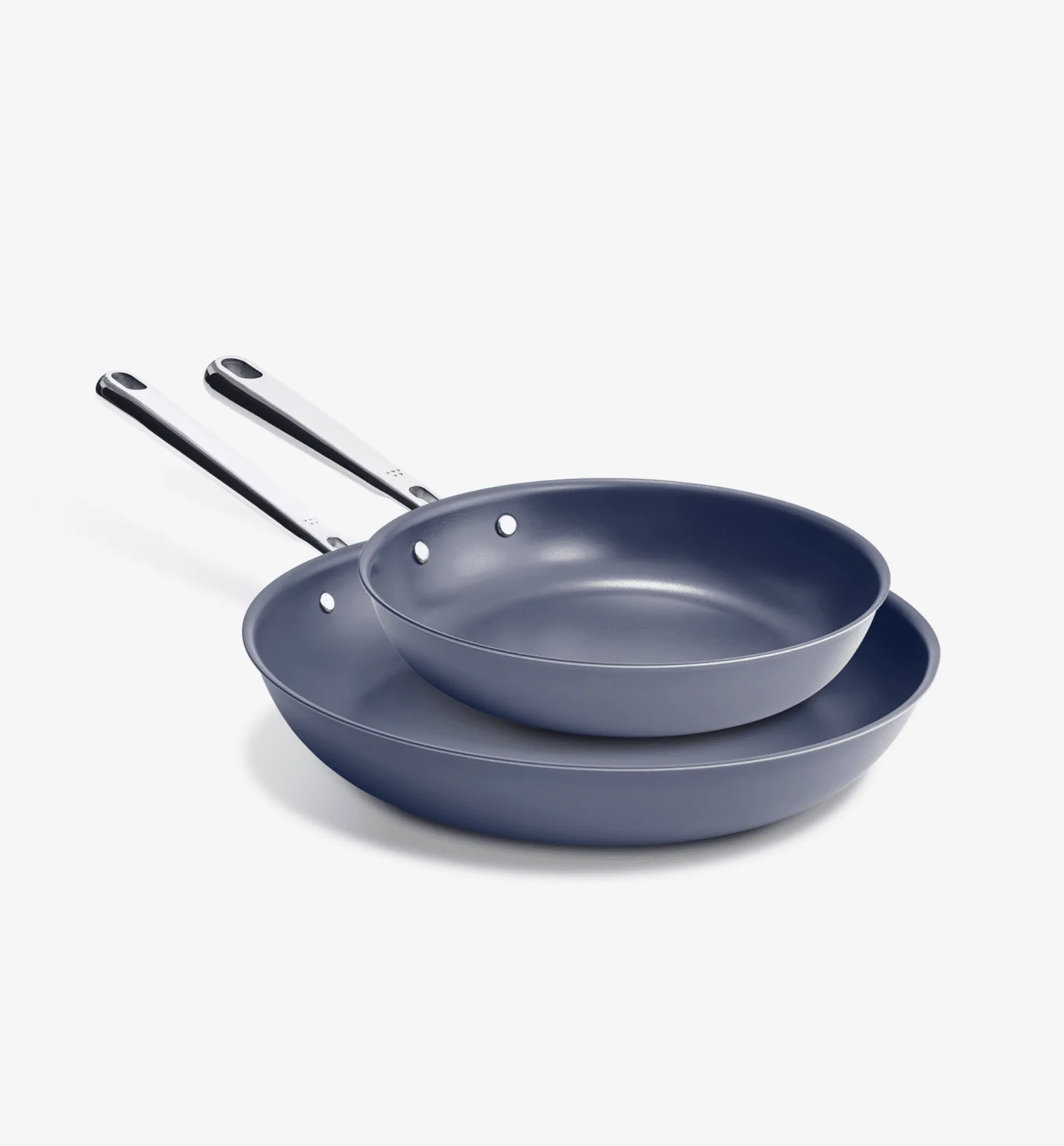
- 8" + 12" Deeper Carbon Nonstick™ Frying Pan: The easiest carbon steel pan ever made, now with higher side walls. Coating-free and non-toxic, it’s a forever pan that gets better every time you cook. The deeper walls reduce splatter and hold more food, while the carbon nonstick surface still requires the same seasoning and drying routine to stay rust-free.