Quick answer
Put the play kitchen where your toddler can reach it without help, keep only a handful of accessories out at a time, and store the rest in open bins your child can use alone. The setup matters more than the kitchen itself: if kids cannot reach, open, or reset the toys, they will ask you to play instead of playing.
Place the kitchen where your toddler plays, not where it looks best
A play kitchen gets used when it sits inside your child's normal path: beside the block shelf, near the books, facing the room rather than a wall. In a montessori play kitchen setup, the guiding rule is access, not decoration. If the kitchen faces a wall, your child's back is to the room and you cannot see what is happening, which makes you hover and makes them check in with you constantly.
Keep it off a main walkway. A kitchen that gets bumped or that you have to step around becomes a thing to move, not a place to play.
Set the height and surfaces for your child, not for you
The counter should sit at roughly your toddler's waist so they can reach the back edge without climbing. If the kitchen is too tall, kids pull at you to lift them, and independent play ends there. Check that doors, knobs, and the oven open without hitting a wall or a nearby chair.
Put one stable stool or child chair nearby if your child likes to sit while they cook. Loose cushions and tall stools invite climbing, so choose one low, firm option and keep it in the same spot.
Store toys in open bins your child can reset alone
Play kitchen organization works best when every container is open, shallow, and labeled with a picture rather than a word. A toddler who can see the pan in the bin will put the pan back in the bin. A toddler facing a lidded box will leave everything on the floor and walk away.
Give each category one home: pans, plates and cups, pretend food, and doll feeding items. If a bin overflows, that is your signal to rotate, not to buy another bin.
Rotate a small set of pretend food and tools
Keep five to eight food pieces and two or three tools visible, and store the rest out of sight. Swap the visible set every week or two. Fewer pieces means less to dump, and a swapped piece reads as new, which restarts play without any new purchase.
For a toddler kitchen play session, the food should be cuttable or openable so there is an action to repeat. That repeated action is what holds attention when you step away.
Add one doll or stuffed animal as the customer
A doll gives your child someone to cook for, which turns stirring into a story. Feeding accessories sized for dolls let kids pour, open, and serve in the same motion they see at home. This is also where a play kitchen quietly builds language: your child narrates the meal to the doll instead of asking you what to do next.
If your child already owns a doll, use it. If not, a single mealtime set is enough; you do not need a full nursery to make the kitchen work.
Step back in stages instead of leaving at once
Start by playing beside your child for two minutes, then move to a chair a few feet away, then to the doorway. Each stage is a checkpoint: if your child follows you, go back one stage and stay there longer. Announcing 'I'll be in the kitchen' and then reappearing every few minutes teaches them you are still nearby without you directing the play.
Resist correcting how they cook. A toddler stirring pasta into a teacup is doing the work of pretend play, and interrupting it to fix the order of operations breaks the spell.
Play kitchen setup steps
- Clear the spot and check reach: Move the kitchen to a wall your child faces with their back to the room, then have them stand at it and reach the back counter without a stool. Common mistake: placing it in a walkway or against a wall so tall they need lifting. Checkpoint: if they cannot reach the back edge, the setup is not finished.
- Assign one open bin per category: Set out four open, shallow bins for pans, dishes, food, and doll feeding items, each with a picture label. Common mistake: using lidded bins or one big toy box, which makes cleanup a job only an adult can do. Checkpoint: your child should be able to put every item away without opening a lid.
- Put out a small starting set: Choose five to eight food pieces and two or three tools, then store the rest out of sight. Include at least one item with a repeatable action, such as a cuttable cake or a bottle that appears to empty. Common mistake: displaying the entire collection at once, which leads to dumping rather than playing. Checkpoint: if your child dumps the bin and walks away, remove half the pieces before the next session.
- Add a doll as the customer: Place one doll or stuffed animal and a small feeding set beside the kitchen so your child has someone to cook for. Common mistake: adding several dolls, which spreads attention instead of deepening the story. Checkpoint: one doll is enough; add a second only if your child already plays with two.
- Withdraw in stages: Play alongside for two minutes, sit a few feet away, then move to the doorway, staying visible. Common mistake: leaving the room immediately or narrating every move, both of which pull your child back to you. Checkpoint: if your child follows you, return one stage closer and hold there longer.
Play kitchen accessories that support solo play
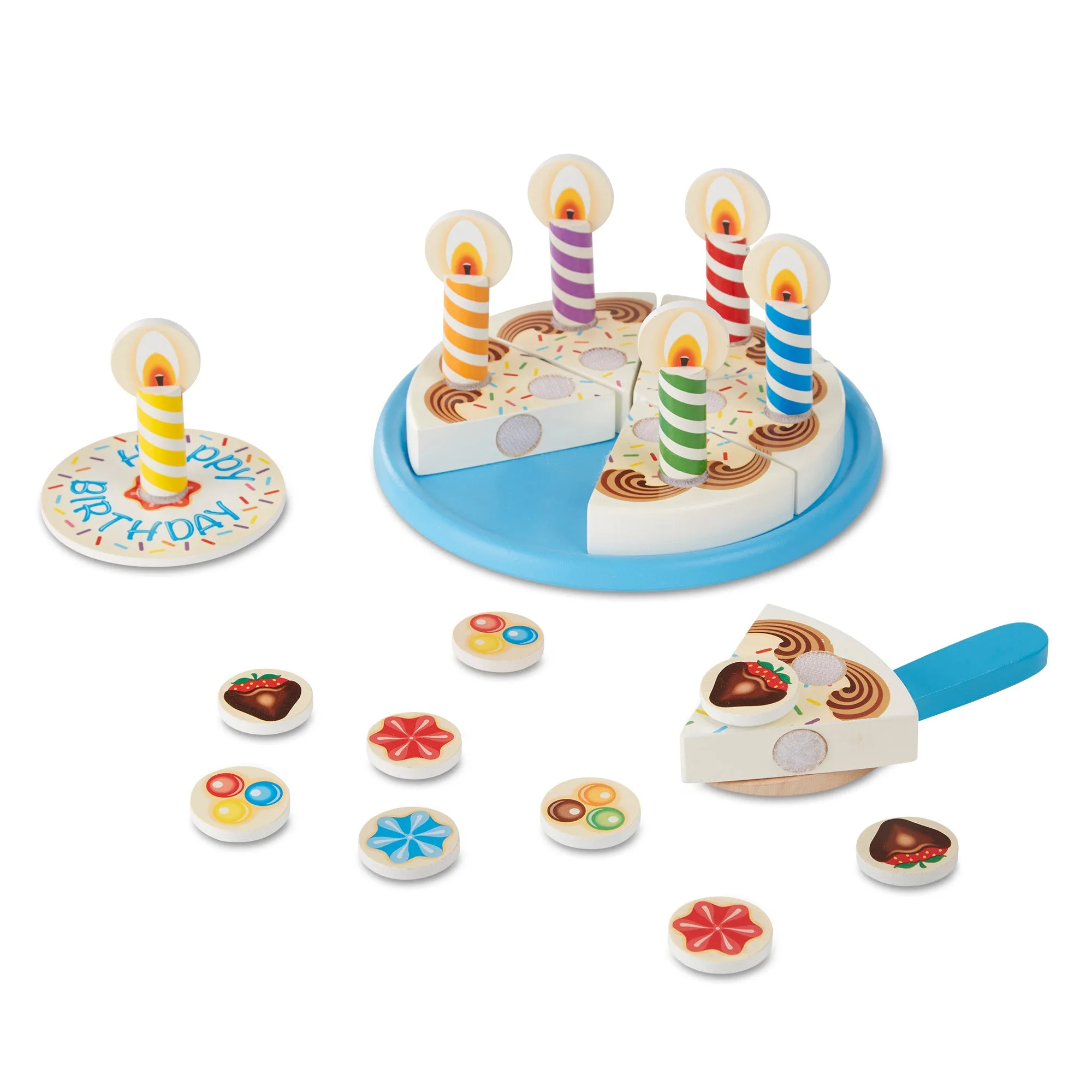
- Wooden Birthday Cake Play Set: This wooden play food set includes six ready-to-cut slices of cake, removable candles and toppings, and a cake plate and server, with a serving knife that makes a slicing sound and all 34 pieces storing in a wooden box. The cut-and-serve action gives a toddler something to repeat without an adult, and the box means the whole set can be reset in one motion during cleanup.
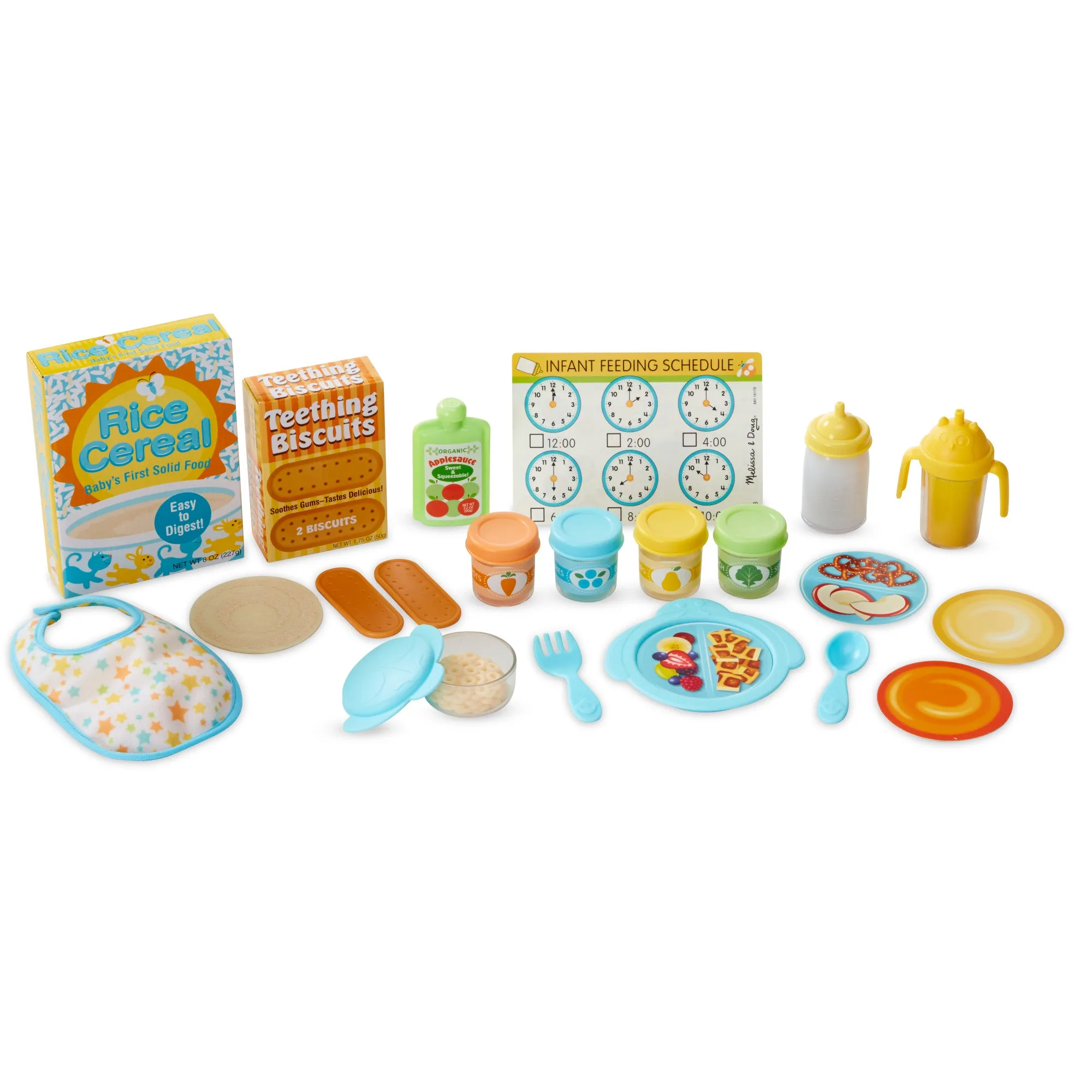
- Mine to Love Mealtime Play Set: This 24-piece set includes a bottle with disappearing milk, a sippy cup, an applesauce squeeze pouch, baby food jars, meal inserts, cereal Os, rice cereal, and teething biscuits, sized for dolls and stuffed animals. Feeding a doll adds a second role to kitchen play, so a child can keep the story going alone after the cooking part is done.
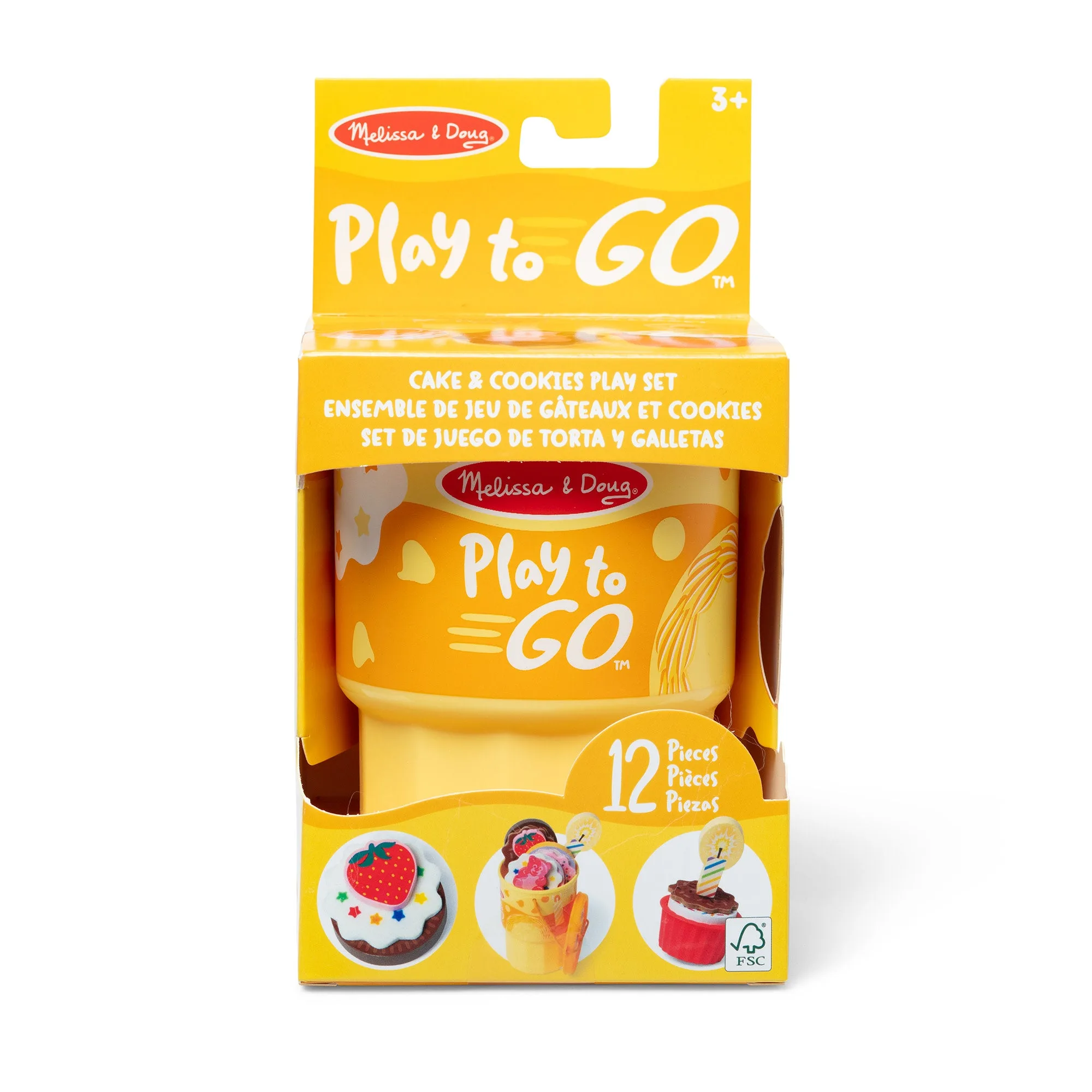
- Play to Go Cake & Cookies Play Set: This 12-piece set covers cookies, cupcakes, and layer cakes, and stores inside a travel-friendly cup. Because everything packs into one cup, it is the easiest set for a child to carry to the kitchen, put away, and set up again without help.