Quick answer
Most ice pops stick because the mold was filled too full, the pop was pulled before it fully froze, or the mold was never warmed at the surface before release. Fill only to the fill line, freeze until the stick is rock solid, then run the mold under cool-to-lukewarm water for 10-20 seconds before pulling. If the pop still resists, stop pulling and warm it again rather than forcing it.
Diagnose before you pull
Sticking is a symptom, not a single fault. Before you yank harder, identify which of these three situations you are in: the pop is under-frozen (still soft in the middle), the mold is over-filled (liquid expanded past the fill line and locked around the stick), or the mold is cold-bonded (the frozen surface is gripping the mold wall). Each has a different fix, and pulling harder only breaks the pop or cracks the mold.
- Under-frozen: the stick wiggles slightly and the pop feels slushy at the base. Return it to the freezer.
- Over-filled: there is a visible ice collar above the fill line or around the stick. Let it thaw slightly, then trim the collar with a warm spoon before releasing.
- Cold-bonded: the pop is solid but will not budge. This is a release problem, not a freezing problem. Warm the mold exterior.
The release method that actually works
For silicone molds, the safest release is a short warm-water dip. Fill a bowl with cool-to-lukewarm water, dip the mold just up to the rim for 10-20 seconds, then dry the outside and pull the stick straight up with steady pressure. Do not twist. Twisting shears the pop at the stick base. If it does not release on the first try, dip again for another 10 seconds. For rigid plastic molds, the same dip works, but you may need 20-30 seconds because plastic transfers heat more slowly than silicone.
- Never use hot water. It melts the outer layer and creates a slushy, misshapen pop.
- Never run the mold under the tap while holding the stick. Water gets into the pop and dilutes it.
- If the pop still resists after two dips, let the whole mold sit at room temperature for 2-3 minutes, then try again.
Prevention for the next batch
The most common cause of sticking is over-filling. Leave 1/4 inch (about 6 mm) of headroom below the rim so the mixture can expand upward without sealing around the stick. Also make sure the pops are fully frozen before you try to release them. A standard home freezer at 0°F (-18°C) needs 6-8 hours for a full mold, not the 3-4 hours many recipes suggest. If your freezer runs warmer, add 2 hours.
- Use a flexible silicone mold when you can. Silicone flexes away from the pop, which breaks the vacuum seal that causes sticking.
- Rinse the mold with cool water and shake out the excess before filling. A thin film of water helps the pop release later.
- Do not stack heavy items on top of the mold in the freezer. Pressure distorts the mold and creates tight spots.
When to stop trying and switch molds
If you have followed the release steps three times and the pop still will not come out, stop. Continuing to pull will either break the stick inside the pop or tear the silicone. At that point, let the mold sit in the refrigerator (not on the counter) for 10 minutes, then try one final dip. If it still fails, the mold may be too rigid or too deeply shaped for easy release. Fun-shaped molds with narrow ears, tails, or limbs are more prone to sticking than simple cylinder molds because the frozen pop has more surface area gripping the mold.
- If the mold is rigid plastic with undercuts (shapes that curve back inward), sticking is a design limitation, not a technique problem. Consider a silicone mold for those shapes.
- If the mold is silicone but the shape has thin protrusions, chill the mold in the freezer for 10 minutes before filling. A cold mold starts freezing the surface instantly, which can reduce sticking.
- If the pop breaks and leaves pieces inside, let the mold thaw completely, then wash with warm soapy water before the next use.
Sticking diagnosis
- Pop is soft in the middle: The stick wiggles and the base feels slushy. The pop is not fully frozen. Return it to the freezer for at least 2 more hours. Do not try to release it yet.
- Pop is solid but will not move: The stick is rigid and the pop feels hard through the mold. The frozen surface has bonded to the mold wall. Dip the mold in cool-to-lukewarm water for 10-20 seconds, dry it, then pull straight up. Repeat once if needed.
- Pop is solid, warm-dipped, and still stuck: The mold shape has undercuts or thin protrusions that grip the pop. Stop pulling. Let the mold sit in the refrigerator for 10 minutes, then try one final dip. If it still fails, switch to a simpler silicone mold for that shape.
One product that avoids the problem
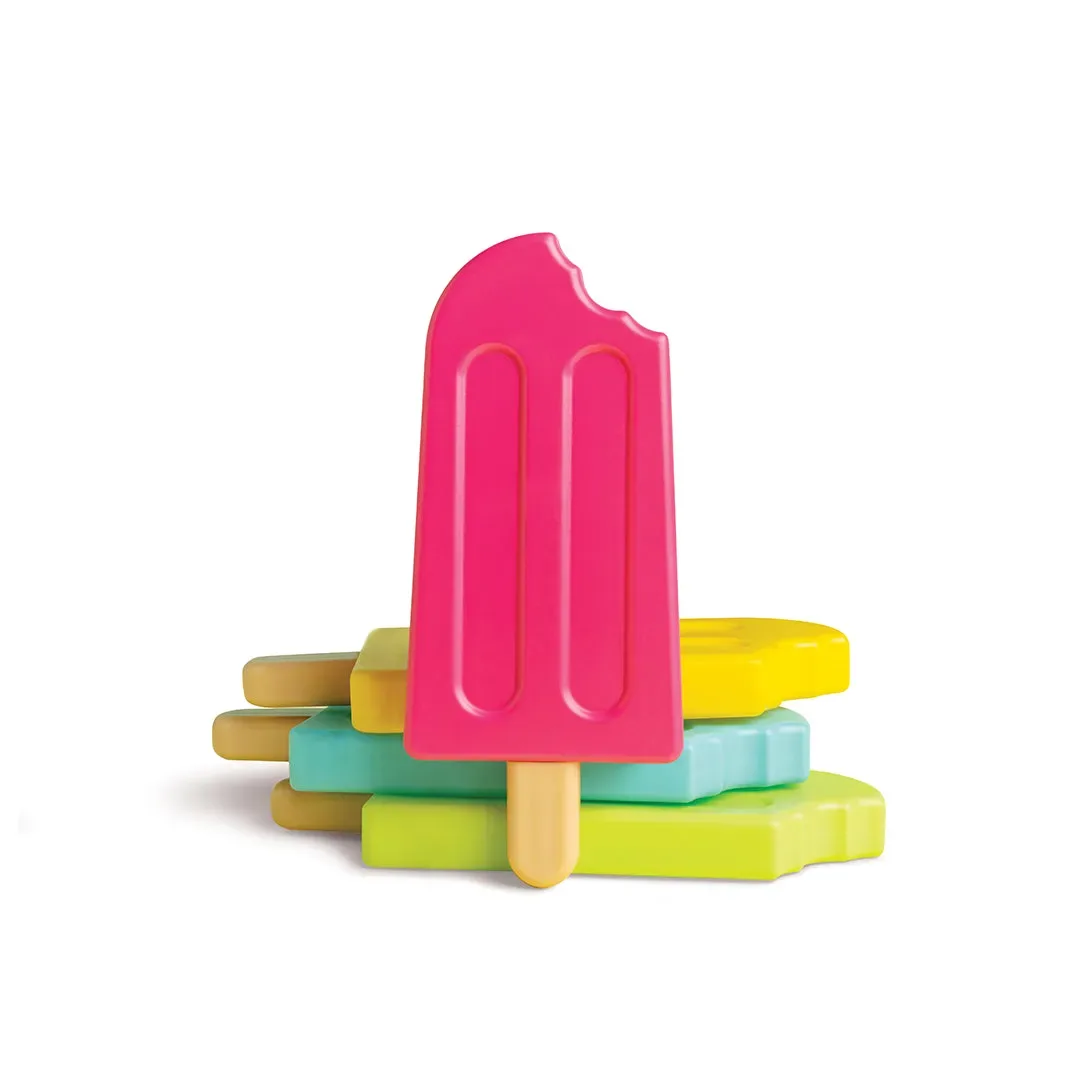
- Ice Pops: Ice Pops are cat-shaped ice packs designed by OTOTO for chilling drinks, not for freezing homemade popsicles. They solve the opposite problem: keeping drinks cold without diluting them. If you want fun shapes in your glass rather than a popsicle mold, these reusable ice packs skip the release issue entirely.