Quick answer
Start with a small open cup, like the Baby-Led™ Tiny Cup, and offer a tiny amount of liquid during a calm, seated feeding. Hold the cup to your baby's lips, tilt slowly, and let them sip at their own pace. Practice once a day, and expect spills for the first few weeks.
Why a tiny open cup beats a sippy cup for early skills
Open cup drinking is a developmental milestone that supports healthy oral and speech development, aids with teething, helps baby learn to have a strong swallow, and may help to prevent tooth decay. A tiny cup makes this possible because its small size lets you control the tilt and the amount of liquid your baby receives. Sippy cups often encourage a sucking pattern that doesn't build the same oral muscles. That's why many feeding specialists suggest starting with an open cup, even if it's messier at first.
When to start and what to expect
Most babies are ready to try an open cup around 6 months, when they can sit upright with support and show interest in your cup. At this stage, they won't drink much—maybe a few sips—and that's fine. The goal is practice, not hydration. Breastmilk and formula are still the main sources of nutrition. Expect spills, dribbles, and occasional coughing as your baby learns to coordinate swallowing. If your baby consistently coughs or chokes, stop and try again in a few days.
Choose the right cup and liquid
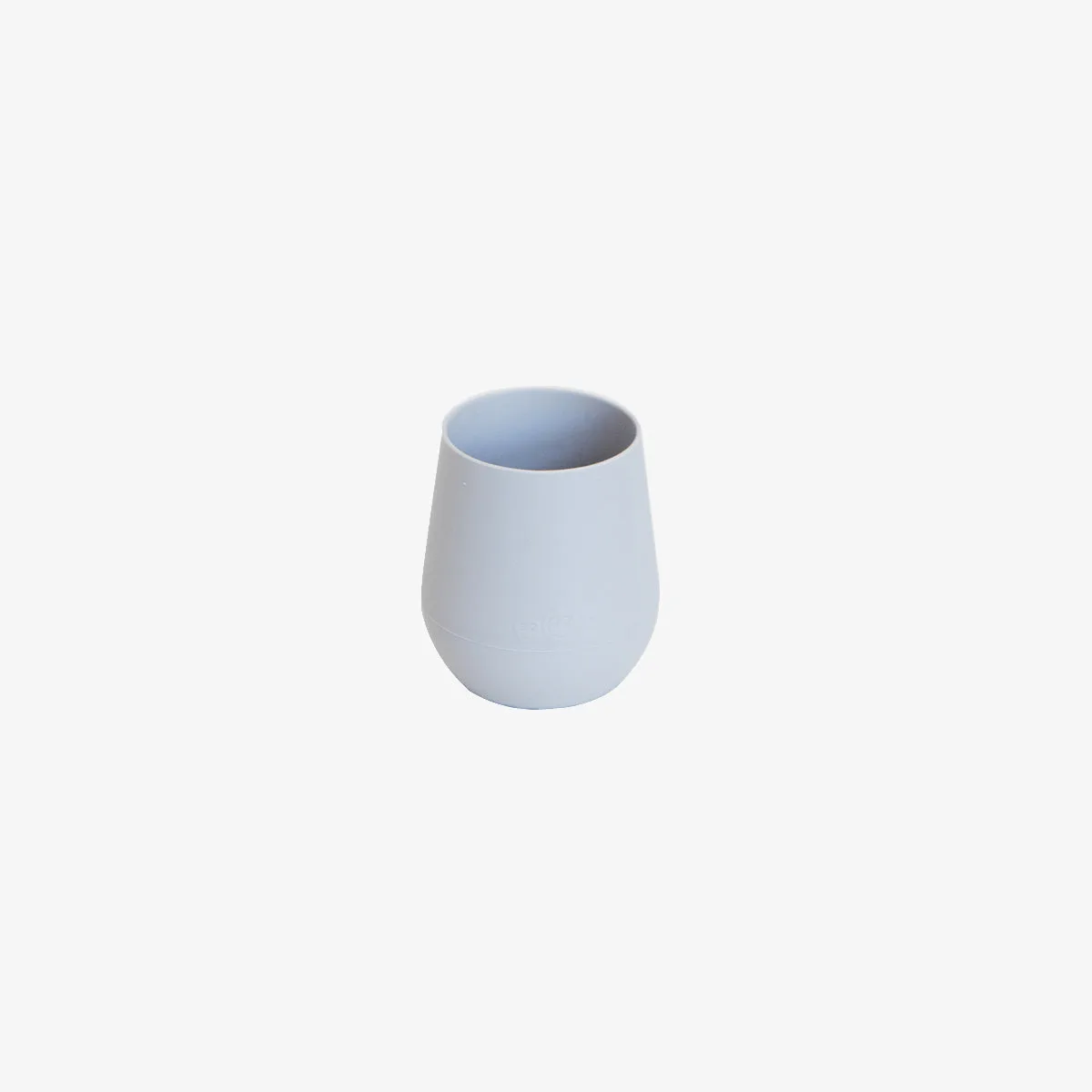
The Baby-Led™ Tiny Cup is designed for this stage: it's small enough for little hands and holds just enough liquid for a few sips. You can use it with breastmilk, formula, and purees. Start with water or breastmilk—something familiar and thin. Avoid juice or sugary drinks, which can pool around new teeth. If you're using purees, thin them slightly so they flow easily. Always consult with your pediatrician regarding what liquids are appropriate for your baby's age and diet.
Step-by-step: teaching your baby to drink from a tiny cup
- 1. Set up a calm, seated feeding: Seat your baby upright in a high chair or on your lap, facing you. Fill the tiny cup with just 1–2 teaspoons of liquid. A full cup is harder to control and increases choking risk. Checkpoint: your baby should be calm and alert, not fussy or overly hungry.
- 2. Hold the cup to your baby's lips: Hold the cup with both hands, tilting it just enough for the liquid to touch your baby's lips. Let them open their mouth and take a small sip. Do not tip the cup into their mouth or pour. Common mistake: tilting too fast. Let your baby set the pace.
- 3. Pause and watch for swallowing: After each sip, lower the cup and give your baby time to swallow. Watch their face and breathing. If they cough or sputter, stop and sit them upright. Checkpoint: no coughing or choking. If it happens, end the session and try again another day.
- 4. Offer the cup at every meal: Practice once a day, ideally during a meal when your baby is already sitting and interested. Offer the cup before or after solids, not when they're ravenous. Consistency matters more than duration—short, daily practice builds the skill.
- 5. Gradually increase independence: As your baby gets better at sipping, let them hold the cup with both hands while you guide the bottom. By around 12 months, many babies can drink from a small open cup with minimal help. Don't rush. Some babies need months of practice before they master it.
Product facts
-
Baby-Led™ Tiny Cup (5-Pack): The Baby-Led™ Tiny Cup is designed to help baby transition from bottle to cup and can be used with breastmilk, formula, and purees. This means you can practice with the same liquids your baby already knows, making the transition smoother.
Baby-Led™ Tiny Cup (5-Pack)