Quick answer
To use a paella pan for perfect Spanish rice, preheat the pan over medium heat, sauté aromatics, add rice and broth in a thin layer, then cook without stirring until a crust forms. A nonstick paellera like the Kuhn Rikon ALLROUND makes release and cleanup effortless.
Why a dedicated paella pan matters
A traditional paella pan is wide and shallow, designed to maximize surface area so rice cooks evenly and develops a crispy bottom crust called socarrat. Standard frying pans are too deep or narrow, which leads to uneven liquid distribution and mushy rice.
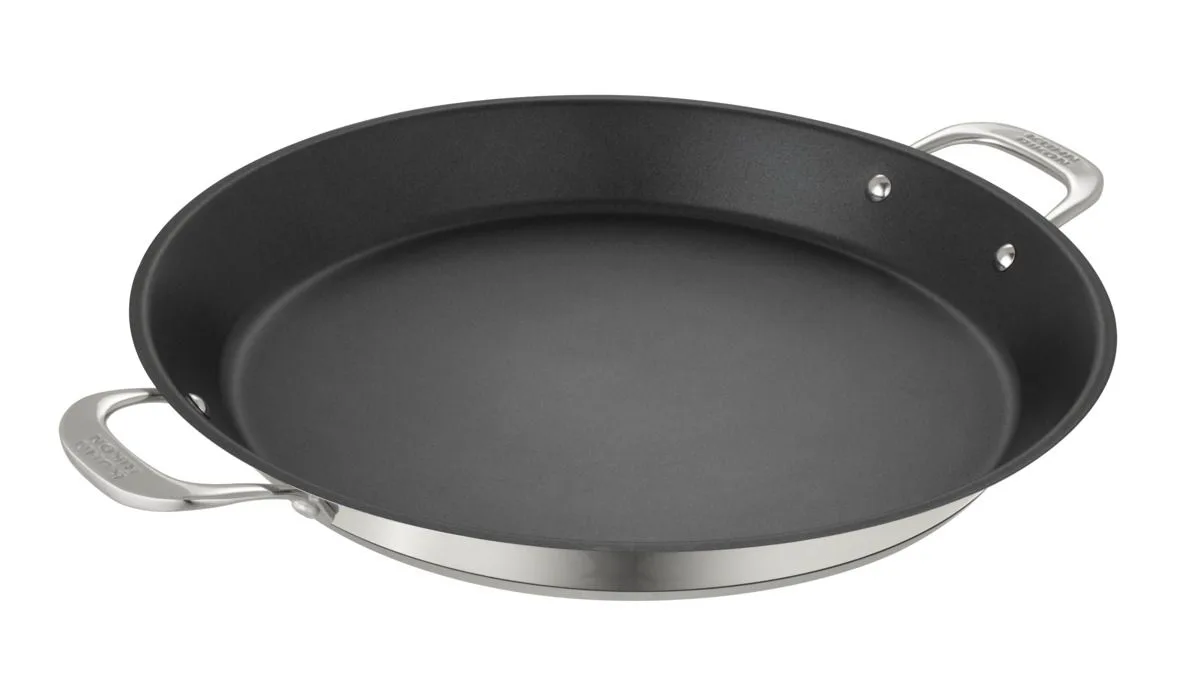
The Kuhn Rikon ALLROUND Paellera with nonstick coating combines this classic shape with modern convenience. Its 36 cm diameter is ideal for family-sized portions, and the nonstick surface helps prevent sticking while making cleanup quick.
Common mistakes to avoid
Stirring the rice after adding broth is the most frequent error. Paella relies on a stable, undisturbed cooking process to form the socarrat. Stirring releases starch and prevents crust development.
Using too much liquid or overcrowding the pan also ruins the texture. The rice should be spread in an even, thin layer—no more than one inch deep. Overcrowding traps steam and leads to gummy results.
Cooking on too high heat burns the bottom before the rice is tender. Medium heat gives you control and allows the crust to form gradually.
How to cook Spanish rice in a paella pan
- 1. Preheat the pan over medium heat: Place your paella pan on the stove over medium heat for 2–3 minutes. Add a thin layer of olive oil and swirl to coat the entire surface. A properly preheated pan prevents food from sticking and ensures even cooking from the start.
- 2. Sauté aromatics and protein: Cook onions, garlic, and any meat or seafood until lightly browned. Spread them evenly across the pan, not piled in the center. Browning in the same pan builds flavor; overcrowding at this stage steams instead of sears.
- 3. Add rice and toast briefly: Sprinkle the rice evenly over the pan and stir for 1–2 minutes until the grains are coated in oil and slightly translucent. Use a short-grain variety like Bomba or Calasparra. Toasting the rice locks in texture and prevents it from becoming mushy later.
- 4. Pour in hot broth without stirring: Add hot seasoned broth (about 3 parts liquid to 1 part rice by volume) all at once. Do not stir after this point. Gently shake the pan to level the rice if needed. Stirring releases starch and prevents the socarrat crust from forming. Trust the process.
- 5. Cook undisturbed until liquid is absorbed: Cook over medium heat for about 15–20 minutes without stirring. Listen for a crackling sound—that is the crust developing. When the liquid is mostly absorbed, reduce heat to low. The crackling sound signals the socarrat is forming. Resist the urge to peek or stir.
- 6. Rest before serving: Remove the pan from heat, cover loosely with foil or a clean kitchen towel, and let rest for 5 minutes. This allows the crust to set and the rice to finish absorbing steam. Resting firms up the socarrat so it lifts off the pan in pieces rather than crumbling.
Our recommended paella pan
-
ALLROUND Paellera con antiadherente Ø 36 cm: The ALLROUND Paellera features a non-stick coating for easy food release and effortless cleaning, and a large 36 cm diameter ideal for family-sized portions. This means you can achieve the traditional socarrat crust without the rice sticking to the pan, and you can cook enough paella for a group in one batch.
ALLROUND Paellera con antiadherente Ø 36 cm