Quick answer
To use a desk planner notepad effectively, set aside 10 minutes each week to map out your tasks, appointments, and goals on a single undated page, then review daily for adjustments.
Why a dedicated desk planner notepad works
Unlike digital calendars, a desk planner notepad keeps your week visible at a glance without screen distractions. The undated pages let you start any time, and the tear-off sheets make it easy to revise your plan without carrying forward errors.
Small vs. large: choosing your size
The Case Study Small Weekly Desk Planner Notepad (5x5 inches) fits neatly on a cramped desk or in a bag, ideal for quick task lists. The Large Weekly Desk Planner Notepad (8.5x11 inches) offers a left-hand column for broader goals and more space for detailed daily entries. Pick the size that matches your typical weekly volume.
Step-by-step weekly planning process
- Set up your week header: Write the current week's dates at the top of a fresh sheet. If your planner is undated, add the month and week number yourself. Common mistake: skipping the date header leads to confusion when you revisit the page later.
- Brain dump your tasks: List every task, appointment, and reminder you need to handle this week. Use the left-hand column (if available) for big-picture goals or projects. Checkpoint: keep this list broad; you will prioritize in the next step.
- Prioritize with a simple system: Mark each item as high (A), medium (B), or low (C) priority. Transfer only A and B items to the main weekly grid. Defer C items to a separate list. Common mistake: trying to schedule every task makes the planner feel cluttered and discourages use.
- Assign tasks to days: Place each A and B task into a specific day column. Keep daily task counts realistic—aim for three to five key items per day. Checkpoint: leave empty slots for unexpected work or breaks.
- Review and adjust daily: Each morning, glance at your planner to confirm the day's plan. Move incomplete tasks to another day or the following week's sheet. Common mistake: not reviewing leads to forgotten tasks and a cluttered, overwhelming page.
Product facts
-
Case Study Small Weekly Desk Planner Notepad: The small planner has 50 tear-away sheets with a glued top edge and 80 lb smooth uncoated paper. The smooth paper is fountain-pen friendly, and the tear-away design lets you remove a completed week without damaging the rest of the pad.
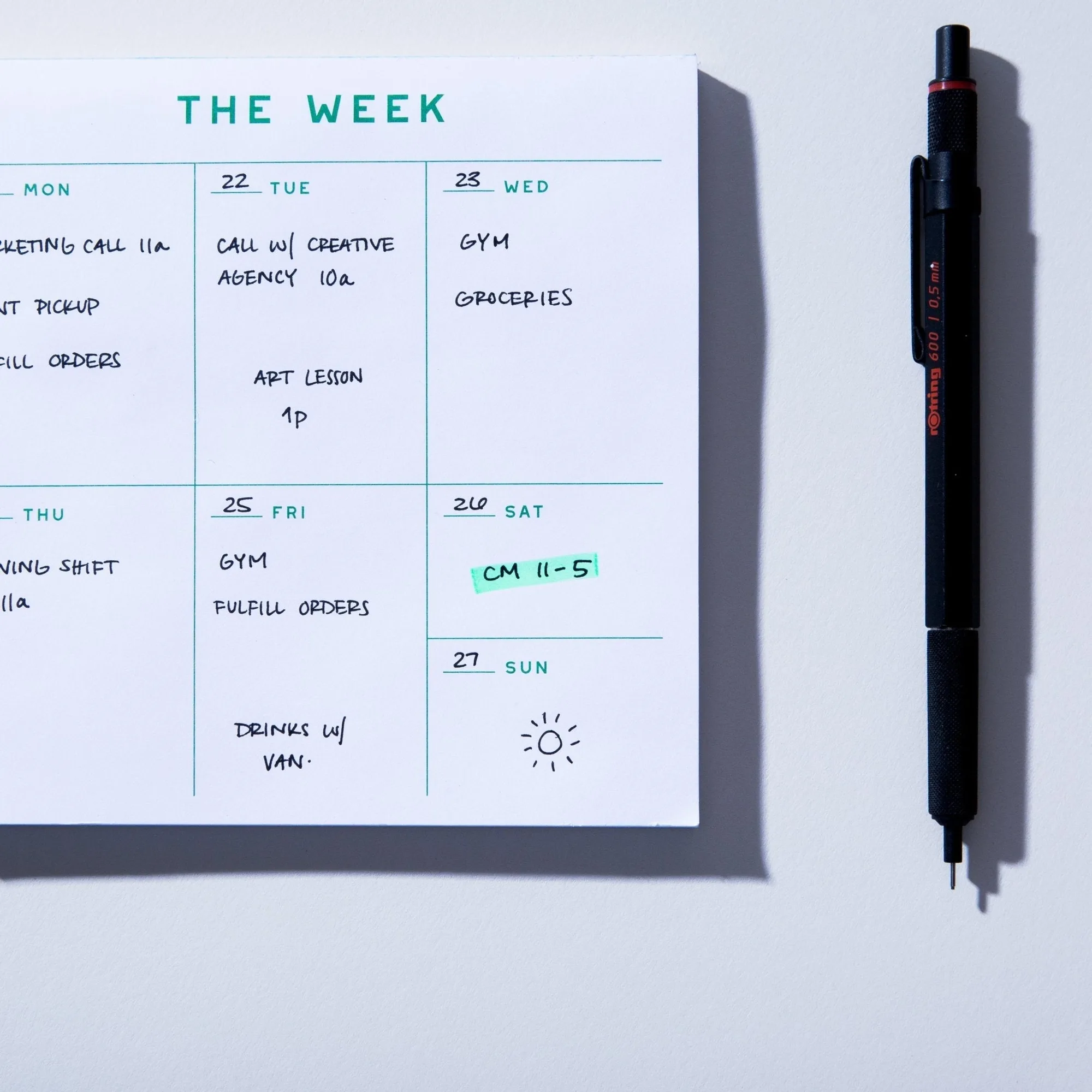
Case Study Small Weekly Desk Planner Notepad
-
Case Study Large Weekly Desk Planner Notepad: The large planner includes a left-hand column for general goals and to-dos, plus an 8.5x11 inch layout. The extra column helps you separate weekly priorities from daily tasks, reducing the mental load of switching contexts.
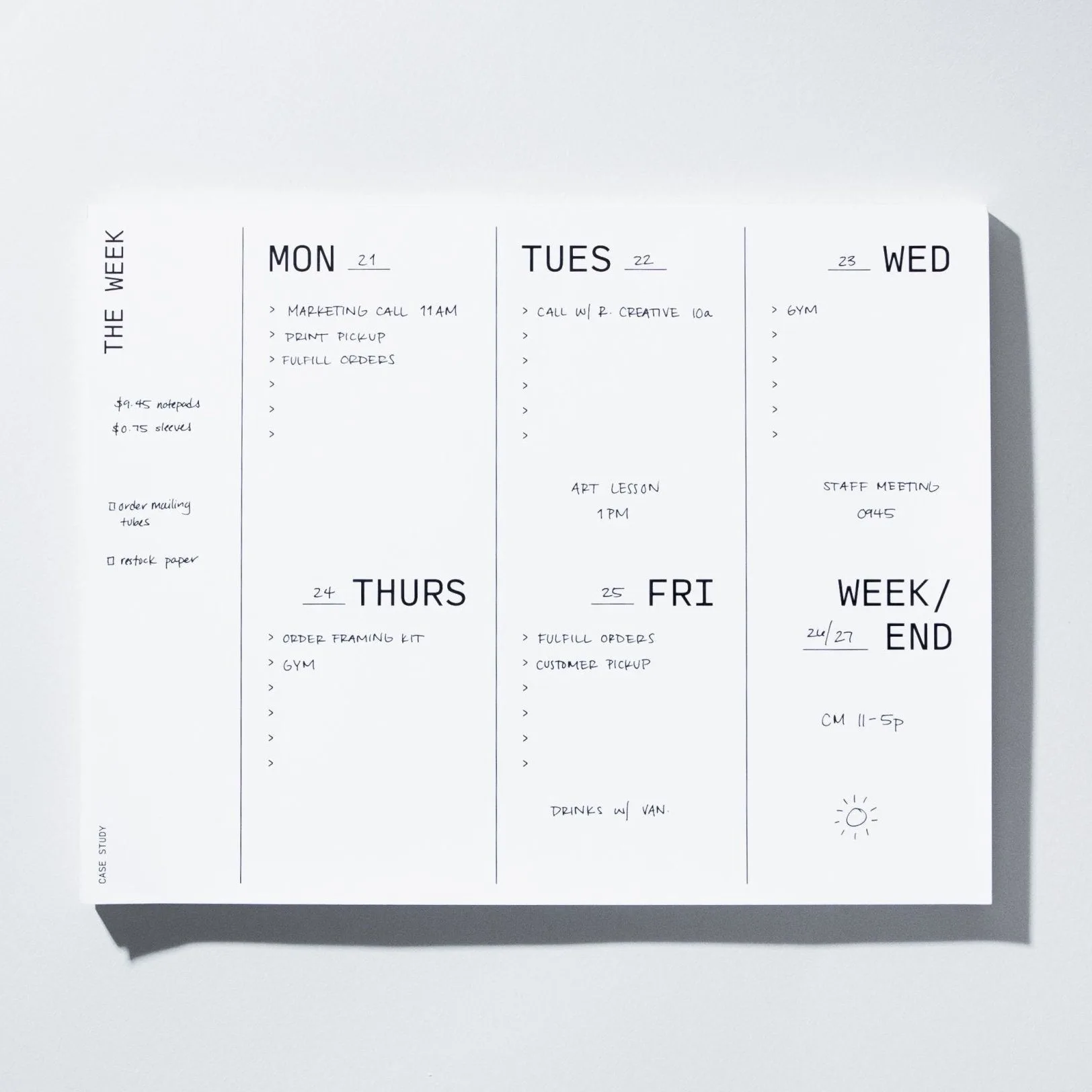
Case Study Large Weekly Desk Planner Notepad