Quick answer
Use vanilla paste measure-for-measure in place of vanilla extract, stirring it into wet ingredients after the sugar has dissolved to preserve its intense floral-woody notes.
Why paste over extract?
Vanilla paste delivers both the flavor and the visible vanilla bean specks, giving baked goods a more complex, aromatic profile and a professional look. Paste is thicker and more concentrated than extract, so a little goes a long way—but it can be used in the same quantity as extract in most recipes without adjusting other liquids.
The main trade-off is cost: premium vanilla paste is more expensive per ounce than extract. However, because it’s pure (no added sugar or thickeners), you need less to achieve the same intensity. For recipes where appearance matters—like custards, buttercream, or glazes—the specks add visual appeal that extract cannot match.
When not to use paste
Avoid vanilla paste in recipes that rely on a clear liquid for structure, such as transparent glazes or delicate meringues, where the specks may stand out visually. For those cases, stick with clear vanilla extract or a vanilla bean scraped from the pod.
Also skip paste if the recipe is already very high in moisture (e.g., a loose batter) and you want to avoid any extra thickening. Paste’s slight viscosity is fine for most cakes and cookies, but for thin syrups or sauces, extract is simpler.
How to bake with vanilla paste in 4 steps
- 1. Measure the right amount: Swap vanilla paste for extract at a 1:1 ratio by volume. For most recipes, 1 teaspoon of paste replaces 1 teaspoon of extract. If the recipe calls for a vanilla bean, use 1 teaspoon of paste per bean. Common mistake: using too much paste because it looks thicker. Stick to the same teaspoon measure as extract.
- 2. Add at the right stage: Stir the paste into the wet ingredients after the sugar has fully dissolved (e.g., after creaming butter and sugar or after mixing eggs). This prevents the paste from clumping and helps the vanilla specks distribute evenly. Checkpoint: If your batter looks streaky with dark specks, you added the paste too early—mix thoroughly before adding dry ingredients.
- 3. Adjust for temperature: Vanilla paste holds up well to heat, so it works in baked goods, stovetop custards, and simmered sauces. For no-bake applications (e.g., buttercream, ice cream base), stir it in at room temperature to avoid shocking the fat. Common mistake: adding paste directly to hot cream can cause it to seize. Let the liquid cool slightly first.
- 4. Store properly: Keep vanilla paste in a cool, dark cabinet away from the stove. Do not refrigerate—cold temperatures can cause the paste to thicken and become difficult to scoop. Use a clean, dry spoon each time to prevent contamination. Checkpoint: If the paste darkens or develops a crust on top, it’s still safe to use—just stir it back in. Discard if you see mold or an off smell.
Product spotlight
-
Organic Madagascar Vanilla Paste - 17.64oz/500g: NOROHY Organic Madagascar Vanilla Bean Paste is crafted without additives or flavor enhancers, offering intense floral and woody notes. Because it contains no added sweeteners or fillers, you can substitute it 1:1 for extract without altering the sugar balance of your recipe.
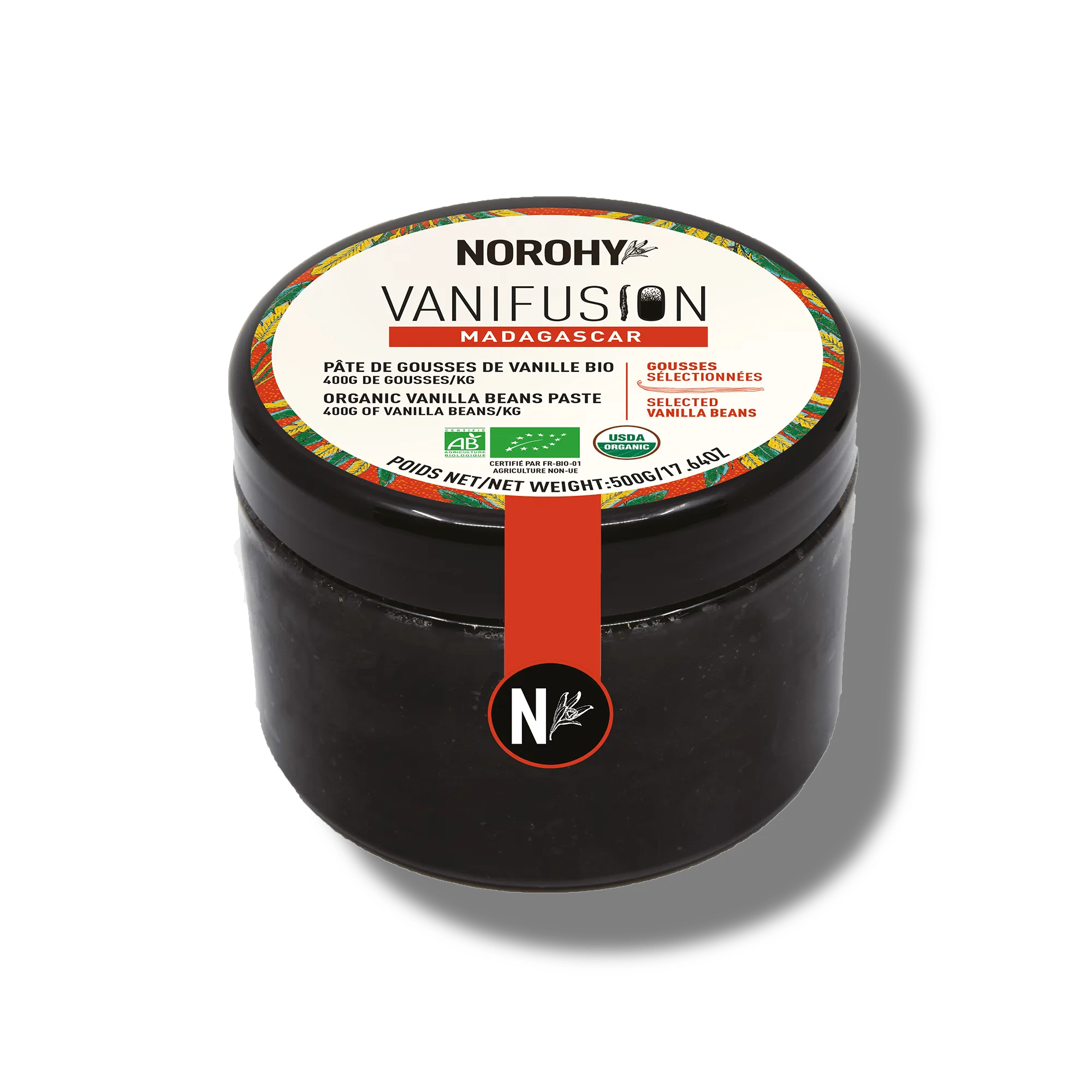
Organic Madagascar Vanilla Paste - 17.64oz/500g