Quick answer
Immi cup ramen noodles stick together when the water is not hot enough, the noodles sit in a tight block, or there is too little liquid to keep them moving. Pour boiling water to the fill line, stir once immediately to separate the strands, then cover and wait. If the noodles are already clumped, add a splash of hot water and stir gently before eating.
Why ramen noodles clump in the cup
Cup ramen noodles are dried in a block so they fit the cup. When hot water hits that block, the outer strands soften first and release starch. If the block is not broken up quickly, that starch acts like glue and the center stays dry while the outside turns gummy. This is the most common reason people search for how to separate ramen noodles from a cup.
Water temperature matters just as much. Water that is hot but not boiling will soften the noodles slowly, giving starch more time to bind. Using less water than the fill line also concentrates the starch, so the strands have less room to move apart.
How to separate Immi cup ramen noodles step by step
Start with fresh boiling water and fill to the line marked inside the cup. Immediately use a fork or chopsticks to lift and shake the noodle block. You are not trying to stir vigorously; you are breaking the block into loose strands so water can reach the center. Do this for about 10 seconds, then cover and let it stand according to the package directions.
After the standing time, uncover and stir once more from the bottom up. If you see any tight clusters, press them gently against the side of the cup with your utensil. That pressure separates strands without crushing them. If the broth looks thick or pasty, add one to two tablespoons of hot water and stir again.
Preparation habits that prevent sticking next time
Keep the cup on a flat surface while you pour so the water distributes evenly. If you are adding extra ingredients like vegetables or a protein, put them in after the noodles have separated, not before. Heavy add-ins can weigh down the block and trap dry spots.
Also check the size option on your Immi cup. A larger size needs more water and a slightly longer stand time, while a smaller size can oversoften if you use the same amount of liquid. The package directions are the baseline, but the first stir is the step most people skip.
Diagnosis: match the symptom to the fix
- Noodles are gummy on the outside, dry in the center: The water was not hot enough or the block was not separated before covering. Use boiling water, stir immediately, then cover and wait the full time.
- Noodles form one solid mass after standing: Too little water or no mid-soak stir let starch bind the strands together. Add hot water to the fill line and stir from the bottom up before eating.
- Broth is thick and pasty, noodles feel heavy: Starch concentrated because the cup was underfilled or sat too long after cooking. Add a splash of hot water and stir; if it still feels pasty, the noodles are overcooked and a shorter stand time next cup is the better option.
Immi cup ramen options and what to expect
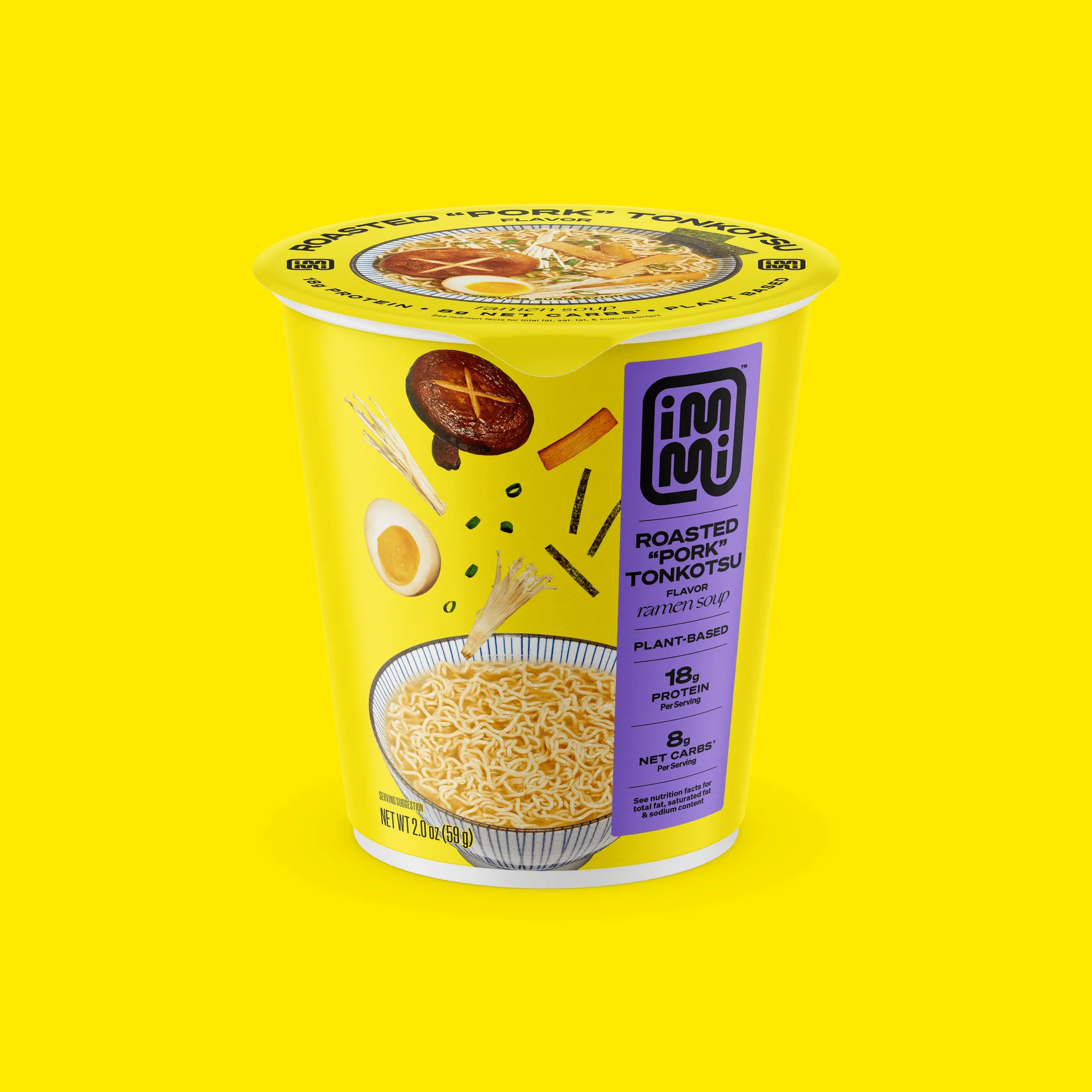
- Roasted "Pork" Tonkotsu Cup Ramen: Roasted "Pork" Tonkotsu Cup Ramen has a smooth, velvety stock with roasted, garlic, shallot, and sesame notes. The richer, thicker-style broth can make clumping more noticeable, so stir immediately after adding water to keep the strands separate.
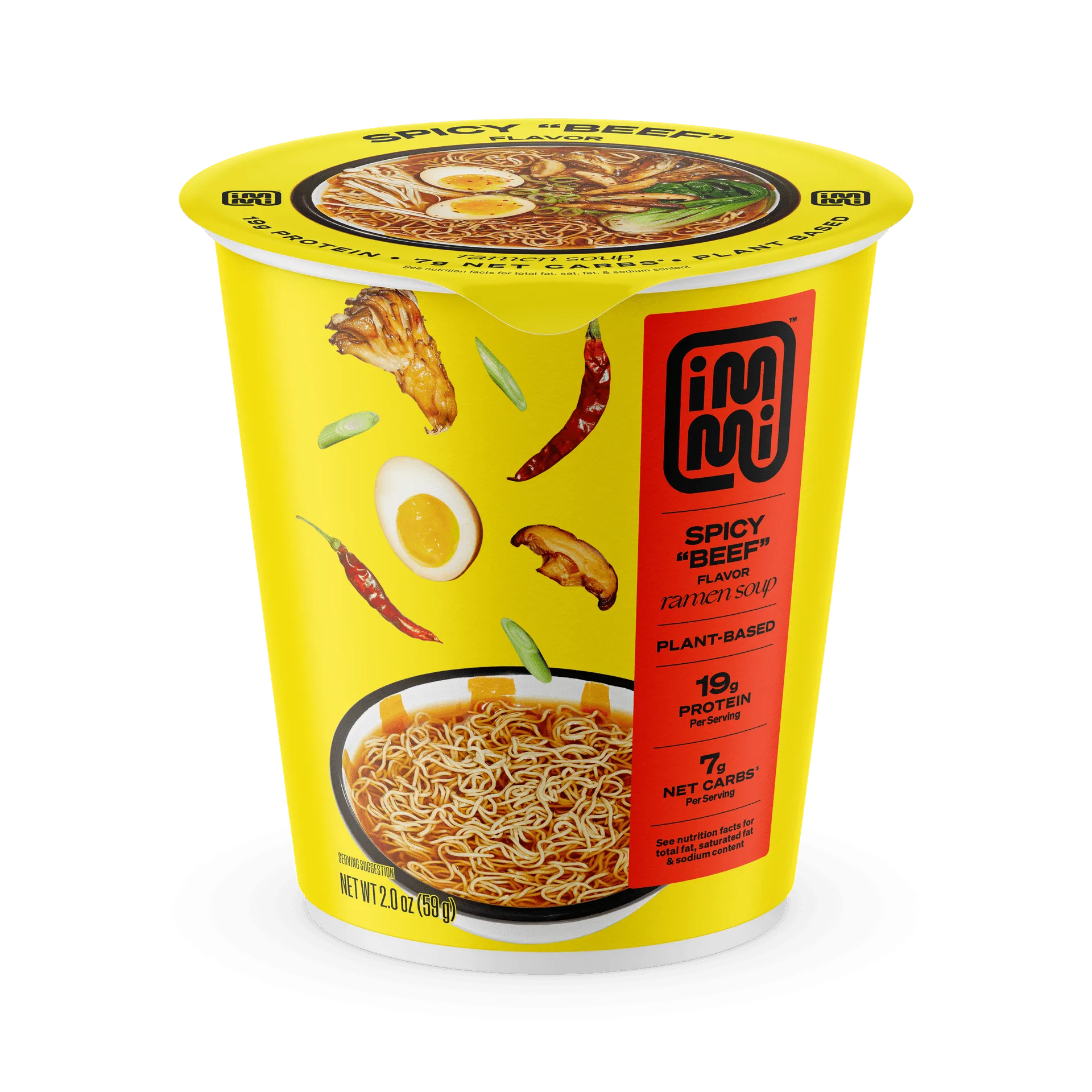
- Spicy "Beef" Cup Ramen: Spicy "Beef" Cup Ramen is hearty and rich with notes of Sichuan peppercorns, anise, and fennel. Spices and seasonings can settle at the bottom; a bottom-up stir after standing helps distribute flavor and prevents noodles from sitting in a dry clump.